
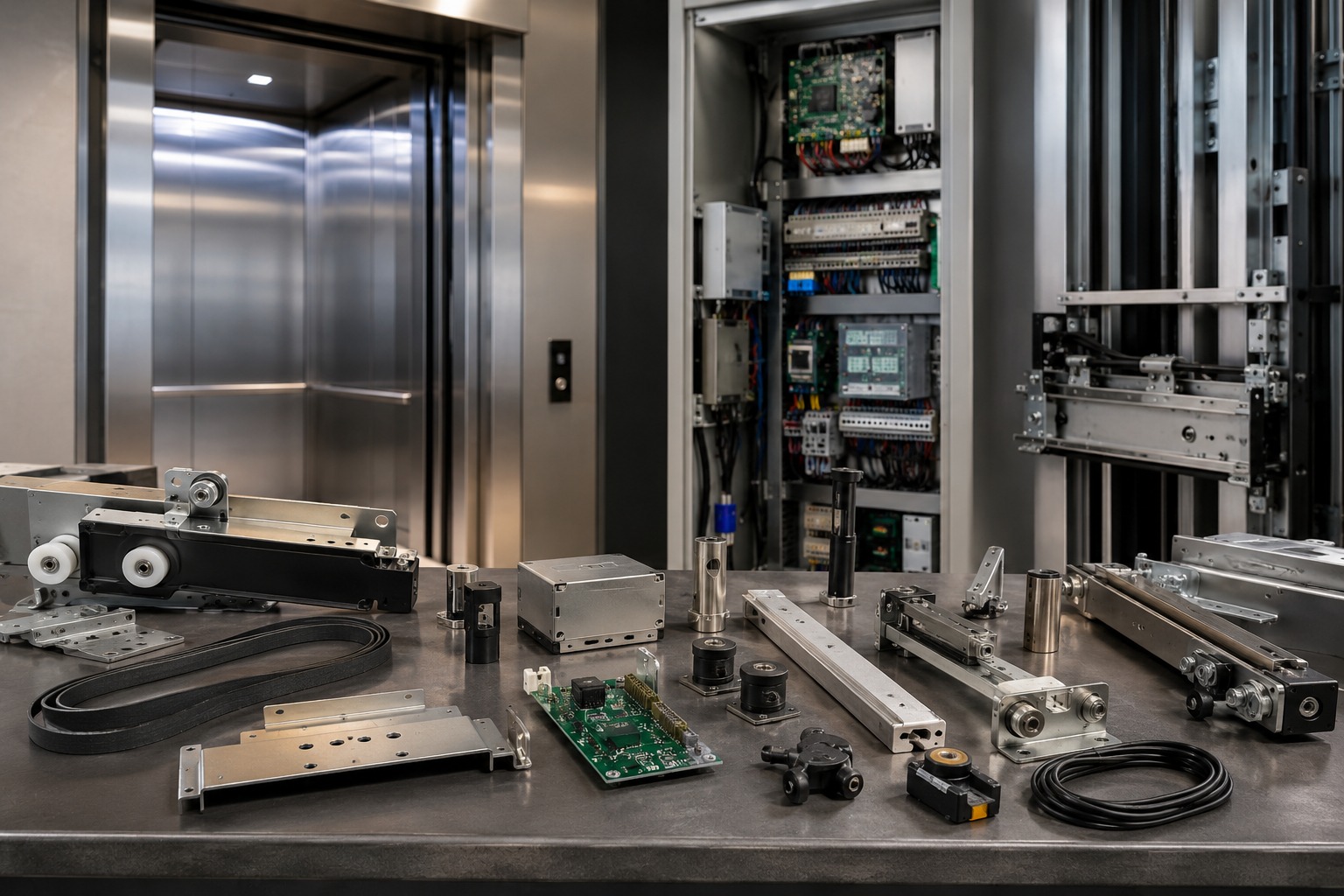
For maintenance contractors, distributors, building owners, and modernization teams in the United States, the lift accessories that generate the most reliable replacement demand are usually the parts tied to daily wear, code-sensitive operation, shutdown risk, and model-specific compatibility. In practical terms, that means door operator parts, door locks, light curtains, guide shoes, oil cups, control boards, sensors, encoders, power supplies, inverter parts, buttons, COP components, and communication accessories remain among the most searched and most frequently reordered product groups.
Demand is especially strong in dense service regions such as New York City, Northern New Jersey, Chicago, Los Angeles, Houston, Miami, Atlanta, Seattle, Dallas, and the Washington, D.C. metro area, where elevators run high traffic cycles and downtime can quickly affect tenants, hotels, hospitals, logistics facilities, and public buildings. In coastal trade hubs such as the Port of Los Angeles, Port of Long Beach, Port Newark-Elizabeth, Savannah, and Houston, fast-moving supply chains also influence how distributors stock replacement lift parts, especially for imported equipment and brand-compatible accessories.
The United States market continues to favor suppliers that can support accurate model matching, dependable inspection, protective packaging, and responsive communication. Buyers are no longer looking only for a low unit price. They want reduced callbacks, predictable lead times, and fewer mistakes on serial, wiring, or mounting details. That is why strong sourcing discipline and replacement compatibility matter just as much as inventory breadth.
The chart above reflects a realistic direction of the U.S. replacement market: steady growth driven by aging elevator stock, modernization cycles, mixed-brand maintenance portfolios, and tighter expectations for uptime. In 2026, demand is expected to be influenced further by digital diagnostics, energy upgrades, and replacement planning related to sustainability and code compliance.
Most Searched Lift Accessories Categories
When buyers search for lift accessories in the United States, they usually begin with a functional problem rather than a broad product class. A mechanic may search for a door lock roller, a purchasing manager may need a light curtain for a known brand, and a distributor may look for a control board or compatible encoder after identifying a repeat service trend across multiple properties. Even so, search behavior consistently clusters around several major product groups.
These categories are popular because they combine three forces: high installed base, recurring wear, and significant impact on service continuity. Accessories connected to passenger interface, door movement, safety signals, and electrical control tend to dominate urgent replacement demand.
| Accessory category | Typical buyer search intent | Common U.S. application | Replacement frequency | Downtime impact | Stocking priority |
|---|---|---|---|---|---|
| Door operator components | Restore opening and closing performance | Residential, office, hotel | High | Very high | Critical |
| Door locks and safety contacts | Resolve shutdowns and door faults | Commercial, institutional | High | Very high | Critical |
| Light curtains and sensors | Replace failed detection devices | Retail, healthcare, mixed-use | Medium to high | High | High |
| Guide shoes and oil cups | Reduce noise, wear, and vibration | Mid-rise and high-rise buildings | Medium | Medium | High |
| Control boards and electronic modules | Repair non-running or unstable systems | Brand-specific portfolios | Medium | Very high | Critical |
| Power supplies and inverter parts | Address drive faults and power issues | Modernized traction elevators | Medium | Very high | Critical |
| Buttons, indicators, and COP parts | Refresh interface and fix call failures | Hotels, apartments, offices | Medium to high | Medium | High |
This table shows why the most searched categories are not random. The parts at the top of the list are either directly involved in safe operation or are among the first items to fail under repeated use. For contractors, this means stocking strategy should align with service frequency. For distributors, it means ranking accessories not only by search volume but by failure consequence and urgency.
In many U.S. metro markets, especially where buildings run mixed fleets from brands such as Hitachi, Toshiba, KONE, and Mitsubishi, customers increasingly prefer suppliers that can support both exact replacement requests and compatibility verification. This is especially important for maintenance teams that serve older installations in downtown Chicago or Manhattan, as well as upgraded systems in Phoenix, Charlotte, and Nashville where modernization has created mixed generations of hardware.
Industry demand varies because traffic patterns vary. Residential and office buildings generate strong recurring business due to door cycles, call button usage, and long equipment operating hours. Hotels also rank high because guest expectations for smooth, quiet operation are strict, and any visible interface failure can quickly trigger a replacement decision.
Door Parts and Safety Device Demand
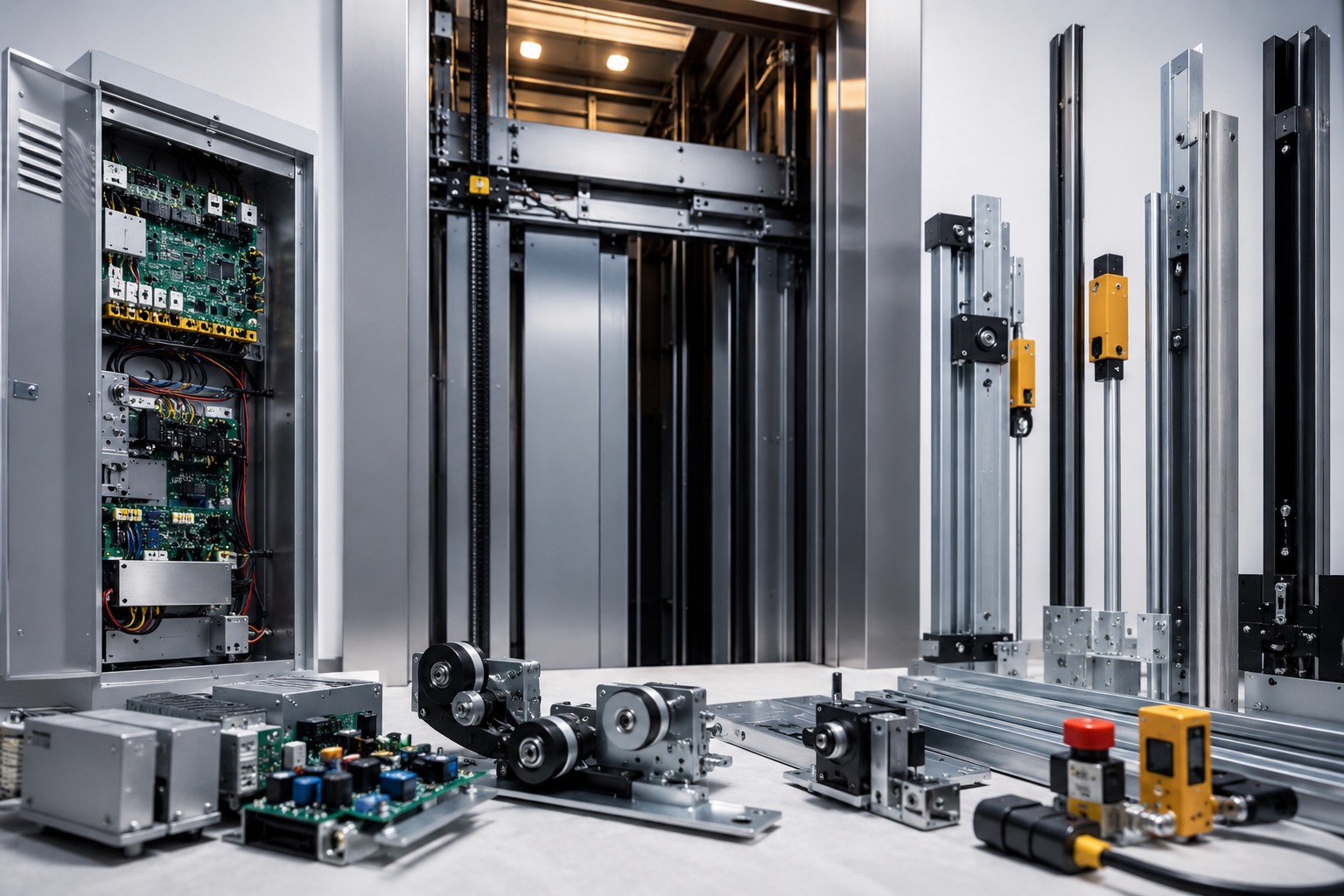
Door-related accessories are the backbone of the replacement market. In the United States, a large share of elevator trouble calls begins with the doors: slow closing, bouncing, failure to reopen properly, lock faults, noisy movement, or intermittent safety detection issues. Because the door system experiences constant mechanical stress, replacement demand remains strong across both old and modernized equipment.
Maintenance contractors often prioritize door parts because they solve the most frequent passenger-facing complaints. Building managers notice door issues quickly because they affect waiting time, perceived safety, and tenant confidence. For distributors, door accessories are usually one of the first product families that justify deep stock.
| Door or safety item | Typical failure symptom | Urgency level | Common building type | Reason for replacement | Sales pattern |
|---|---|---|---|---|---|
| Door spring | Weak return, unstable panel movement | High | Residential towers | Fatigue from cycle wear | Steady repeat orders |
| Door lock | Interlock faults, shutdown | Critical | Office and mixed-use | Safety and code sensitivity | Urgent replacement |
| Door roller | Noise, drag, poor tracking | Medium to high | Hotels and apartments | Wear and contamination | Routine service demand |
| Light curtain | False detection or no detection | High | Hospitals and retail | Sensor degradation or damage | Frequent branded inquiry |
| Door vane/contact parts | Unreliable landing operation | High | Commercial buildings | Mechanical wear or misalignment | Regular replacement |
| Door operator board | Jerky motion or no response | Critical | Modernized portfolios | Electronic failure | Model-specific demand |
| Sill guides and related hardware | Panel rubbing or misalignment | Medium | Older urban properties | Wear, debris, and age | Predictable service item |
The reason this category performs so consistently is simple: if the doors do not work correctly, the elevator cannot deliver acceptable service. In New York, Boston, Philadelphia, and San Francisco, where older buildings often retain legacy door systems or mixed-era upgrades, accurate component identification is especially important. Small differences in bracket style, spring size, contact arrangement, or board revision can turn a routine order into a costly delay if the wrong part is shipped.
For that reason, many buyers prefer to source common wear items in advance. A good example is the elevator door spring replacement part, which fits the kind of recurring maintenance need that contractors face across apartment, office, and hotel portfolios. Even a relatively small component can prevent repeated nuisance calls when it is matched correctly and installed before a full failure occurs.
Safety devices also continue to rise in importance because tenants and inspectors expect reliable non-contact protection, stable interlock performance, and fewer service interruptions. In 2026, demand is likely to increase for upgraded light curtains, better-diagnostic safety contacts, and replacement accessories that help older elevators meet more modern performance expectations without a full system changeout.
Guide Shoe Oil Cup and Lubrication Demand
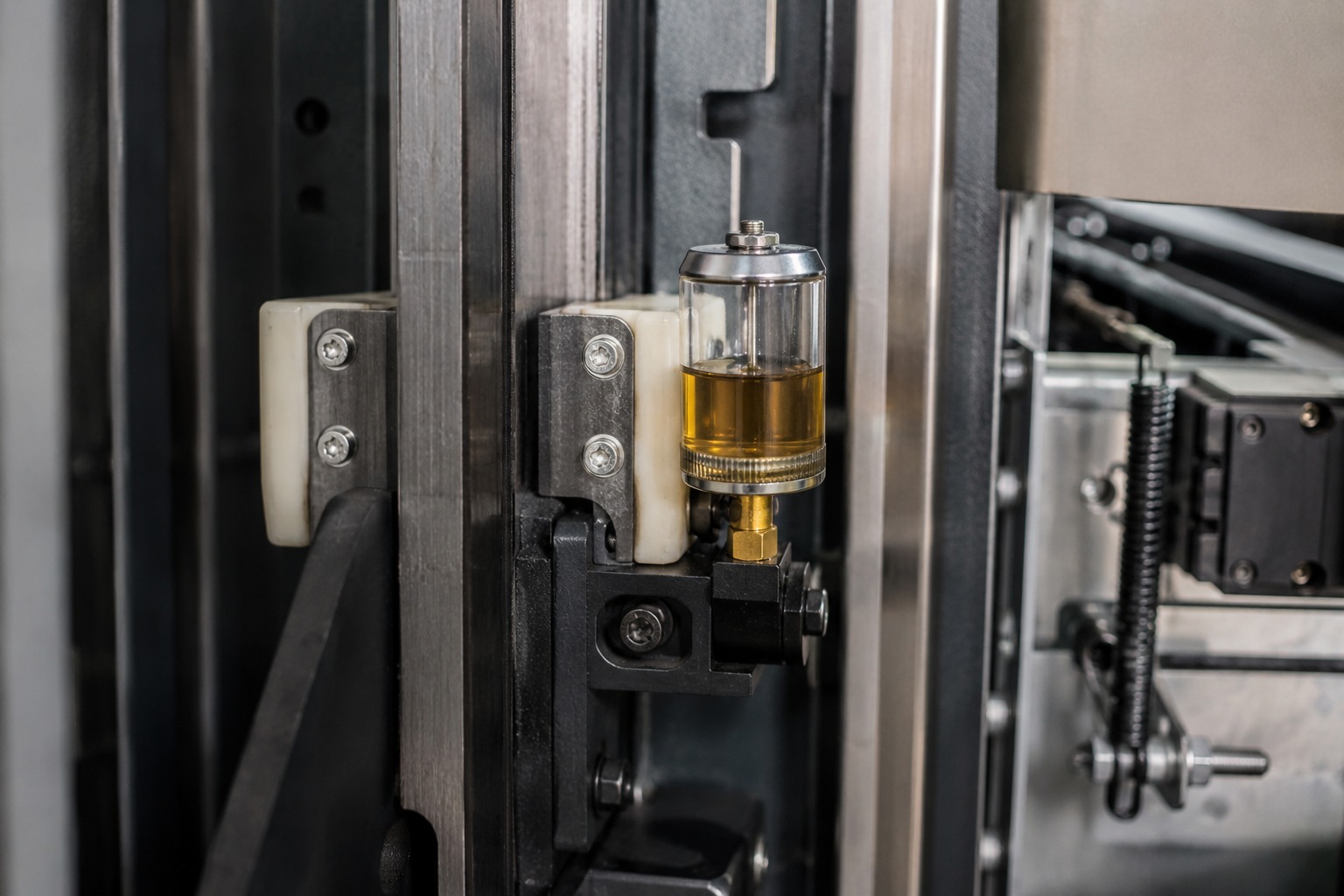
Guide shoes, liners, oil cups, lubrication parts, and related running accessories are often less visible than door components, but they generate a durable and practical replacement business. These parts matter because they directly influence ride quality, rail contact, noise, wear, and long-term component life. In the field, lubrication issues can appear as vibration, squealing, inconsistent travel feel, or accelerated rail and guide wear.
In the United States, demand for guide shoe and lubrication accessories is especially strong in mid-rise and high-rise buildings with older traction systems, heavy daily usage, or deferred maintenance history. Markets such as New York City, Chicago, and Seattle often see recurring demand because building operators want to reduce noise complaints and avoid larger mechanical wear events.
| Lubrication-related part | Main function | Common symptom when worn | Typical service environment | Replacement trigger | Stocking value |
|---|---|---|---|---|---|
| Guide shoe | Maintain stable car guidance | Vibration or uneven ride | High-rise traction systems | Liner wear or looseness | High |
| Oil cup | Feed lubricant to guide interface | Dry contact or noise | Older rail-guided systems | Cracking, leakage, blockage | High |
| Guide insert/liner | Reduce friction and wear | Rattling, rubbing, dust | Commercial and residential | Visible wear | High |
| Lubrication wick/felt | Control lubricant transfer | Inconsistent lubrication | Legacy installations | Drying or contamination | Medium |
| Mounting hardware | Secure alignment of shoe assembly | Shift, noise, looseness | Older machine-room systems | Corrosion or fatigue | Medium |
| Seal or traction-related consumable | Assist clean, controlled operation | Leakage or contamination issues | Mixed-use properties | Aging material | Medium to high |
The table shows why these products deserve more attention than they often receive. Lubrication parts rarely become a top search term because they are glamorous; they become top searches because they solve repeat service issues. A noisy guide system can trigger tenant complaints for weeks before someone traces the problem to a low-cost consumable or wear component.
For distributors building a practical range, oil cups and related wear parts are valuable because they support preventive maintenance rather than only emergency repair. That creates repeat ordering patterns. Contractors that keep these items available can fix ride-quality issues earlier, reduce callbacks, and extend the life of more expensive assemblies.
When a portfolio includes older traction systems, buyers also look for accessory items connected to sealing and wear control. A good example is this traction seal lift accessory, which fits the type of maintenance-driven sourcing requirement seen in mixed-age elevator fleets. Accessories like this may not be the first thing a building owner asks about, but they are exactly the products that experienced service teams reorder consistently.
Looking ahead to 2026, sustainability will also influence lubrication-related demand. Building operators are increasingly interested in cleaner-running equipment, better lubricant management, and lower waste in routine maintenance. Replacement accessories that support longer service intervals, cleaner handling, and reduced friction losses may gain more attention, especially in LEED-focused or ESG-reporting properties.
Electronic Boards and Sensor Demand
The demand for electronic boards and sensors has expanded rapidly as more elevators rely on precise digital control, diagnostic signaling, interface modules, and communication between subsystems. In the United States, this category includes elevator control boards, call boards, display boards, arrival indicators, leveling sensors, door sensors, encoders, magnetic switches, photocells, and related electronic accessories.
These products are searched heavily because a single electronic fault can disable normal operation even when the mechanical system is still in good condition. Contractors often need to identify exact board versions, connector layouts, software revisions, and matching signal behavior. That is why this category rewards suppliers with strong technical verification capabilities rather than simple catalog listing alone.
| Electronic item | Main application | Typical failure result | Buyer concern | Matching difficulty | Demand profile |
|---|---|---|---|---|---|
| Controller board | Core logic and system control | Shutdown or unstable operation | Exact model confirmation | Very high | Critical but model-specific |
| Call board | Hall call registration | Unresponsive floor calls | Connector and layout match | High | Steady replacement |
| Arrival indicator board | Passenger information display | No floor indication or errors | Brand and mounting compatibility | Medium to high | Consistent urban demand |
| Light curtain control module | Door safety detection | Nuisance reopen or no detect | Beam count and voltage | High | Frequent safety-related demand |
| Encoder | Speed and position feedback | Drive faults, leveling issues | Signal type and shaft fit | Very high | Specialized recurring demand |
| Magnetic or proximity sensor | Position and door signal input | Intermittent faults | Sensing distance and wiring | Medium | Strong service volume |
| Power or logic module | Internal board support | Erratic operation | Board revision verification | High | Moderate but urgent |
In practical U.S. service work, electronic demand is driven by two overlapping markets. The first is the repair market for boards and sensors in existing installations. The second is the modernization-support market, where upgraded systems still rely on compatible accessory modules, indicators, and passenger interface devices. This is especially common in cities like Dallas, Atlanta, Denver, and Orlando, where many buildings have modernized control layers while retaining parts of older fixtures or landing hardware.
For example, distributors frequently receive requests for hall call and communication accessories that must match dimensions, mounting positions, or legacy interface expectations. Products like the outbound call board bottom box support this need, especially when a contractor must keep a building operational without redesigning the fixture setup.
Likewise, visual signaling products remain important because passenger information quality affects user perception and ADA-oriented accessibility expectations. For buildings replacing worn indicators or handling modernization updates, the arrival light and forecast indicator for Hitachi applications illustrates the kind of brand-related accessory demand that remains active in the U.S. market.
The area trend above shows a realistic shift: electronic and sensor-related accessories are taking a larger share of total replacement demand. This is not because mechanical parts matter less, but because diagnostics, interfaces, and control stability now play a larger role in elevator uptime. By 2026, buyers will likely demand even more support for cross-referencing, revision checking, and photo-based model verification before shipment.
Technological capabilities that matter
In this category, a strong supplier needs technical depth. That includes understanding board revisions, terminal labeling, voltage ranges, connector formats, brand families, encoder signal logic, and sensor application conditions. Buyers in the United States increasingly favor partners that can review photos, compare labels, confirm dimensions, and reduce the risk of mismatched electronics before dispatch.
Power Supply and Inverter Demand
Power supplies, inverter parts, and frequency-converter-related accessories are among the highest-impact products in elevator maintenance because they affect motion quality, startup reliability, error handling, and overall system stability. A failed power module or inverter component can stop service immediately. Even before total failure, it may cause rough starts, drive alarms, leveling inconsistency, or intermittent faults that are hard to diagnose.
Demand in the United States is strong in modernization-heavy regions where traction systems have been upgraded over time. Contractors in Los Angeles, Houston, Minneapolis, Charlotte, and New Jersey often manage portfolios with multiple drive generations. That means replacement sourcing must account for both current inverter needs and legacy-compatible power accessories.
| Power or drive item | Typical role | Common failure symptom | Importance to uptime | Purchase trigger | Forecast through 2026 |
|---|---|---|---|---|---|
| Switching power supply | Provide stable control voltage | No logic power or unstable reset | Critical | Sudden board failure | Rising |
| Inverter control board | Manage drive output behavior | Drive alarms, no run | Critical | Fault code diagnosis | Rising |
| Cooling fan assembly | Protect drive thermal performance | Overheat faults | High | Preventive maintenance | Stable to rising |
| Capacitor or capacitor bank part | Support power smoothing | Voltage instability | High | Age-related degradation | Stable |
| Brake resistor-related item | Handle deceleration energy | Drive trip on braking | High | Performance issue or burnout | Stable to rising |
| Rectifier or input module | Convert incoming power | No startup or fuse issue | Critical | Electrical fault event | Stable |
| EMI or protection accessory | Support cleaner electrical operation | Noise or sensitivity problems | Medium | Upgrade or troubleshooting | Rising |
This category is important not only because failures are serious, but because replacement decisions are often time-sensitive. Building owners may tolerate cosmetic wear for a while, but they will not tolerate a recurring no-run condition tied to power electronics. That makes inverter and power supply accessories a high-value product line for distributors that can verify part numbers quickly and ship with protective packaging.
Another major driver is energy performance. In 2026, sustainability policy and owner expectations are likely to push more interest toward efficient drive operation, lower standby power, improved thermal management, and accessories that support life extension rather than full immediate replacement. As utility costs rise in states such as California, New York, and Massachusetts, buyers may increasingly evaluate not only whether a power part is available, but whether it helps stabilize operation with better energy behavior.
Manufacturing capabilities that matter
For electronic and power-related accessories, manufacturing discipline is closely tied to reliability. Buyers want consistent component selection, stable assembly methods, inspection routines, and protective packaging that reduces transit damage. In the U.S. market, where parts may be shipped across long domestic routes after import arrival at ports like Los Angeles, Long Beach, Savannah, or Newark, packaging quality and anti-damage handling are not small details. They directly affect whether a part arrives ready to install.
How Distributors Build Product Ranges
Successful elevator parts distributors in the United States do not build their product range by listing every possible item at once. They usually build outward from high-frequency service pain points. The smartest product range combines emergency demand, preventive maintenance items, modernization support parts, and brand-specific components that are difficult for contractors to source locally.
In practice, most distributors organize lift accessories in four layers. First come the fast-moving wear items: door parts, rollers, springs, guide inserts, oil cups, basic sensors, buttons, and communication accessories. Second come safety-sensitive items such as locks, light curtains, and switch devices. Third come the technical parts with high urgency but lower volume, including boards, encoders, power supplies, and inverter modules. Fourth come brand- and project-specific accessories used for retrofit continuity, aesthetic matching, or fixture replacement.
| Range-building layer | Core products | Reason to stock | Inventory depth | Best customer type | Margin potential |
|---|---|---|---|---|---|
| Fast-moving maintenance | Door rollers, springs, buttons, oil cups | Constant repeat demand | Deep | Service contractors | Moderate |
| Safety and shutdown parts | Locks, contacts, light curtains | Urgent service need | Deep to targeted | Maintenance firms | Strong |
| Technical electronics | Boards, sensors, encoders | High-value urgent orders | Targeted | Distributors and specialists | Strong |
| Drive and power products | Power supplies, inverter parts, fans | Critical uptime impact | Targeted | Modernization contractors | Strong |
| Fixture and interface parts | COP items, indicators, intercom parts | Modernization and appearance | Moderate | Building owners, retrofit teams | Moderate to strong |
| Brand-specific continuity parts | Hitachi, Toshiba, KONE, Mitsubishi accessories | Compatibility-driven orders | Selective but essential | Mixed-fleet buyers | High |
The explanation behind this table is straightforward: distributors need balance. A range with only low-cost wear items leaves money on the table. A range with only complex boards and power parts misses the repeat business that keeps customers returning monthly. The best-performing portfolios combine daily-use essentials with technically demanding items that reinforce trust and specialization.
The comparison chart highlights what many U.S. buyers already know: product breadth matters, but it is not enough. The suppliers that win repeat business are the ones that support accurate model matching, stable inspection, secure packaging, and responsive service. These are the practical details that reduce return risk and shorten elevator downtime.
Service capabilities that matter
From a buyer perspective, good service means more than answering emails. It means helping maintenance teams identify compatible replacement parts, confirming application details, communicating lead times clearly, and packaging products to survive domestic redistribution. For contractors working under pressure in places like Manhattan, downtown Los Angeles, or Houston medical campuses, a responsive supplier can save hours of troubleshooting and prevent unnecessary repeat visits.
That is also where our role fits the market well. We support maintenance companies, distributors, building owners, and modernization contractors with a broad range of elevator parts covering control boards, inverter and frequency converter parts, door operator components, locks, light curtains, guide shoes, oil cups, sensors, encoders, power supplies, buttons, COP panels, intercom parts, and other lift accessories across major brands. Instead of treating sourcing as simple trading, we focus on correct model matching, stable quality checks, careful packaging, and timely communication so customers can reduce downtime and source compatible parts with more confidence.
How to Connect Blogs with Product Pages
For elevator parts companies targeting the United States, blog content should not be separate from product conversion. The best-performing content strategy connects maintenance questions, troubleshooting topics, and replacement planning guides directly to relevant product pages. This helps both search visibility and buyer action.
For example, an article about common causes of elevator door bounce should naturally lead to product pages for springs, rollers, contacts, or light curtains. A guide about hall call failures should connect to specific call boards or indicator accessories. A post on rough ride and rail noise should link readers toward guide shoes, oil cups, and related wear parts. The goal is not to force links into the article. The goal is to answer a real service question and then make the next step easy.
| Blog topic | Search intent | Best linked product type | Ideal CTA approach | SEO value | Conversion value |
|---|---|---|---|---|---|
| Why elevator doors reopen repeatedly | Troubleshooting | Light curtains, door parts | Check model and symptoms | High | High |
| How to identify a failed hall call board | Repair diagnosis | Call boards and interface boxes | Send part photo for match | High | High |
| Signs of worn guide shoes | Preventive maintenance | Guide shoes, liners, oil cups | Compare wear pattern | Medium to high | Medium to high |
| What causes inverter drive alarms | Technical support | Power supplies, inverter parts | Verify drive model first | High | High |
| When to replace elevator indicators | Modernization planning | Arrival indicators, display boards | Match dimensions and brand | Medium | Medium |
| How to source brand-compatible lift accessories | Purchasing guidance | Mixed brand parts portfolio | Request compatibility support | High | High |
The explanation here is simple: educational content performs best when it solves the buyer’s problem and then points directly to the product family most likely to solve it. A contractor reading about call registration faults should not have to search the site from scratch. The article should lead naturally to the relevant product page. That improves usability, strengthens topical relevance, and increases the chance of inquiry.
For local SEO in the United States, blogs can also include market-specific terms such as “elevator parts for New York maintenance contractors,” “lift accessories for Chicago high-rise service,” or “replacement elevator boards for Los Angeles modernization teams.” This works best when the content remains genuinely helpful and grounded in real maintenance scenarios.
By 2026, content that combines technical clarity, practical photos, and model-matching guidance will likely outperform generic category pages alone. Google’s helpful content standards continue to reward pages that show experience and direct usefulness. For elevator parts suppliers, that means publishing fewer empty keywords and more actionable maintenance guidance tied to real product solutions.
FAQ About Lift Accessories
What lift accessories generate the steadiest replacement demand in the United States?
Door parts, safety devices, guide shoe lubrication parts, boards, sensors, power supplies, and inverter-related parts usually generate the most consistent demand. They are tied closely to uptime, safety, and frequent wear.
Why are door parts searched so often?
Because door problems are among the most common elevator issues. Reopening faults, lock failures, noisy movement, and poor closing performance quickly trigger service calls, so buyers search for these components regularly.
Are guide shoe oil cups still important in modern maintenance?
Yes. Even though they are small parts, they affect lubrication quality, ride smoothness, and long-term wear. In older systems especially, replacing worn oil cups and related accessories can prevent bigger mechanical problems.
What makes electronic boards harder to source than standard wear parts?
Electronic boards often require exact model matching, revision confirmation, connector verification, and sometimes brand-specific compatibility review. A small mismatch can make the part unusable, so technical support matters.
How should a U.S. distributor decide what to stock first?
Start with fast-moving wear and safety items, then add high-urgency technical parts based on customer service history. A balanced range usually includes door components, light curtains, guide wear items, sensors, boards, and selected power parts.
Do building owners buy lift accessories directly?
Some do, especially for modernization planning or urgent replacement sourcing, but most purchases still flow through maintenance companies, elevator contractors, or regional distributors who manage installation and verification.
How can blogs improve product sales for elevator parts suppliers?
Blogs help by answering real service questions and connecting those questions directly to product pages. This improves SEO, buyer trust, and conversion because the user finds both the explanation and the solution in one path.
What trends will shape lift accessory demand in 2026?
Three major trends are likely to shape demand: more electronics and sensor replacement, stronger interest in energy and sustainability-related upgrades, and greater pressure for accurate model matching across mixed-brand and modernized fleets.
What should buyers send when requesting a quote?
Ideally, send the brand, model, part number, photos of labels and connectors, dimensions if relevant, and a short description of the fault. This speeds up matching and reduces the risk of ordering the wrong part.
What qualities should buyers look for in a parts supplier?
Look for reliable sourcing, careful model verification, stable quality inspection, protective packaging, responsive support, and experience serving maintenance contractors and distributors. Those factors often matter more than the lowest initial price.
In summary, the strongest replacement demand in the United States comes from accessories that sit at the intersection of wear, safety, electronics, and uptime. Door components and safety devices remain core volume drivers. Guide shoe oil cups and lubrication parts support valuable preventive maintenance. Boards, sensors, power supplies, and inverter parts continue to expand in importance as elevator systems become more electronic and mixed in generation. Distributors that build smart product ranges and connect educational content with targeted product pages are best positioned to capture steady recurring demand in 2025 and 2026.