
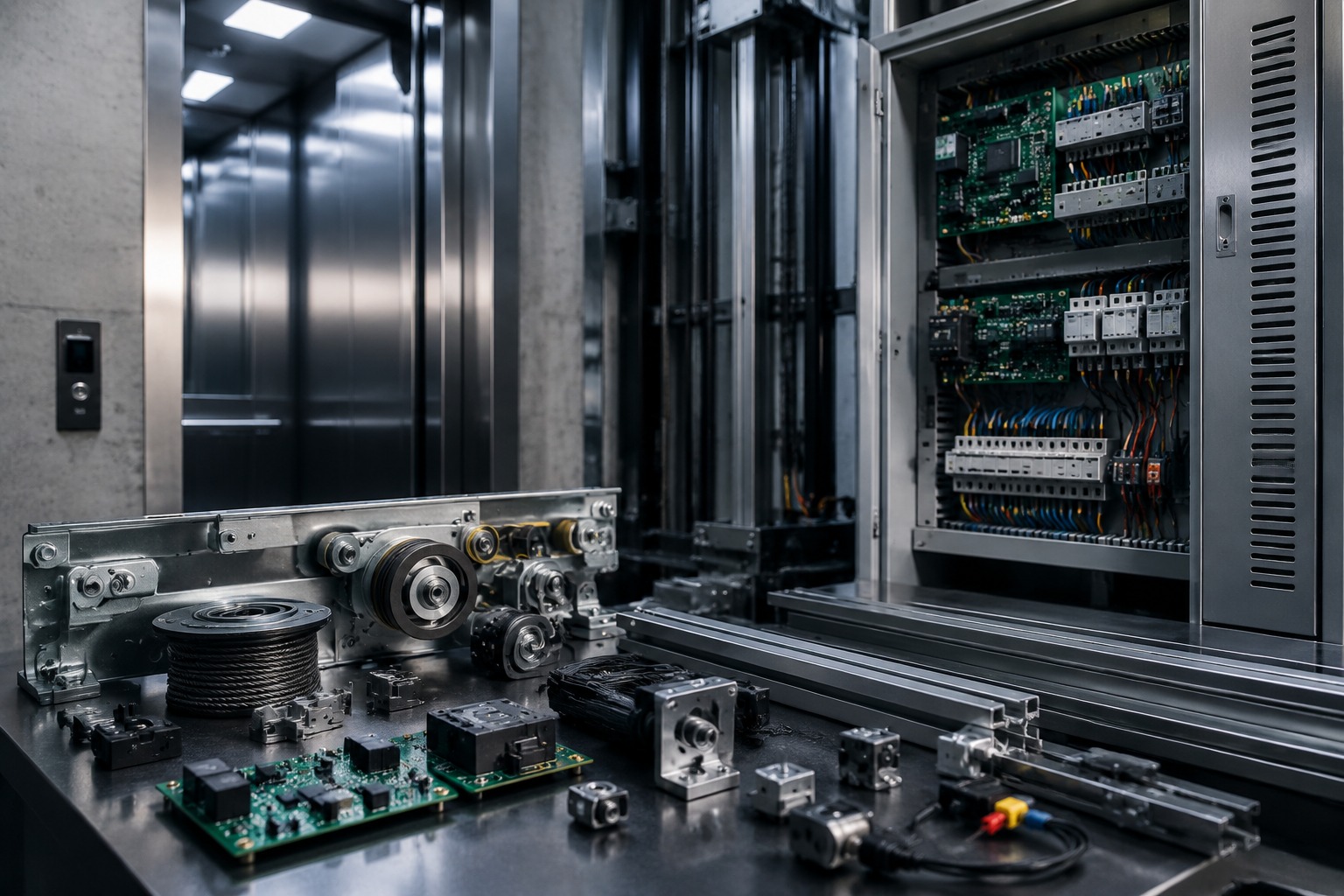
For repair teams, modernization contractors, distributors, and building owners in the United States, buying the right Hitachi elevator parts is not only a purchasing task. It directly affects uptime, passenger safety, callback rates, and labor efficiency. The most in-demand Hitachi lift accessories usually include control boards, encoders, door motors, emergency power supplies, sensors, guide shoes, brake components, door locks, and COP-related parts. The best procurement results come from accurate model identification, careful part-number matching, inspection of wear conditions, and supplier qualification checks before the order is placed.
In major US service markets such as New York City, Chicago, Los Angeles, Houston, Miami, Atlanta, Seattle, and Dallas, elevator maintenance teams often face the same pressure: fast turnaround, uncertain legacy configurations, and limited tolerance for wrong deliveries. Buildings near logistics hubs such as the Port of Los Angeles, Port of Long Beach, Port of New York and New Jersey, Savannah, and Houston may have better import options, but availability alone does not solve compatibility issues. A replacement that looks similar can still fail because of firmware revision differences, shaft dimensions, wiring layouts, connector changes, or system communication requirements.
This guide explains which Hitachi elevator replacement parts are most commonly requested, how to identify model series and part numbers, how to plan control board and sensor replacement, what to check when buying a door motor or power supply, and how to evaluate supplier quality. It also covers common procurement mistakes, practical buying advice for the US market, and future trends through 2026, including modernization demand, sustainability, and digital diagnostics.
Popular Hitachi elevator replacement parts
Popular Hitachi elevator replacement parts in the United States tend to come from assemblies that experience high cycle counts, electronic aging, or recurring impact wear. In commercial offices, hospitals, hotels, transit buildings, and multifamily towers, door operator components and control electronics often lead demand because they affect daily operation immediately. Guide shoes, oil cups, rollers, brake linings, relays, sensors, and buttons are also frequent line items because they wear gradually and are often replaced during preventive maintenance or modernization work.
Technicians generally divide demand into five practical groups: control and drive electronics, door system components, landing and safety parts, ride-quality components, and cabin interface parts. This makes inventory planning easier and helps buyers create consistent stocking policies across multiple customer sites.
| Part category | Typical replacement reason | Failure impact | Urgency level | Common application | Buying note |
|---|---|---|---|---|---|
| Control boards | Electronic aging, surge damage, communication faults | System shutdown or unstable operation | Very high | Controller cabinets | Verify series, software label, connector layout |
| Encoders | Signal loss, positioning drift, wear | Ride leveling and speed errors | High | Traction machines and motors | Check pulse rating and shaft fit |
| Door motors | Overheating, torque loss, bearing wear | Door reopening, slow operation, shutdown | High | Door operators | Confirm motor type and control compatibility |
| Emergency power supplies | Battery aging, charger faults, degraded output | Reduced rescue performance during outages | High | Emergency operation circuits | Review voltage, backup duration, cabinet size |
| Sensors and light curtains | Misalignment, contamination, wiring failure | Door nuisance faults and safety issues | Medium to high | Door entrances | Inspect beam count and mounting dimensions |
| Guide shoes and oil cups | Mechanical wear, poor lubrication | Noise, vibration, rail wear | Medium | Car and counterweight guidance | Match shoe dimensions and liner material |
| Brake components | Pad wear, spring fatigue, coil issues | Safety and stopping performance concerns | Very high | Traction machine brake assembly | Demand strict dimensional and material checks |
The table above shows why some parts move faster than others. Buyers should notice that the highest-risk items are not always the most expensive ones. A relatively small sensor, relay, or encoder can create more downtime than a larger mechanical item if it is not matched properly.
When teams need controller-related spares, a useful starting point is a verified Hitachi elevator control board source that provides photo confirmation, label checks, and connector comparison before shipment. For motion feedback issues, many contractors also prioritize a compatible Hitachi encoder replacement because misread position data can trigger repeated service calls.
The line chart reflects a realistic growth pattern in US replacement demand, driven by aging installed bases, deferred modernization after supply disruptions, and rising expectations for uptime in high-traffic properties.
How to identify model series and part numbers
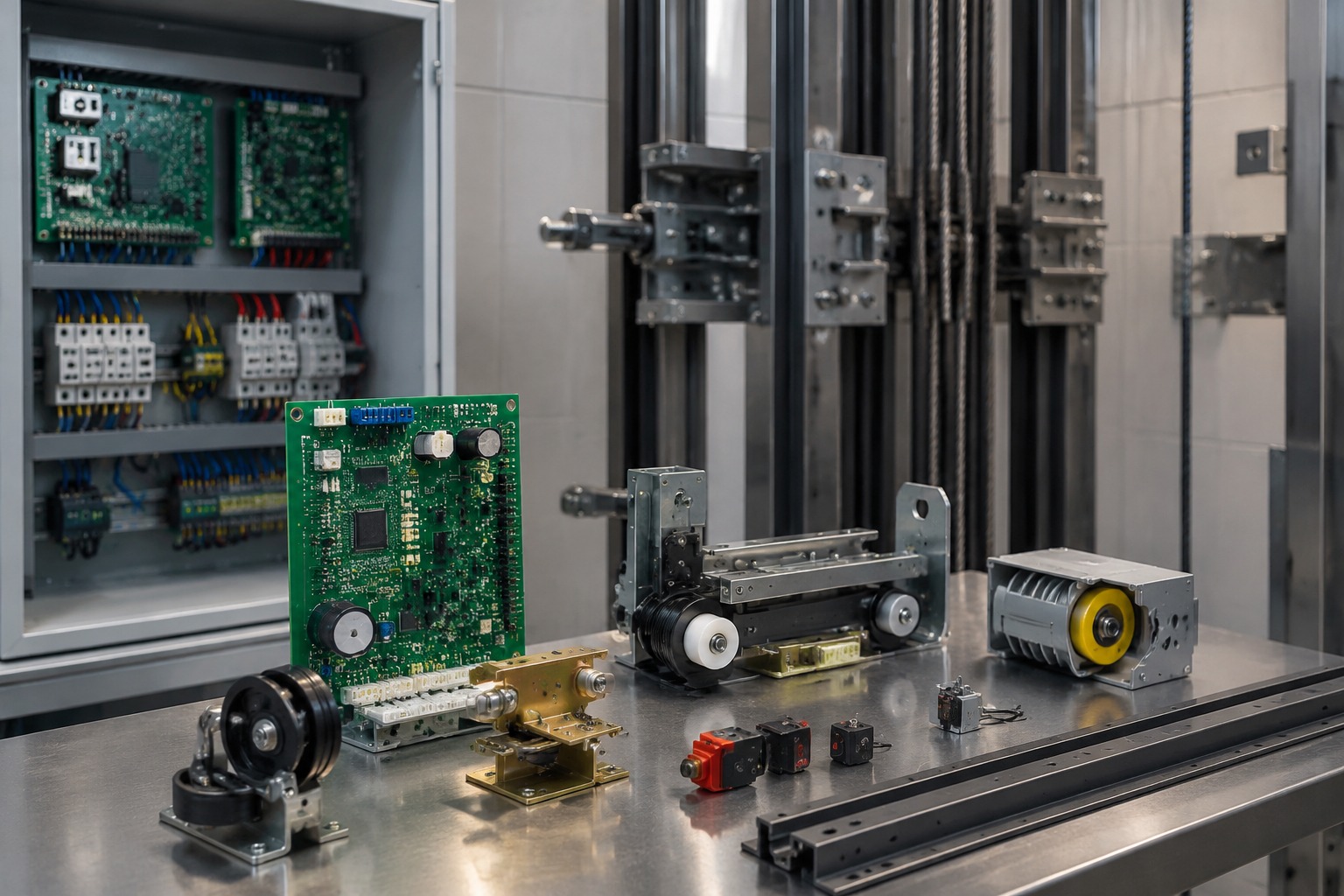
Correct identification is the foundation of successful Hitachi elevator parts sourcing. In many field cases, a team knows the symptom but not the exact original configuration. That is where costly mistakes begin. A building may have mixed revisions after earlier repairs. A controller cabinet may contain upgraded boards beside older modules. Door operators may have replacement motors from a previous service contractor. The safest method is to match at least four data points, not one.
The first checkpoint is the elevator model or system series. The second is the part number shown on the label or etched plate. The third is the physical configuration, including dimensions, connector positions, shaft size, mounting hole spacing, and cable length. The fourth is operational compatibility, such as input voltage, communication protocol, speed range, or firmware generation.
| Identification point | Where to find it | Why it matters | Common field problem | Best verification method | Risk if ignored |
|---|---|---|---|---|---|
| System series | Controller nameplate, machine room records | Defines compatibility family | Mixed records after modernization | Compare cabinet labels and service logs | Wrong electronic part selection |
| Part number | Sticker, engraved plate, PCB label | Primary sourcing reference | Faded or incomplete labels | Use close-up photos and serial cross-checks | Near-match but incorrect item ordered |
| Revision code | Suffix on label or board print | May affect firmware or pin layout | Revision omitted in purchase request | Record full alphanumeric code | Intermittent faults or non-start |
| Voltage and rating | Nameplate, printed spec sheet | Protects electrical compatibility | Assuming similar appearance means same rating | Match exact electrical specifications | Component damage or trip faults |
| Dimensions | Manual measurement | Critical for motors, guide shoes, brackets | Ignoring shaft or mounting spacing | Measure with caliper and photo scale | Cannot install on site |
| Connector type | Visual inspection | Confirms plug-and-play suitability | Same board family, different terminal layout | Front and rear photo comparison | Rewiring delays and safety concerns |
| Application location | On-site inspection | Distinguishes similar parts used differently | Confusion between car and landing components | Mark photos with equipment location | Duplicate or wrong-stock purchases |
The explanation behind this checklist is simple: no single label tells the full story. In US retrofit-heavy markets like Boston, Philadelphia, San Francisco, and Washington, DC, many elevators have partial upgrades that change what “original part” means. Experienced buyers ask for clear photos of the front label, rear view, connector side, dimensions, and installation position. They also keep a record of removed parts for future repeat orders.
A good procurement file should include the building name, city, elevator number, machine room photos, controller model, fault code history, and operating environment. For example, beachside properties in Miami or coastal California may see more corrosion risk, while high-traffic healthcare facilities in Houston or Phoenix may prioritize low downtime and immediate substitution planning.
Control board and sensor replacement planning
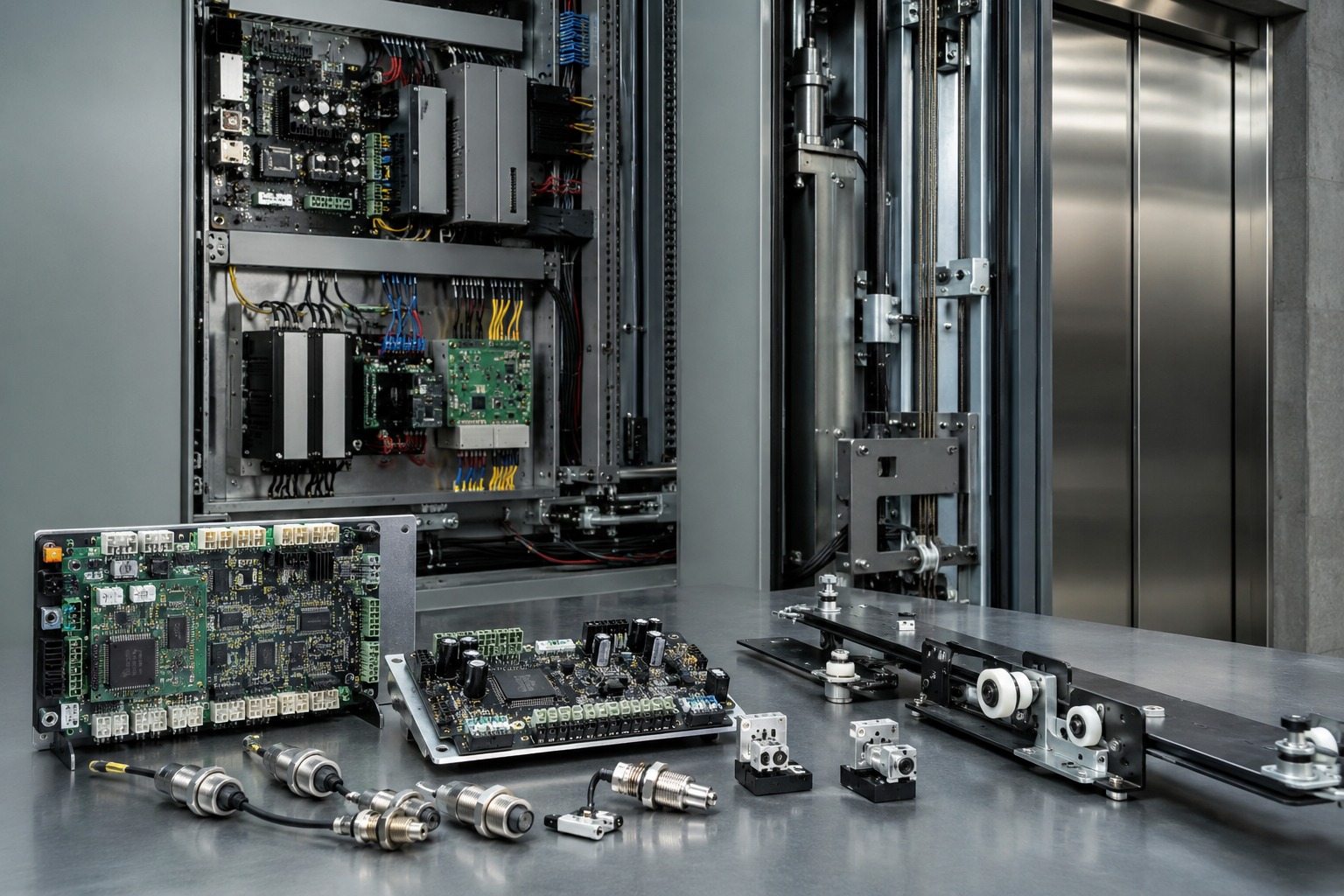
Control board and sensor replacement should never be treated as a simple one-piece swap unless compatibility has been fully confirmed. These parts influence logic control, dispatch response, door sequencing, safety chain feedback, car positioning, and ride quality. Replacement planning should begin with symptom analysis. Is the board itself faulty, or is it reacting to a problem elsewhere such as unstable power input, sensor contamination, loose wiring, or overheating?
For boards, the strongest process includes defect verification, environment review, backup planning, and testing steps. For sensors, teams should confirm whether the issue is optical misalignment, mechanical vibration, cable damage, or true internal failure. Many replacement mistakes come from changing a board when the root cause was a failed encoder, poor grounding, or unstable auxiliary power.
| Planning stage | Board replacement focus | Sensor replacement focus | Recommended documents | Testing action | Expected outcome |
|---|---|---|---|---|---|
| Fault confirmation | Check alarms, LEDs, communication status | Check signal quality and alignment | Fault logs, photos | Run diagnostic review | Reduce unnecessary replacement |
| Model verification | Match board number and revision | Match sensor type and range | Labels, manuals | Cross-check with supplier | Improve fit and function accuracy |
| Electrical confirmation | Input/output rating review | Signal voltage review | Spec sheet | Meter reading | Prevent electrical mismatch |
| Environmental review | Heat, dust, moisture, ventilation | Door dust, vibration, water ingress | Site notes | Visual inspection | Protect new part life |
| Installation planning | Downtime window and backup procedure | Alignment tools and cable routing | Work order | Pre-job meeting | Faster field replacement |
| Post-install testing | Run, level, dispatch, fault reset | Door response and signal stability | Commissioning checklist | Operational test cycles | Verify stable return to service |
In practical US maintenance operations, teams often keep one verified board and one verified sensor kit in branch stock for high-priority buildings. This approach is especially common in Manhattan office towers, hospital campuses in Cleveland, and university systems in the Midwest where prolonged downtime can lead to heavy service pressure.
Technological capability matters here. We support sourcing by reviewing part photos, label data, connector configurations, and key specification points before dispatch. That process helps maintenance teams reduce uncertainty when a control board, encoder, or door-related signal component must be replaced quickly. For example, when sourcing a controller module, teams may request a reviewed replacement control board for Hitachi lift systems together with image verification to improve first-time matching success.
This bar chart illustrates why hospitals, office towers, and multifamily buildings remain strong drivers of replacement demand. High cycles and strict uptime requirements make electronic spares planning especially important in these sectors.
Door motor and power supply considerations
Door system failures are among the most common reasons for passenger complaints and repeat callbacks. A weak door motor, unstable drive response, or aging emergency power supply can create unreliable operation even when the main controller is healthy. In the US market, buyers should pay close attention to door operator architecture, motor type, torque requirements, mechanical fit, controller compatibility, and startup current behavior. Emergency power supplies require equal care because they directly affect rescue operation and outage response.
When evaluating a door motor, ask whether it is permanent magnet synchronous, AC, or another configuration used by the system. Then verify voltage, current, mounting style, shaft dimensions, pulley arrangement, encoder integration if present, and expected operating behavior. For power supplies, review input voltage, output range, load profile, charging logic, battery status, enclosure dimensions, and protection features.
In coastal and humid environments such as Florida, New Orleans, or Gulf Coast locations, enclosure quality and corrosion resistance deserve extra attention. In colder northern cities like Minneapolis, Detroit, or Buffalo, seasonal temperature variation can affect storage, battery health, and installation timing.
| Item | Key check | Why it matters | Field symptom if wrong | Required verification | Priority |
|---|---|---|---|---|---|
| Door motor type | Motor family and drive compatibility | Ensures correct control response | Door hunting or failure to open | Nameplate and operator model | Very high |
| Motor shaft and mounting | Diameter, keyway, bracket spacing | Prevents fitment issues | Cannot install on site | Dimension check | Very high |
| Torque and speed characteristics | Load handling and duty cycle | Supports stable opening/closing | Slow or jerky doors | Performance confirmation | High |
| Emergency power supply output | Voltage, current, backup duration | Supports rescue and control circuits | Insufficient emergency operation | Electrical rating review | Very high |
| Battery condition | Age and storage history | Affects reliability during outage | Short backup time | Battery date and test data | High |
| Cabinet and connector layout | Physical integration | Reduces field modification work | Install delay and rewiring | Photo matching | Medium to high |
| Protection features | Overload, short-circuit, thermal protection | Improves safety and service life | Repeat trip or damage | Specification review | High |
A common example is a door operator modernization project where the original motor is no longer stable under heavy traffic. In that case, a properly matched permanent magnet synchronous Hitachi door motor can help restore smooth opening performance, provided that mounting, electrical requirements, and drive compatibility are checked in advance. For buildings that need stronger outage preparedness, a suitable emergency power supply for Hitachi elevators should be selected with backup duration and cabinet fit in mind.
Manufacturing capability also influences outcomes. Reliable suppliers should be able to organize careful dimensional checks, protective packaging for electronic and mechanical items, and stable incoming quality review before shipment. That is especially valuable for long-distance orders moving through Los Angeles, Newark, Savannah, or inland freight routes to service branches across the US.
Guide shoe and brake component checks
Guide shoes and brake components may not attract as much attention as boards or motors, but they are central to ride quality and safety. Guide shoes support stable travel along the rails, reduce vibration, and help protect rail surfaces. Brake components influence stopping consistency, hold force, release behavior, and safety confidence. Because these parts face constant mechanical stress, wear inspection should be systematic rather than reactive.
For guide shoes, inspect liner wear, shoe body condition, fastening hardware, lubrication path, oil cup condition, and alignment. For brake components, inspect pad thickness, wear pattern, spring condition, coil function, arm movement, and contamination from oil or dust. A buyer should not order replacements based on a broad description like “guide shoe” or “brake pad” alone. Measurements and installation details matter.
| Component | Inspection point | What to look for | Operational risk | Replacement trigger | Procurement note |
|---|---|---|---|---|---|
| Guide shoe liner | Wear depth | Uneven contact, thinning, cracking | Noise and rail wear | Exceeds wear limit | Match liner material and size |
| Guide shoe body | Structural condition | Deformation, looseness, corrosion | Instability during travel | Visible structural damage | Check mounting points |
| Oil cup | Lubrication flow | Leakage, blockage, dry rail contact | Accelerated wear | Poor lubrication performance | Confirm cup type and feed design |
| Brake pad or lining | Surface and thickness | Glazing, uneven wear, contamination | Reduced stopping quality | Below service limit | Use exact dimensions and material spec |
| Brake coil | Electrical function | Heat damage, weak pull, inconsistent release | Trip or unsafe release behavior | Measured fault or unstable action | Verify voltage and duty rating |
| Brake spring and arm | Mechanical return | Fatigue, binding, misalignment | Inconsistent braking force | Abnormal movement found | Record assembly geometry |
| Fasteners and hardware | Torque and condition | Looseness, stripped threads | Component shift or vibration | Cannot maintain secure assembly | Replace as a set when needed |
The explanation is straightforward: accurate inspection reduces guesswork. A service branch in Denver may experience vibration complaints linked to worn guide shoe liners, while a hotel in Las Vegas may report inconsistent stopping that points to brake wear. In both cases, sending a photo set and measured dimensions to the supplier improves replacement accuracy and shortens downtime.
The area chart shows a realistic shift in replacement strategy. US customers are moving from purely reactive purchasing toward planned stocking of high-risk electronic and safety-related parts, supported by fault data and preventive service records.
How to inspect supplier quality
Choosing the right supplier is often more important than choosing the lowest price. A dependable elevator parts supplier should demonstrate technical review ability, stable sourcing discipline, packaging standards, and responsive communication. In the US market, where a wrong part can trigger extra labor, return freight, and customer dissatisfaction, supplier quality should be reviewed in a structured way.
Start by evaluating whether the supplier understands elevator application details rather than treating parts as generic industrial items. Ask how they verify model series, how they manage photo confirmation, how they inspect incoming stock, and how they package sensitive boards, sensors, and mechanical parts. A supplier that can discuss connector differences, board revisions, shaft measurements, and site conditions is usually better prepared to reduce ordering mistakes.
Service capability should also be reviewed. A good partner responds quickly to technical inquiries, confirms critical data before shipping, and helps customers prioritize urgent and routine orders. For US maintenance companies serving multiple states, responsiveness can be as valuable as price because downtime costs accumulate rapidly in office towers, senior living properties, and healthcare sites.
| Supplier criterion | What good looks like | Warning sign | Why it matters | How to verify | Decision impact |
|---|---|---|---|---|---|
| Technical matching process | Requests labels, photos, dimensions, application details | Quotes by brand name only | Improves compatibility accuracy | Ask for pre-order checklist | High |
| Quality inspection | Performs visual and basic functional checks where applicable | No inspection explanation | Reduces defective deliveries | Request inspection procedure | High |
| Packaging standard | Protective packing for boards, sensors, and motors | Loose or generic packaging | Protects product in transit | Ask for packaging photos | Medium to high |
| Documentation support | Confirms labels, photos, shipping list, product details | Vague product descriptions | Helps receiving and field teams | Review sample quotation | High |
| Response speed | Answers urgent questions promptly | Slow replies during technical review | Critical for downtime cases | Test inquiry turnaround | High |
| Product range depth | Covers boards, motors, sensors, locks, guide parts, buttons | Very narrow item coverage | Simplifies vendor consolidation | Review catalog scope | Medium |
| Understanding of US market needs | Supports building owners, maintenance firms, and modernization contractors | No awareness of service urgency | Improves service fit | Discuss project cases | Medium to high |
Our company approach is built around three practical strengths. First, technological capability: we support careful model matching using part labels, images, dimensions, and application details. Second, manufacturing capability: we coordinate stable quality review and protective packaging for electronic and mechanical items before dispatch. Third, service capability: we respond quickly to maintenance companies, distributors, building owners, and modernization contractors who need reliable sourcing support and reduced downtime risk.
This comparison chart highlights why supplier discipline matters. The gap is usually largest in technical matching and inspection, which are the two areas that most directly influence whether a part works on the first visit.
Common procurement mistakes
Most procurement mistakes in Hitachi elevator parts sourcing are preventable. The first is relying on a partial part number without checking the full revision. The second is assuming visual similarity equals compatibility. The third is replacing a suspected electronic part before confirming the actual root cause. The fourth is buying solely on price without reviewing supplier quality. The fifth is failing to account for application environment, lead time, or installation constraints.
In the United States, these errors often appear in fast-paced service situations. A branch office may need a board urgently in New Jersey, a hotel may demand same-week door repair in Orlando, or a hospital may escalate a repeat leveling issue in St. Louis. Under pressure, teams sometimes skip documentation. That shortcut usually costs more later through return freight, second technician visits, and extended equipment downtime.
Another frequent mistake is not standardizing internal procurement forms. If the request does not require model series, part number, revision, photos, dimensions, and fault description, buyers end up making decisions on incomplete data. The better approach is to use a fixed intake template for all elevator parts orders.
| Mistake | What happens | Typical cost impact | Prevention step | Who should own it | Result of correction |
|---|---|---|---|---|---|
| Using incomplete part numbers | Wrong revision ordered | Return cost and extra downtime | Record full label including suffix | Technician and buyer | Better first-order accuracy |
| Skipping photos and dimensions | Physical mismatch | Field installation delay | Require image set and measurements | Technician | Improved installation success |
| Replacing the wrong root-cause part | Problem remains unresolved | Repeat labor and customer frustration | Review diagnostics before ordering | Service supervisor | Smarter troubleshooting |
| Buying on lowest price alone | Poor quality or mis-match risk | Higher lifecycle cost | Evaluate supplier process, not price only | Procurement manager | Lower callback rate |
| Ignoring environmental conditions | Premature failure | Shorter service life | Note heat, dust, humidity, usage intensity | Field team | Better part selection |
| No stock plan for critical items | Long downtime during urgent faults | Service penalties or lost tenant confidence | Stock high-risk spares by region | Operations manager | Faster recovery time |
| Poor receiving inspection | Damaged or wrong items go unnoticed | Project disruption later | Check labels and packaging on arrival | Warehouse staff | Earlier issue detection |
For US buyers, the best habit is to treat replacement parts as a technical purchasing project rather than a simple commodity transaction. That is especially true for modernization contractors coordinating multiple buildings across California, Texas, Illinois, Georgia, and the Northeast corridor.
FAQ about Hitachi elevator parts
What are the most popular Hitachi elevator replacement parts in the US market?
The most frequently requested items usually include control boards, encoders, door motors, emergency power supplies, sensors, light curtains, door locks, guide shoes, oil cups, buttons, and brake-related components. Demand is highest in buildings with heavy daily cycles or aging installed systems.
How can I identify the correct Hitachi part number?
Use a combination of full label photos, system series information, revision codes, dimensions, connector details, and application location. Do not rely on a short part number fragment or memory alone.
Can a similar-looking board be used as a substitute?
Not safely unless compatibility is confirmed. Boards that appear similar may have different revisions, firmware, pin layouts, or communication characteristics. Always verify before purchase.
What should I prepare before asking for a quotation?
Prepare the elevator model series, complete part number, revision code, clear photos, dimensions where relevant, fault description, and site location. This greatly improves quote accuracy and sourcing speed.
Are door motors and encoders common failure points?
Yes. Door motors face constant cycling, and encoders are critical for accurate motion feedback. Both are common in service and modernization work, especially in high-traffic buildings.
How do I know if a supplier is reliable?
Look for technical matching support, inspection discipline, protective packaging, responsive communication, and familiarity with elevator applications. A supplier should ask the right questions before shipping.
Should we keep Hitachi spare parts in local stock?
For high-priority buildings, yes. Many US maintenance companies keep key boards, sensors, door components, and other fast-failure items in regional inventory to reduce downtime and emergency freight costs.
What industries have the highest replacement demand?
Hospitals, office towers, hotels, multifamily residential buildings, transport hubs, and universities often generate strong replacement demand due to heavy traffic and strict uptime expectations.
What are the 2026 trends in Hitachi elevator parts sourcing?
Three trends stand out. First, more predictive replacement based on data from recurring faults and wear patterns. Second, stronger interest in energy-efficient modernization, including updated door systems and power-related components. Third, more attention to sustainability, packaging protection, and lifecycle cost instead of upfront price alone. Policy and compliance pressure in the US will also encourage better documentation, more resilient emergency systems, and procurement decisions that support reliability over short-term savings.
Why does supplier location strategy matter for the US?
Because logistics can affect total downtime. Customers often plan inbound shipments through trade hubs such as Los Angeles, Long Beach, Newark, Savannah, and Houston, then distribute parts to branch operations in local service cities. A supplier that understands this flow can help with better scheduling and packaging.
Final buying advice for the US market
If you are sourcing Hitachi elevator parts in the United States, the most practical strategy is to combine strong technical verification with disciplined supplier selection. Start with the exact model series and full part number. Add photos, dimensions, and operating context. Confirm whether the problem is electronic, mechanical, or environmental before buying. Review supplier quality, packaging, and response speed. Then build a regional stock plan for the parts that fail most often in your portfolio.
For maintenance companies, that approach reduces callbacks and truck rolls. For building owners, it shortens downtime and protects tenant satisfaction. For distributors and modernization contractors, it lowers project risk and improves installation predictability. Whether the job is in a Manhattan high-rise, a Seattle medical center, a Chicago residential tower, or a Miami beachfront hotel, the same principle applies: the correct part is the one that matches the real system, not just the general description.
With reliable sourcing support, stable quality review, careful packaging, and responsive service, repair teams can secure compatible Hitachi elevator replacement parts more efficiently and keep lift systems operating safely across the US market.