
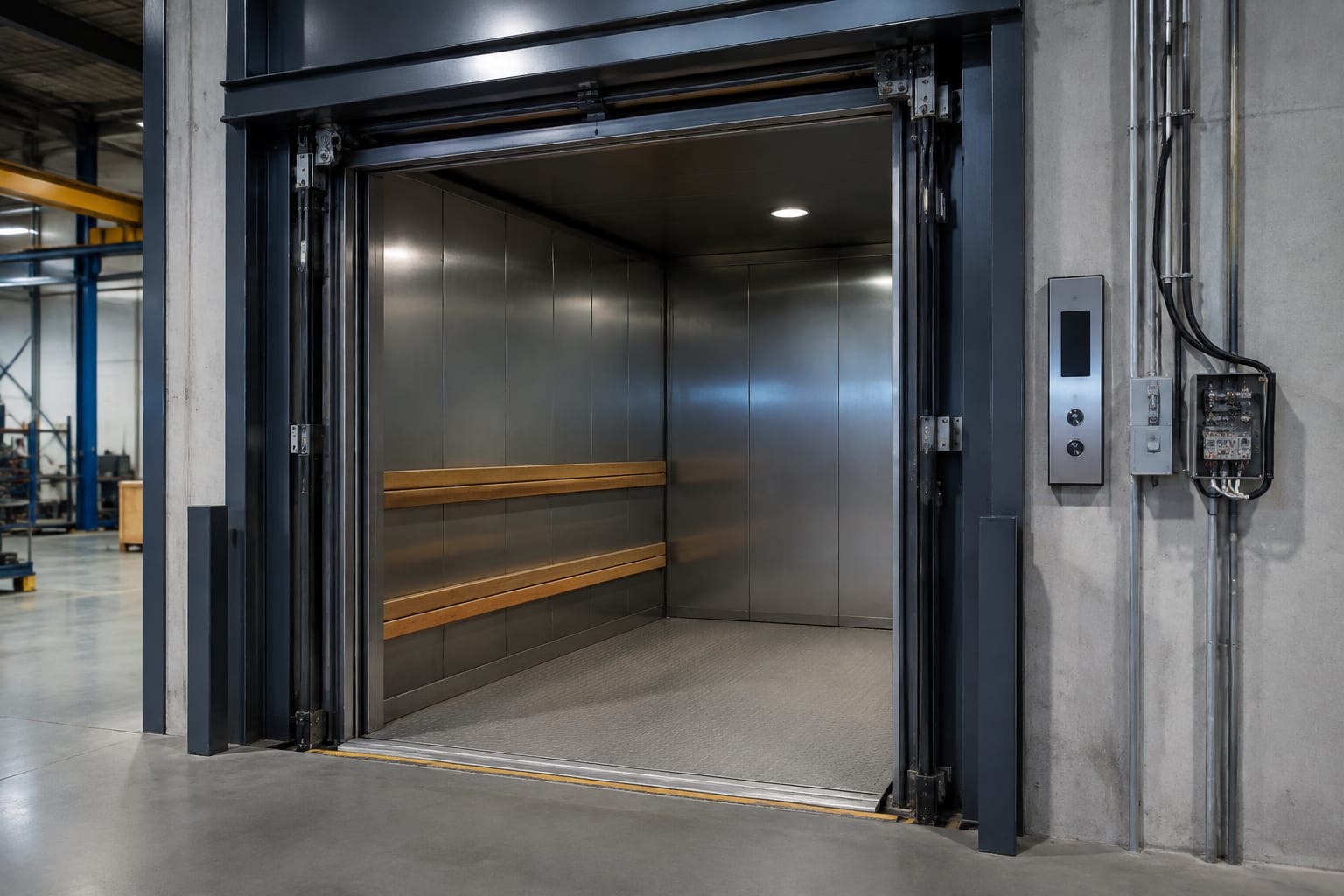
Freight elevator parts must tolerate a different operating environment than components used in typical passenger elevators. Repeated pallet, cart, and material handling traffic can damage landing entrances, affect door alignment, wear locks and contacts, and stress controls faster than expected.
For reliable replacement sourcing, identify the complete assembly rather than ordering from a general description. The most important details are the elevator and door operator manufacturer, model, part number, door configuration, dimensions, mounting arrangement, electrical ratings, and clear photos of the installed component. A matching-looking part is not necessarily mechanically or electrically compatible.
How Freight Elevator Duty Changes Part Selection
Freight elevators commonly handle concentrated loads, wide carts, hand trucks, pallet jacks, and frequent stops at loading areas. Even when the rated capacity is appropriate, daily loading activity can create impacts and side loads at the entrance. This makes entrance equipment a major focus when selecting freight elevator spare parts.
A part suited to freight duty should be evaluated for its installed application, not simply its physical size. For example, a landing door panel may need to resist repeated contact from moving materials, while a lock assembly must remain correctly aligned despite vibration, settling, or a door that is regularly pushed or pulled during loading.
Key selection considerations include:
- Traffic pattern: Determine whether the elevator serves light stock movement, warehouse transfer, service carts, or intensive dock operations.
- Door type and configuration: Confirm whether the opening uses single-slide, center-opening, two-speed, vertical bi-parting, or another arrangement.
- Operating environment: Dust, moisture, temperature swings, washdown exposure, and airborne debris can affect rollers, contacts, switches, and wiring.
- Impact exposure: Identify parts located where carts, pallets, or loads can strike them, especially sill areas, panels, guides, and door edges.
- Existing system compatibility: Door hardware and controls are often specific to a manufacturer, operator family, or generation of equipment.
- Maintenance access: Choose components that can be inspected, adjusted, and replaced without introducing unnecessary downtime or modifications.
It is also important to separate normal wear from a recurring operating problem. Replacing a bent guide or damaged closing device without correcting an out-of-level sill, misaligned panel, poor loading practice, or loose hanger assembly may result in another early failure.
Freight-Door Panels and Tracks
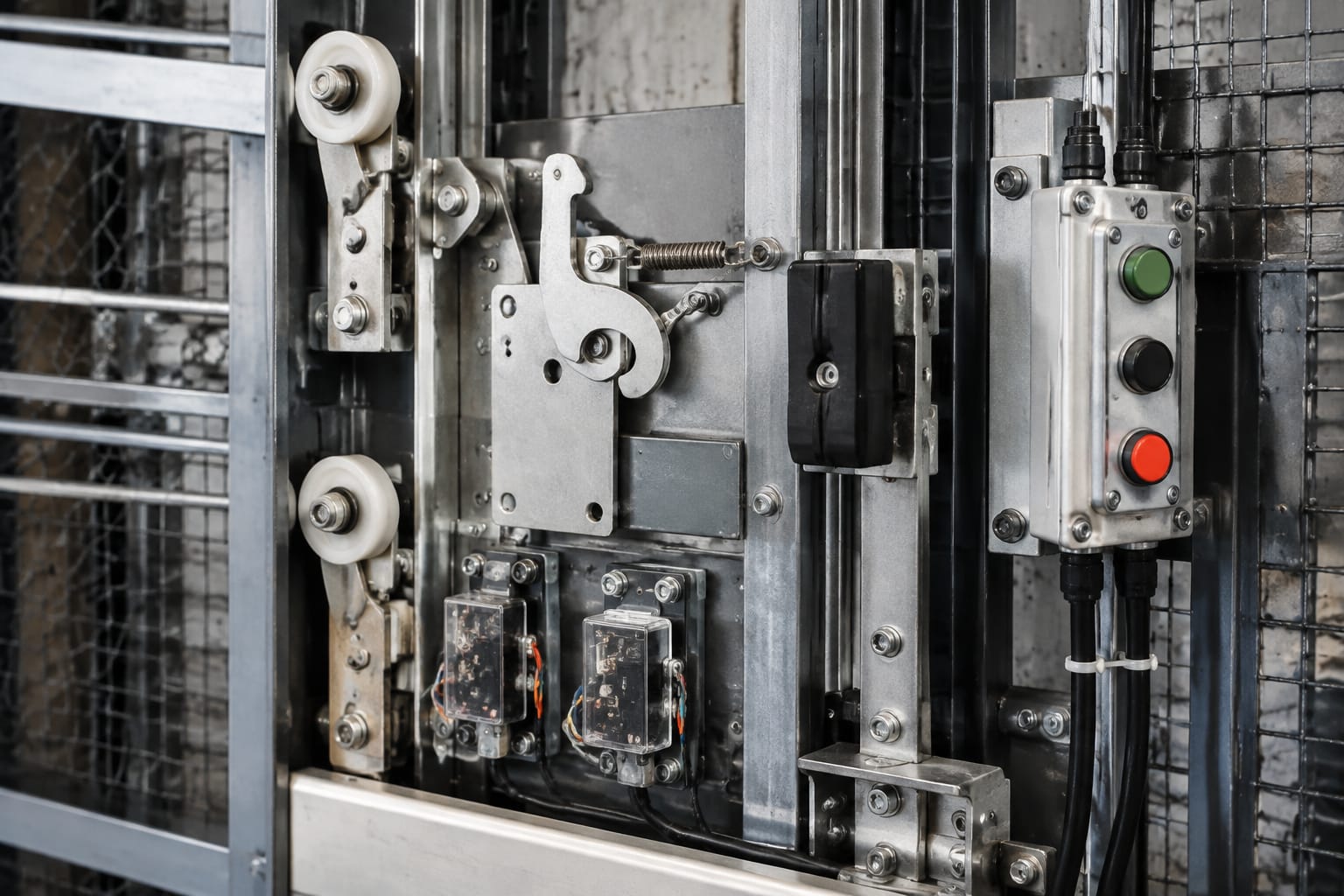
Landing door panels form the physical barrier at each floor, while car doors and associated components operate with the elevator car. In freight applications, door panels may be heavier and more exposed to direct contact than passenger entrance panels. Damage can include dents, bowed sections, cracked reinforcements, loose gibs, damaged astragals, and worn bottom edges.
When sourcing a replacement panel or track-related part, confirm whether the item belongs to the landing entrance, car entrance, or door operator system. The names may sound similar, but the mounting, dimensions, and safety role can differ.
What to Check on Door Panels
A replacement door panel needs more than the correct width and height. Review:
- Panel material and construction
- Opening type and panel handing
- Overall width, height, thickness, and edge profile
- Hanger and pickup locations
- Bottom-guide or gib mounting pattern
- Interlock and lock engagement positions
- Vision panel, fire-rating, or building-specific requirements where applicable
- Finish requirements when appearance matters in a public or customer-facing area
Do not assume that a door panel can be field-modified safely to fit another entrance. Changes to lock engagement geometry, clearances, or hanger locations can interfere with reliable operation. Where code, fire protection, or building requirements apply, the replacement should be reviewed against the applicable site conditions and authority requirements.
Tracks, Hangers, and Sill Interfaces
Door tracks support the panel through hanger rollers, while sills guide movement at the bottom of the opening. Freight traffic often deposits debris in sills and can introduce force to the lower edge of the door. That combination can create noisy travel, dragging, poor closing, or recurring lock faults.
Inspect the track for dents, corrosion, loose mounting hardware, worn running surfaces, and misalignment. Examine hangers for roller wear, bearing play, damaged eccentric adjustments, and loose fasteners. At the sill, look for compacted debris, cracked inserts, damaged grooves, and guides that no longer stay centered.
A panel that appears to have a lock problem may actually be travelling incorrectly because of a worn track, hanger, roller, or sill guide. Establish the mechanical condition first, then adjust or replace locking components as needed.
Door Locks, Hooks, and Contacts
Landing door locks, interlocks, hooks, and electrical contacts are critical safety components. They help prevent a landing door from opening when the elevator car is not properly positioned and confirm required door conditions to the control system. Their exact design varies substantially by manufacturer and entrance type.
Because these components are safety-related, freight elevator lock replacement should never be based on a photograph alone. Use markings, part numbers, measurements, mounting details, and the existing assembly’s electrical configuration to verify the correct component. Installation, adjustment, and testing should be completed by qualified elevator personnel.
Common Components and Their Roles
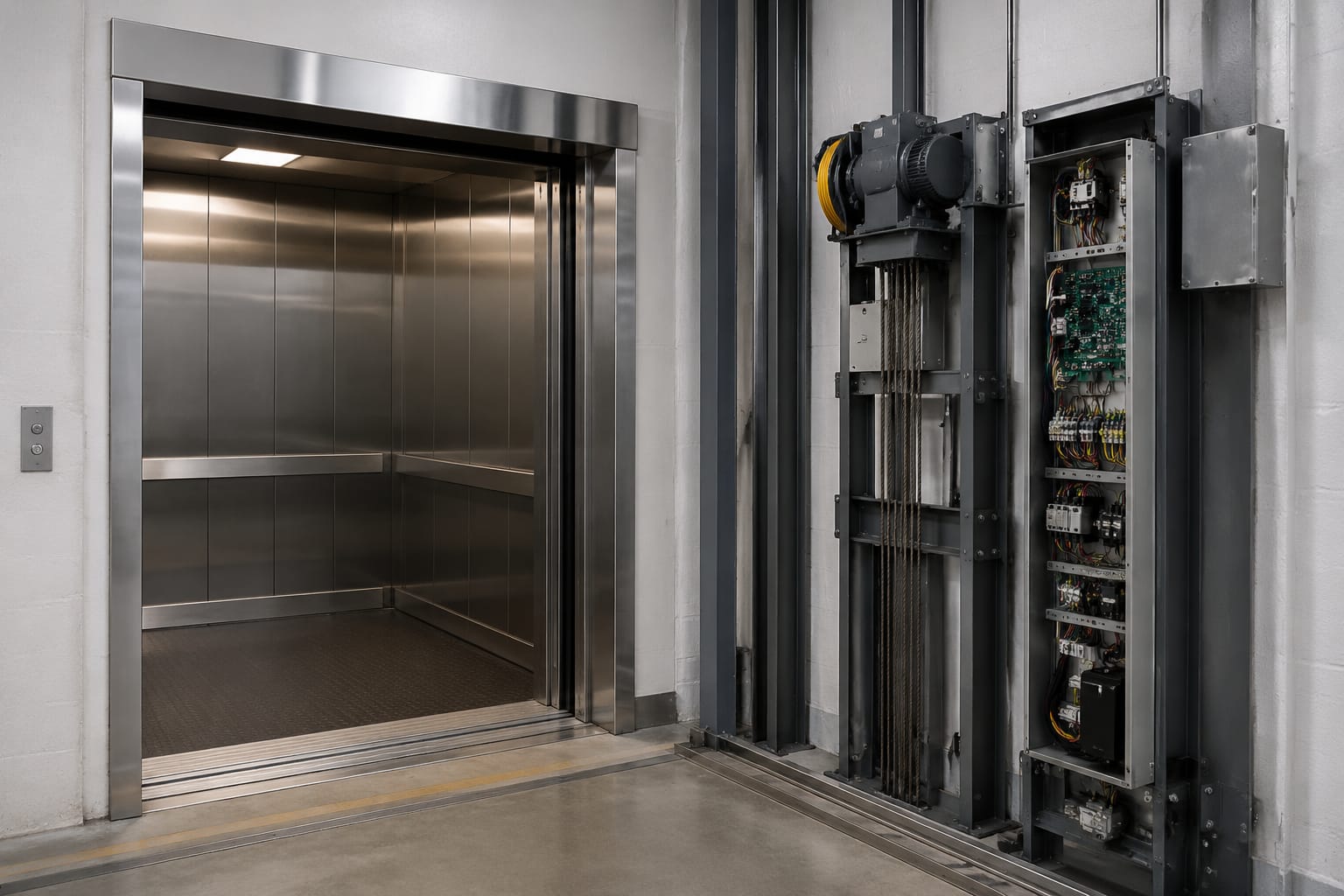
| Component | Primary role | Frequent freight-service concern |
|---|---|---|
| Landing door lock or interlock | Secures the landing door and provides a safety circuit function | Misalignment caused by panel movement, impact, or loose mounting |
| Lock hook or keeper | Provides the mechanical engagement point | Worn engagement surfaces, bending, or incorrect clearance |
| Contact switch | Reports lock or door condition to the controller circuit | Oxidation, loose terminals, damaged actuators, intermittent continuity |
| Lock cylinder | Allows authorized keyed access where installed | Physical damage, incorrect keying, or an incompatible mounting style |
| Roller or linkage within the lock assembly | Moves the mechanism into proper engagement | Wear, contamination, binding, or insufficient travel |
For an example of a replacement category used on elevator entrance systems, review the product details for a freight elevator door lock contact switch. The installed assembly’s specifications still need to be matched before purchasing.
Why Lock Alignment Matters
A functioning contact cannot compensate for poor mechanical engagement. If a lock hook does not reach the required position, the contact may not make reliably, or the system may produce intermittent door-zone or safety-circuit faults. Conversely, forcing an improperly aligned door to close can accelerate wear on the hook, keeper, rollers, and switch actuator.
Before replacing a failed lock component, check:
- Door panel travel and final closed position.
- Hanger and guide condition.
- Lock body mounting security.
- Hook or keeper wear and alignment.
- Electrical terminal condition and wiring strain relief.
- Whether the fault occurs at one landing or across several entrances.
Some older entrances use arrangements where the hook is supplied separately from the lock body. In those cases, verify its mounting style, profile, dimensions, and corresponding lock mechanism. A hall door lock hook is only suitable when it matches the existing entrance design and operating geometry.
Rollers, Guides, and Closing Components
Rollers, gibs, guides, closers, and related motion components determine whether a freight door travels consistently into a lockable closed position. These parts are comparatively small, but their condition can directly affect larger and more expensive components.
Hanger Rollers and Bottom Guides
Hanger rollers carry the door panel along the track. Bottom guides, commonly called gibs in some door systems, keep the panel located in the sill. Worn rollers can develop flat spots, bearing looseness, noise, or uneven travel. Worn or broken guides can allow the bottom of a panel to wander, causing rubbing, poor clearances, and lock misalignment.
Confirm the following before sourcing:
- Roller diameter, width, bore, bearing arrangement, and mounting method
- Whether the roller is fixed, eccentric-adjustable, or part of a hanger assembly
- Guide material, profile, and fastener pattern
- Sill groove width and panel bottom geometry
- Left- or right-hand orientation where applicable
- Number of rollers or guides required per panel
Replacing only one roller in a heavily worn assembly can leave uneven movement. Evaluate the pair or full set on the affected panel, particularly when the door has visible tilt, inconsistent gap, or rough track travel.
Closing Devices and Linkages
Depending on the entrance type, closing force may come from a door operator, a closer, a weight-and-chain arrangement, spring components, or linkage hardware. In freight service, closing parts may be affected by repeated manual interference, load contact, contamination, and inadequate adjustment.
A door that closes too slowly may remain outside the required lock engagement position. A door that closes too aggressively can cause impact wear and create unsafe operational behavior. Do not increase closing force simply to overcome mechanical binding. Clean and inspect the track, sill, guides, rollers, and lock geometry first.
Replacement selection should include the device stroke, mounting centers, spring or force characteristics where specified, linkage orientation, and any manufacturer markings. The correct component must support the existing entrance’s intended closing behavior.
Controls, Buttons, and Limit Switches
Freight elevator controls are often selected for durable operation, but heavy use can still damage buttons, switches, wiring, and enclosure components. The appropriate replacement depends on the control system and the component’s role in the circuit.
Car operating panels may include floor buttons, door open and close buttons, emergency controls, key switches, indicators, and alarm-related devices. At entrances and within the door operator, limit switches and position switches help monitor travel, door position, and operating sequence.
Buttons and Car Operating Fixtures
When replacing a button or switch, document:
- Manufacturer and part number
- Button diameter and mounting cutout
- Legend, illumination type, voltage, and connector style
- Momentary or maintained action
- Normally open, normally closed, or changeover contact arrangement
- Panel thickness and mounting hardware
- Whether the item communicates with a proprietary fixture or serial system
A button with the same face diameter may have different electrical contacts, illumination requirements, or connector pinout. Avoid mixing unverified components into a control panel, especially where indicators or electronic fixture boards are involved.
Limit and Position Switches
Limit switches used on door equipment and freight elevator mechanisms should be matched by actuator style, contact configuration, electrical rating, mounting pattern, travel range, and environment. A roller lever, plunger, or other actuator needs to engage at the correct point in the mechanism’s motion.
An intermittent limit switch fault may actually be caused by a loose cam, worn roller, bent bracket, or changing door travel. Inspect the actuating hardware and verify repeatable switch operation before concluding that the switch alone has failed.
For keyed landing hardware, match the housing, cylinder profile, mounting method, and intended application rather than choosing by appearance. A hall door triangular lock cylinder should be verified against the existing lock assembly and access-control requirements.
Wear Caused by Loading Operations
Loading operations create wear patterns that are less common in passenger-only service. A pallet corner may strike a door edge; a cart wheel may scrape a sill; a load may contact a closed or partially closed panel; and debris from shipping materials may accumulate in door tracks and sill grooves.
Typical loading-related damage includes:
- Dented or bowed door skins
- Bent bottom guides or damaged gibs
- Deformed sill grooves and debris-packed thresholds
- Loose lock mounting screws or shifted lock bodies
- Worn hooks and keepers from misaligned closure
- Frayed wiring or loose connections near moving equipment
- Broken button caps or damaged car operating panels
- Repeated nuisance shutdowns from contacts that cannot make consistently
The operating procedure matters as much as the replacement part. Loads should clear the doorway before door operation, and staff should avoid pushing carts against panels to hold them open. When a recurring damage pattern is visible at one landing, inspect the surrounding loading route, sill condition, floor transition, and clearance for the typical equipment entering the car.
Also consider whether an impact has affected hidden hardware. A door can appear nearly normal after contact while its guide, hanger adjustment, pickup mechanism, or lock alignment has shifted enough to cause future faults.
Information Needed for Replacement
The more precise the identification package, the lower the risk of receiving an unsuitable part. This is particularly important for multi-brand freight elevator parts, where similar names can describe non-interchangeable components.
Provide the following information to a sourcing team, distributor, or supplier:
- Elevator manufacturer, controller manufacturer, and door operator manufacturer
- Equipment model, serial number, and installation or modernization information when available
- Existing part number and all markings on the component
- Clear photos from the front, rear, side, and installed location
- Overall dimensions and key mounting-hole center distances
- Door arrangement, panel count, opening type, and landing or car location
- Electrical label details, contact arrangement, voltage, and connector type for electrical parts
- Handing or orientation, if applicable
- Description of the failure and whether it occurs at one landing or multiple locations
- Quantity required and whether related wear parts should be replaced together
Photos should include a scale reference and surrounding mounting area. A close-up of a label is useful, but a wider image often reveals the hanger, lock hook, track, or wiring arrangement needed to confirm compatibility.
Do not discard the failed component before identification is complete unless site safety requires its removal. The original part may contain markings, dimensions, or mounting details that are not recorded elsewhere.
Kelevator supplies multi-brand elevator spare parts for B2B importers, distributors, maintenance contractors, modernization companies, and OEM buyers. For a commercial inquiry, a complete identification package supports a more meaningful compatibility review than a generic request for a “freight door lock” or “elevator roller.”
Inspection and Maintenance Planning
A practical maintenance plan for freight entrances prioritizes condition, repeatability, and early correction of alignment issues. Inspection intervals should reflect traffic, environment, building use, equipment age, and the maintenance program governing the site.
During routine service, qualified personnel can inspect:
- Door panel condition, fasteners, and clearance
- Track cleanliness and hanger roller operation
- Sill grooves, guides, and evidence of rubbing
- Lock body security, hook engagement, and contact operation
- Linkages, closers, and closing consistency
- Limit switch actuation and bracket condition
- Button condition, panel integrity, and visible wiring damage
- Signs that loading equipment is contacting entrance components
Documenting recurring defects by landing is valuable. It distinguishes a one-time damaged part from a systemic issue such as a damaged sill, building settlement, unsuitable cart path, or door adjustment problem. Trend records also help maintenance teams stock sensible high-wear items without guessing at every replacement.
Safety devices, locks, interlocks, and control circuits require qualified evaluation and testing after repair. Do not bypass contacts, defeat a lock, alter safety-circuit wiring, or use makeshift shims to keep a freight elevator in service. Those actions can conceal the underlying condition and create a serious safety risk.
For the next replacement order, begin with the part number and complete installed-assembly details, then compare the mechanical and electrical features before approving a substitute. This approach helps buyers source freight elevator parts that fit the actual entrance and control system rather than merely resembling the failed component.
Related product references
For practical catalog examples related to this topic, review freight elevator door lock contact switch lift parts elevator accessories, Hall door lock hook lift accessories elevator spare parts, and Hall door triangular lock cylinder lift accessories elevator spare parts. Confirm the exact model, dimensions, ratings, and connectors before ordering.