
How switching power boards support reliable elevator electronics
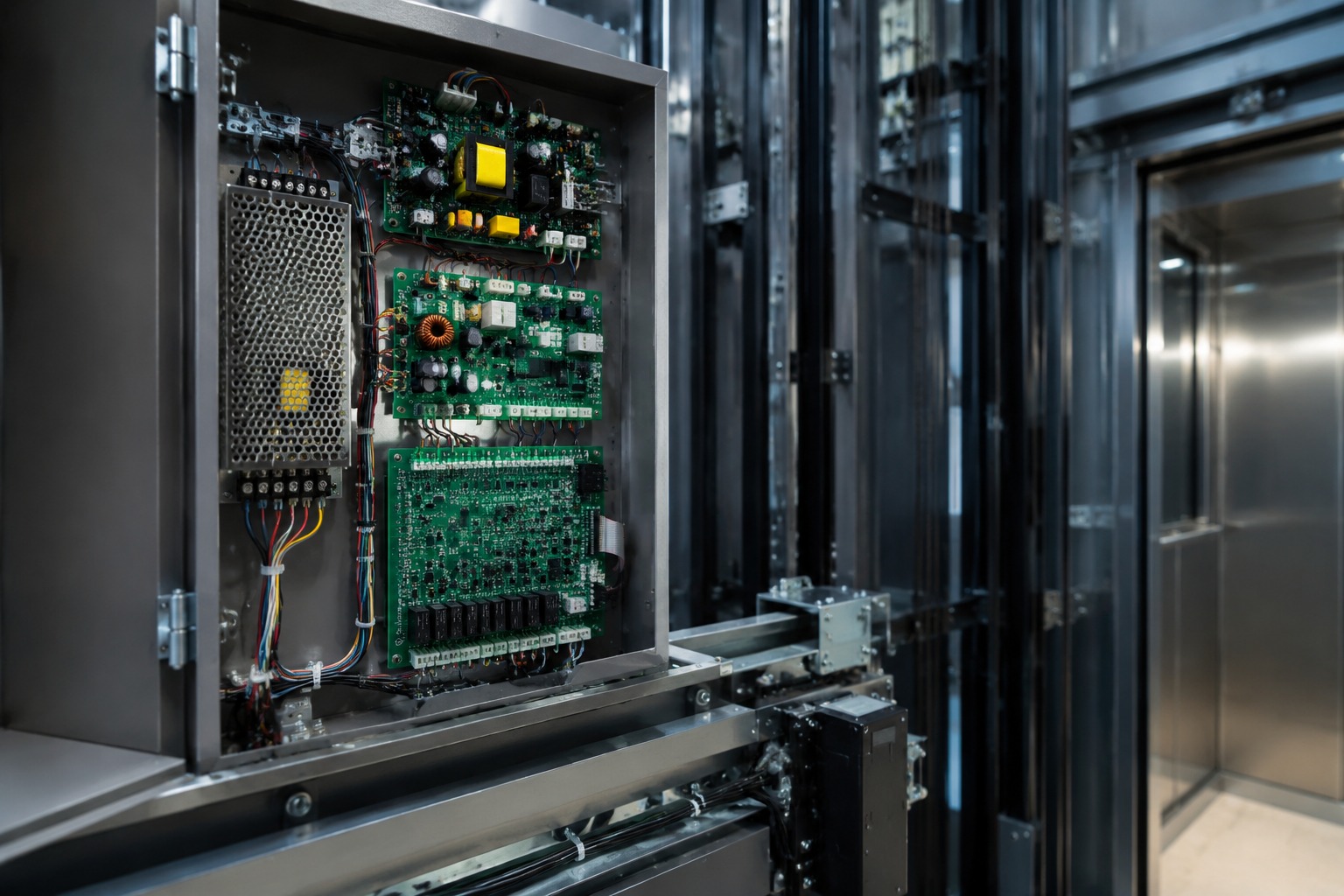
Switching power supply boards are the quiet backbone of modern elevator electronics. In a typical lift system, they convert incoming electrical power into the stable DC voltages needed by control circuits, door operators, communication modules, displays, and safety-related electronic assemblies. When these boards perform well, elevators start correctly, level smoothly, keep doors responsive, and maintain dependable signaling between subsystems. When they weaken or fail, the symptoms often appear as nuisance faults, unstable controller behavior, intermittent shutdowns, or repeated callbacks.
For maintenance companies, distributors, building owners, and modernization contractors in the United States, understanding power board selection is practical, not theoretical. A replacement board must match voltage output, connector layout, operating load, and application environment. That is especially important when sourcing boards for older installations in cities such as New York, Chicago, Los Angeles, Houston, Miami, Seattle, and Atlanta, where mixed portfolios often include legacy systems, partial modernizations, and site-specific wiring conditions.
Direct answer: switching power boards support reliable elevator electronics by regulating voltage, isolating sensitive circuits, reducing heat compared with older linear supplies, and providing consistent output under changing load conditions. In elevator service work, the best results come from accurate model matching, output verification under load, careful shipping protection, and a clear installation testing workflow. If you are evaluating a replacement, product-specific options such as the AVR HGE MCA switching power supply board, general elevator switching power supply boards, and the 24V/51V AVR power board should be reviewed against the installed control system, field voltage readings, and connector details before purchase.
In the U.S. market, the demand for reliable elevator power boards is rising because aging building stock, labor costs, and downtime sensitivity all push service teams to reduce repeat visits. In busy commercial hubs near the Port of Los Angeles, Port of Long Beach, Port of Houston, the Port of Savannah, and the Port of New York and New Jersey, supply chain timing also matters. Fast model confirmation, stable quality inspection, and packaging that protects sensitive electronic boards during domestic and international transit can make the difference between a one-trip repair and another lost service window.
Where switching power boards are used
Switching power boards are used across several elevator subsystems, not only in the main controller cabinet. Their role is to provide clean, regulated power for electronic boards that cannot tolerate unstable input. In traction and hydraulic elevators alike, they appear in controller sections, communication assemblies, display and signal circuits, car operating panels, machine-room cabinets, door operator systems, and in some cases peripheral monitoring devices connected to building management networks.
In controller applications, the board often supplies stable DC voltage to microprocessor-based logic. A fluctuation here can trigger boot issues, memory errors, communication loss, or random resets. In door operator applications, the switching board supports command and feedback electronics that need predictable power to manage opening speed, obstruction detection, and door zone timing. In COP and LOP assemblies, it may support display illumination, button boards, and signal distribution. Intercom modules, light curtains, and some sensor packages may also rely on related regulated power stages.
These boards are especially valuable in modernization projects where old relay logic has been partially replaced with newer control electronics. Many U.S. buildings in downtown Boston, Philadelphia, San Francisco, and Dallas operate mixed-generation systems. In those environments, a dependable switching power board helps bridge older electrical infrastructure and newer electronic control demands.
| Application area | Main function | Typical voltage role | Service symptom if weak | Criticality | Field note |
|---|---|---|---|---|---|
| Main controller cabinet | Powers logic and signal boards | Stable DC for CPU/control | Random resets | Very high | Always verify under load |
| Door operator control | Supports door electronics | Regulated low-voltage output | Door hesitation | High | Check connector heat marks |
| COP panel assemblies | Buttons, indicators, displays | Signal and display voltage | Dim indicators | Medium | Inspect for moisture exposure |
| LOP and hall signals | Hall call logic support | Regulated DC feed | Intermittent hall calls | Medium | Check harness fit |
| Intercom/communication modules | Emergency communications | Noise-controlled output | Audio instability | High | Inspect grounding path |
| Peripheral sensor circuits | Supports external devices | Device-specific DC output | False sensor alarms | Medium | Confirm current demand |
The table above shows why power board faults can look unrelated at first. A door issue, communication alarm, or controller reboot may all trace back to an unstable supply stage. That is why experienced technicians in the United States often include power quality checks early in troubleshooting, especially in high-cycle buildings such as hotels, hospitals, airports, and residential towers.
The market growth trend shown above reflects realistic pressure in the United States: more aging installations, more modernization work, and a continued preference for board-level replacement when it helps shorten downtime and preserve compatibility.
AVR HGE MCA board compatibility
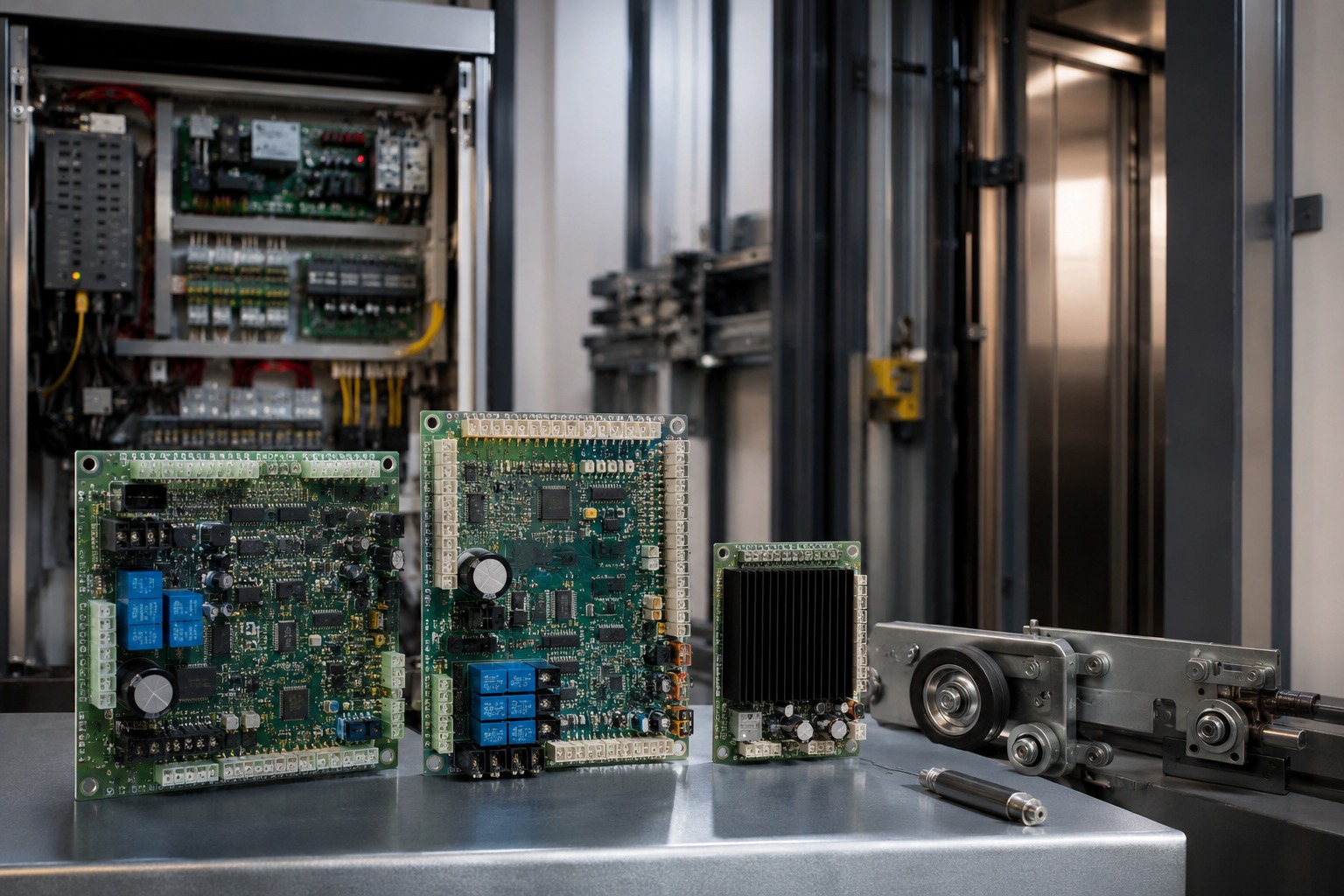
Compatibility is the first checkpoint when replacing an elevator switching power board. With AVR HGE MCA boards and similar assemblies, technicians should not rely on appearance alone. A board can look nearly identical while differing in output voltage, connector pin assignment, heat sink design, mounting spacing, firmware interaction expectations, or input range. Proper matching requires part number review, application review, and field confirmation.
For compatibility review, start with the board label, machine or controller model reference, and any revision marking on the installed unit. Next, compare the required output rails, including nominal voltage and acceptable tolerance. Then check terminal orientation, connector count, and any harness indexing. If the board interfaces with a specific control architecture used in certain Hitachi elevator systems, the exact AVR HGE MCA designation matters because related variants may be intended for different cabinets or peripheral functions.
In practical sourcing, a supplier should ask for clear photos of the front, back, labels, connector areas, and mounting side. They may also ask for measured output voltages, observed fault symptoms, and the elevator brand or controller family. This is not a delay; it is part of reducing the risk of shipping a part that does not match. For service teams based in regional markets such as Phoenix, Charlotte, Minneapolis, Denver, and Nashville, that extra confirmation can save a second trip and avoid unnecessary return handling.
| Checkpoint | Why it matters | How to verify | Acceptable result | Risk if ignored | Recommended action |
|---|---|---|---|---|---|
| Exact part number | Controls direct replacement match | Read label and revision | Same or approved equivalent | Wrong board family | Send high-resolution photo |
| Output voltage set | Must match system demand | Compare nameplate and meter readings | Within specified range | Controller instability | Confirm all output rails |
| Connector layout | Prevents miswiring | Match pin count and orientation | Physical alignment confirmed | Harness mismatch | Cross-check images carefully |
| Mounting dimensions | Cabinet fit and cooling | Measure hole spacing | Same mounting pattern | Unsafe installation | Verify before shipping |
| Input range | Must suit site conditions | Check board spec and supply source | Compatible with installed feed | Premature failure | Confirm line condition |
| Application role | Same board may serve different functions | Review controller schematic if available | Matched by use case | Partial functionality loss | Share cabinet context |
The explanation behind this checklist is simple: elevator electronics are application-specific. A good supplier supports compatibility through technical review rather than guesswork. In our own workflow, technological capability means verifying model data from labels, photos, connector details, and output information before shipment, especially for hard-to-source elevator control and power components.
Voltage output and load checks
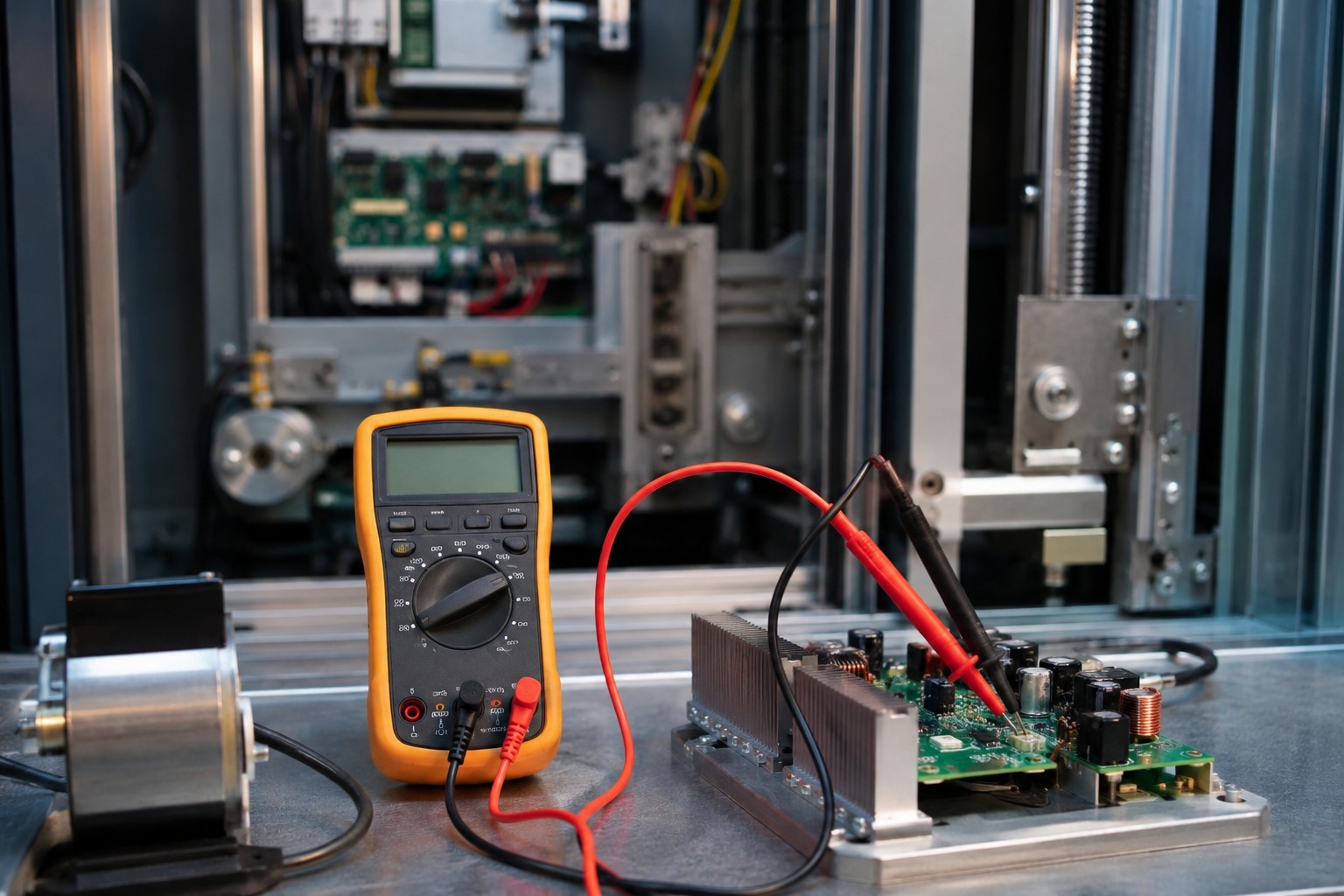
Voltage output checks should never be limited to no-load readings. A switching power board may show acceptable voltage with disconnected loads but drop or ripple excessively under real operating demand. For elevator service, measure both nominal output and stability during active conditions such as startup, door movement, display illumination, or communication module operation. If the system allows, compare readings at rest and during peak draw periods.
Start by confirming safe lockout and following site procedures. Inspect the board visually for burned areas, swollen capacitors, cracked solder joints, darkened connectors, or signs of moisture contamination. Then restore power for testing if site rules and safe procedure permit. Measure input supply first. If the incoming supply is unstable, the problem may not be the board. Next, test each output rail with a calibrated meter. If available, use an oscilloscope to inspect ripple, especially where intermittent faults are difficult to reproduce.
Load checks are equally important. If the board is rated correctly but a downstream device is drawing excessive current, the new board may fail again. Disconnecting branch loads one at a time can help isolate abnormal draw, but this should only be done according to the controller design and site safety practice. In modern service operations, replacing a board without understanding downstream load is a common reason for repeat failure.
| Step | Test point | What to observe | Normal indication | Warning sign | Next action |
|---|---|---|---|---|---|
| 1 | Visual inspection | Heat marks, capacitor shape, corrosion | Clean and intact | Burning or leakage | Do not energize until reviewed |
| 2 | Input voltage | Line stability and correct range | Stable within spec | Over/under voltage | Check upstream source |
| 3 | No-load output | Nominal DC value | Within tolerance | Low or drifting output | Suspect board regulation |
| 4 | Loaded output | Voltage during operation | Minimal drop | Sag under demand | Check board and downstream load |
| 5 | Ripple/noise | Waveform quality | Controlled ripple | Excess ripple spikes | Inspect capacitors and switching stage |
| 6 | Thermal behavior | Temperature rise over time | Stable operating temperature | Hot spots or odor | Review ventilation and load |
This testing process is valuable in every market, but it is particularly relevant in the United States where site conditions vary widely. Coastal properties in Miami or Seattle may face humidity concerns. High-rise buildings in Manhattan or Chicago may have heavy daily cycles. Sun-exposed machine rooms in Phoenix or Las Vegas can increase thermal stress. The board must be evaluated in the real operating environment, not only on paper.
Common power board failure signs
Power board failure is not always dramatic. Some boards fail suddenly with a visible blown component, while others degrade gradually. Common signs include intermittent controller resets, dim or flickering displays, unstable door logic, unusual buzzing, error codes linked to communication loss, repeated fuse events, or excessive heat around connectors and regulators. In some cases, passengers notice nuisance behavior before maintenance logs show a clear pattern.
Technicians should also watch for subtle clues: a board that works when cold but fails after warm-up, a cabinet smell resembling overheated electronics, or oxidation on connector pins that causes resistance and local heating. Capacitor aging remains one of the most common long-term issues in switching power boards, especially in units exposed to heat over many years.
Because elevator downtime is expensive, service teams often benefit from replacing suspect boards proactively when testing shows unstable output trends, even before total failure occurs. This is especially true in hospitals, data centers, major hotels, and premium residential buildings where interruptions affect operations and tenant satisfaction.
| Observed sign | Possible cause | Immediate risk | Typical field response | Replacement urgency | Extra note |
|---|---|---|---|---|---|
| Intermittent controller reboot | Output instability or ripple | Service interruption | Measure loaded voltage | High | Check downstream current too |
| Burned connector area | Heat from resistance or overload | Escalating damage | Inspect harness and socket | High | Connector replacement may also be needed |
| Swollen capacitor | Aging or heat stress | Sudden failure risk | Replace board | High | Common in older cabinets |
| Low output under load | Weak regulation stage | Unreliable operation | Test under active cycle | Medium to high | Do not rely on no-load test only |
| Buzzing or electrical odor | Overheating or component stress | Impending shutdown | De-energize and inspect | High | Ventilation may be part of issue |
| Intermittent signal faults | Noise or voltage fluctuation | Nuisance callbacks | Check ripple and ground | Medium | Often mistaken for logic board failure |
This industry demand comparison highlights why hospitals, office towers, and large residential properties often maintain tighter spare-part planning. Their service exposure and uptime expectations are high, so an unstable power board can quickly become a priority replacement item.
How to protect boards during shipping
Shipping protection matters because electronic elevator boards can be damaged by impact, electrostatic discharge, vibration, moisture, and poor carton support. A board that leaves the warehouse in good condition can still arrive with cracked solder joints, bent components, or damaged connectors if packaging is weak. For U.S. customers receiving parts through major hubs like Los Angeles, Houston, Savannah, Newark, Memphis, or Louisville, packages may pass through multiple transfer points before final delivery. That increases the need for proper protection.
At minimum, a switching power board should be placed in anti-static protection, secured against movement, cushioned with shock-absorbing material, and packed in a rigid outer carton sized to prevent collapse. Heavy boards should not be allowed to float loose inside oversized boxes. Connector faces and heat sink edges should be protected from direct impact. Clear labeling for fragile electronics is useful, but physical packaging quality matters more than labels alone.
Manufacturing capability in this context includes more than sourcing the board itself. It also means consistent incoming inspection, traceable packing procedures, and packaging methods designed for elevator electronics. For service contractors who order mixed shipments of control boards, sensors, buttons, and door components, a supplier’s packing discipline can reduce arrival damage and speed up receiving checks.
| Protection method | Purpose | Recommended use | Risk reduced | Suitable for domestic U.S. shipping | Suitable for export transit |
|---|---|---|---|---|---|
| Anti-static bag | Controls electrostatic exposure | Every board shipment | ESD damage | Yes | Yes |
| Foam corner support | Absorbs shock | Boards with exposed edges | Impact cracks | Yes | Yes |
| Connector guard | Prevents bent pins | Multi-pin assemblies | Connector damage | Yes | Yes |
| Rigid inner carton | Limits flexing | Single-board shipments | Board warp | Yes | Yes |
| Outer double-wall carton | Improves crush resistance | Long-distance transit | Compression damage | Recommended | Recommended |
| Moisture barrier pack | Helps in humid routes | Coastal or seasonal shipping | Corrosion risk | Sometimes | Often |
The explanation here is straightforward: protective packaging is part of product reliability. A quality-controlled board still needs careful handling to arrive ready for installation. That matters for urgent service calls in every part of the United States, from dense urban cores to remote regional sites.
Installation testing workflow
An organized installation testing workflow reduces commissioning errors and protects the replacement board from preventable damage. The process should begin before the new board is mounted. Confirm the original failure mode, inspect the cabinet for contamination or heat stress, verify that downstream loads are not shorted, and compare the new board against the removed unit. Check labels, output markings, terminal locations, and mounting points before energizing.
After installation, start with continuity and wiring confirmation. Make sure harnesses are fully seated and no connector is forced. Reapply power and verify input voltage. Measure output rails at startup, then during normal idle operation, then again during active elevator functions such as door movement and calls. Observe whether the controller boots normally and whether any stored faults return. If the board powers communication, displays, or monitoring circuits, test those functions as well.
Short-term burn-in or observation is a good practice where service windows allow it. Many callbacks can be avoided by monitoring thermal behavior for an adequate period after installation. If cabinet airflow is poor, consider whether dust, blocked vents, or nearby heat-generating components contributed to the original failure. Simply replacing the board without addressing cabinet conditions may shorten service life.
The trend shift above reflects a practical reality in the U.S. market: service teams increasingly prefer pre-verified compatibility and documented inspection over trial-and-error procurement. This supports faster installation, fewer returns, and better field confidence.
Service capability becomes important here. Responsive support before and after shipment helps maintenance teams confirm fit, output expectations, and packaging condition. That is particularly useful for customers managing multi-site portfolios across states, where one service department may be supporting properties in several cities with different elevator ages and usage patterns.
Stocking power boards for service teams
Stocking strategy depends on fleet mix, service geography, and downtime tolerance. A national contractor with routes in New York, New Jersey, Texas, California, and Florida will likely stock differently from a regional maintenance firm serving only a few cities. The key question is not whether to stock power boards, but which ones to stock, in what quantity, and based on what failure history.
High-priority stock candidates usually include boards tied to common controller platforms, frequent failure points, and buildings with heavy traffic. Service managers should review callback records, building criticality, lead times, and compatibility overlap. Boards used across multiple elevator models may deserve higher stocking priority than highly specialized units. At the same time, obsolete or low-turn items may be better sourced on-demand if a supplier can confirm compatibility quickly.
For many U.S. service teams, the most effective stocking model is a layered one: van stock for fast-moving boards, branch stock for medium-volume items, and centralized stock for slower but mission-critical components. This approach works well for busy metro regions such as New York City, Chicago, Los Angeles, Atlanta, and Washington, D.C., where travel time itself affects service cost.
| Stock level | Typical item type | Best use case | Quantity logic | Review frequency | Operational benefit |
|---|---|---|---|---|---|
| Technician van stock | Fast-moving common boards | Emergency callbacks | 1 to 2 per high-use family | Monthly | Reduces first-response delay |
| Branch inventory | Regional controller matches | Multi-building portfolios | Based on installed base | Monthly to quarterly | Supports same-day dispatch |
| Central warehouse | Lower-turn critical boards | Nationwide support | Lead-time driven | Quarterly | Balances cost and coverage |
| Project stock | Modernization-specific boards | Planned retrofit jobs | Per contract requirement | Per project milestone | Improves schedule control |
| Consignment or reserved stock | Customer-specific legacy items | Hospitals and premium sites | Agreed service level | Quarterly | Protects uptime at key sites |
| Non-stock source-on-demand | Rare variants | Special applications | Order after verification | As needed | Avoids dead inventory |
When selecting a supplier, compare more than price. Lead time, model-matching accuracy, incoming quality checks, protective packaging, and communication quality all affect the real cost of a replacement. A lower-priced board that arrives damaged or mismatched costs more once labor, delay, and repeat service are included.
The comparison chart above shows the categories that matter most when evaluating an elevator parts source. In our own role as a professional supplier to maintenance companies, distributors, building owners, and modernization contractors, the focus is on reliable sourcing, careful model matching, stable quality inspection, protected packaging, and responsive support so customers can reduce downtime and order with greater confidence.
FAQ about switching power supply boards
How do I know whether a switching power board is the real cause of the fault?
Start with input voltage verification, then test output rails under load. If voltage sags, fluctuates, or shows excessive ripple during operation, the board is a strong suspect. Also inspect for visual signs such as heat marks, capacitor swelling, or damaged connectors. Always rule out downstream overcurrent conditions before installing a replacement.
Can a board with the same shape be used as a substitute?
No. Physical similarity is not enough. Part number, output voltages, connector layout, mounting dimensions, and application role must match. That is why photo review and label confirmation are important when sourcing AVR HGE MCA or related elevator power boards.
What outputs are commonly checked on elevator power boards?
That depends on the application, but regulated DC outputs such as 24V and other controller-specific rails are common. In some systems, multiple outputs serve logic, communication, and display functions. Confirm all rails against the installed board or system requirement, not only one voltage point.
Why do some boards fail again soon after replacement?
Repeat failure often points to unresolved downstream load issues, unstable incoming power, poor ventilation, contamination, or incorrect board matching. A replacement should be part of a larger diagnostic process, not the entire process.
Is protective packaging really that important for domestic shipping in the United States?
Yes. Even short domestic routes can include multiple handling points. Sensitive elevator electronics should be packed in anti-static and impact-protective materials, with secure connector protection and rigid carton support.
What information should I send when requesting a quote?
Send the board part number, elevator brand, controller model if known, clear photos of both sides, connector close-ups, mounting view, voltage readings if available, and a short description of the fault. This speeds compatibility review and improves quotation accuracy.
Should service teams keep these boards in stock?
For common controller families and high-priority customer sites, yes. Stocking strategy should follow installed base, failure history, and lead time risk. For rare models, source-on-demand may be more efficient if your supplier can respond quickly.
What should buyers in the United States look for in 2026?
Three trends stand out for 2026. First, smarter diagnostics and board traceability will support faster troubleshooting and inventory decisions. Second, policy and compliance attention will continue to favor safer, better-documented replacement sourcing and packaging practices. Third, sustainability will become more visible through efficient logistics, reduced repeat shipments, better repair-versus-replace decisions, and longer-lasting compatible parts that reduce waste. In major modernization markets such as New York, Los Angeles, Chicago, and Miami, buyers will increasingly prefer suppliers that combine technical verification with practical service responsiveness.
Buying advice for the United States market
If you are purchasing switching power supply boards for elevators in the United States, the best buying advice is to treat each order as a technical match rather than a generic electronic replacement. Ask for compatibility confirmation, output verification guidance, and packaging details. Consider total cost, including technician time, downtime exposure, and return risk. For recurring needs, build a relationship with a supplier that can support both standardized and hard-to-find models across elevator control boards, power supplies, door components, sensors, and related accessories.
Technology capability matters because accurate matching prevents expensive mistakes. Manufacturing and inspection capability matter because stable quality reduces field failures. Service capability matters because fast answers help maintenance teams keep elevators operating safely and reliably. When those three capabilities work together, sourcing becomes simpler and more predictable for service companies, distributors, building owners, and modernization contractors across the U.S.
Applications and industries served
Switching power boards are used in office buildings, apartment towers, hotels, healthcare facilities, transportation hubs, campuses, retail centers, and industrial properties. Each sector places different demands on the board. Hospitals prioritize uptime and alarm stability. Residential towers prioritize consistent everyday operation. Airports and hotels need fast recovery from faults because traffic is continuous. Industrial sites may challenge electronics with dust, vibration, or temperature variation.
That is why parts sourcing should align with the application environment. A supplier experienced with elevator accessories and control parts can help customers identify suitable replacements, especially when the site includes older equipment or mixed-brand portfolios.
Case-based sourcing approach
Consider a common scenario: a downtown high-rise in Chicago reports intermittent controller resets during morning traffic. Initial symptoms suggest a logic fault, but loaded voltage testing reveals output drop on the existing power board during heavy activity. After compatibility review using photos and labels, a matched replacement is shipped with protective packaging. Installation follows a step-by-step test plan, and the service team also corrects heat buildup in the cabinet. The result is fewer callbacks and restored stability.
In another example, a coastal residential property in Miami experiences intermittent signal problems. The visible issue is corrosion near connectors, traced to environmental exposure in the machine room. Replacing the board alone would not have solved the recurring problem; cleaning, connector review, and moisture control were also necessary. These examples show why field context matters as much as the part number itself.