
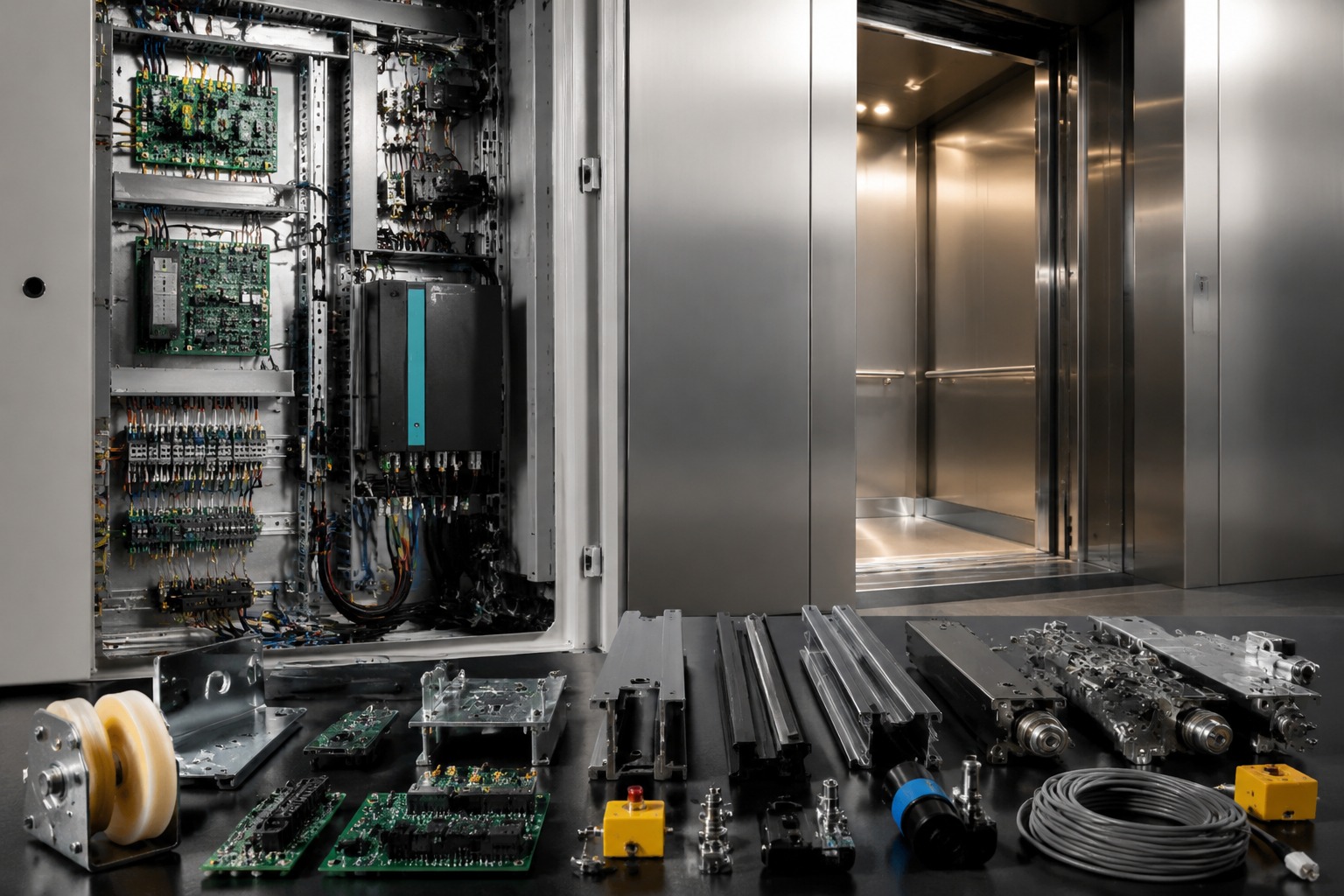
For building owners in the United States, the fastest way to buy the right elevator spare parts is to match the exact elevator brand and model first, focus on the parts that fail most often, confirm part numbers and dimensions with photos, and choose suppliers that can prove testing, packing quality, and delivery performance. That approach reduces repeat orders, avoids unsafe substitutions, and shortens shutdown time when a car is out of service.
Whether you manage a residential tower in New York City, a hotel in Orlando, a hospital in Houston, a warehouse conversion in Chicago, or a mixed-use property near the Port of Los Angeles, elevator uptime is not just a maintenance issue. It affects tenant satisfaction, ADA access, move-ins, inspections, service calls, and operating income. In many U.S. buildings, one wrong replacement board, one mismatched door lock, or one poorly packed sensor can turn a same-day repair into a week of downtime.
This guide is designed for building owners, asset managers, modernization contractors, maintenance companies, and distributors that need dependable elevator components in the U.S. market. It covers practical buying steps, product categories, market conditions, supplier selection, emergency stock planning, and preventive replacement strategy. It also reflects 2026 trends in modernization, sustainability, electronic traceability, and service responsiveness.
Why the U.S. market requires a tighter procurement process
The United States elevator service market is large, fragmented, and regionally uneven. Major metro areas such as New York, Boston, Atlanta, Dallas, Seattle, and San Francisco often face long lead times for older model parts because installed equipment varies by building age, OEM mix, modernization history, and code upgrade cycle. Imported lift accessories may come through Los Angeles, Long Beach, Savannah, Houston, Newark, or Miami, so freight timing, customs documentation, and protective packaging matter more than many buyers expect.
At the same time, building owners are trying to control costs. That means replacement parts are often sourced beyond the original manufacturer, especially for mature systems from Hitachi, Toshiba, KONE, Mitsubishi, and other major brands. Reliable sourcing can absolutely work, but only if compatibility checks are strict and quality documentation is clear.
Common elevator spare part categories in U.S. buildings
Typical procurement demand includes elevator control boards, inverter and frequency converter parts, door operator assemblies, door locks, light curtains, guide shoes, oil cups, sensors, encoders, power supplies, push buttons, car operating panel components, intercom parts, contactors, relays, capacitor elements, and wiring accessories. In older commercial properties, even a small part such as a guide insert or a door contact can be critical because one unavailable item can keep the elevator offline.
The chart above reflects a realistic upward trend in demand for replacement elevator parts in the United States, driven by aging installed equipment, modernization work, labor shortages in field service, and the need for faster repair turnarounds. By 2026, many buyers are expected to keep more structured spare inventories rather than relying entirely on emergency sourcing.
Begin with the elevator brand and exact model
The first rule of reliable elevator spare parts procurement is simple: do not start with a generic description such as 鈥渄oor board,鈥?鈥渟ensor,鈥?or 鈥渂utton.鈥?Start with the elevator brand, exact model, controller type, drive type, door operator model, and as much field data as you can collect from the job site. In U.S. buildings, the same property may contain multiple elevators installed in different phases, modernized by different contractors, or repaired over time with different compatible parts. Assuming that two cars in the same bank use the same component is a common and expensive mistake.
Ask your technician, property engineer, or service provider to gather the machine room and car-top information before requesting a quote. Good suppliers can then narrow compatibility quickly and reduce the risk of sending a non-matching part. If the part is electronic, request photos of labels, terminals, connectors, dip switch areas, and firmware markings. If it is mechanical, collect dimensions and mounting positions.
| Item to confirm | Why it matters | Where to find it | Typical U.S. issue if missing | Priority | Recommended evidence |
|---|---|---|---|---|---|
| Elevator brand | Filters compatible product families | Nameplate, controller cabinet | Supplier quotes a look-alike part | Critical | Photo of nameplate |
| Model or series | Distinguishes versions within the same brand | Controller label, service manual | Wrong board revision shipped | Critical | Close-up label image |
| Part number | Best direct matching reference | Old part sticker or packaging | Replacement does not fit connectors | Critical | Readable part sticker photo |
| Controller type | Affects board and drive compatibility | Machine room panel | Programming mismatch | High | Controller interior photo |
| Door operator model | Needed for locks, rollers, boards, sensors | Car top, landing door mechanism | Door parts ordered by assumption | High | Photo of operator and tags |
| Voltage and coil rating | Essential for electrical safety | Label on contactor, relay, supply | Part burns out or will not actuate | Critical | Voltage label photo |
| Mounting dimensions | Confirms physical fit | Measure old part on site | Installers cannot mount replacement | High | Photo with ruler or caliper |
This table shows why identification work upfront is cheaper than emergency troubleshooting later. In practice, one missing detail often leads to a chain reaction: delayed quote, return freight, extra technician time, tenant complaints, and reinspection scheduling.
Direct answer for building owners
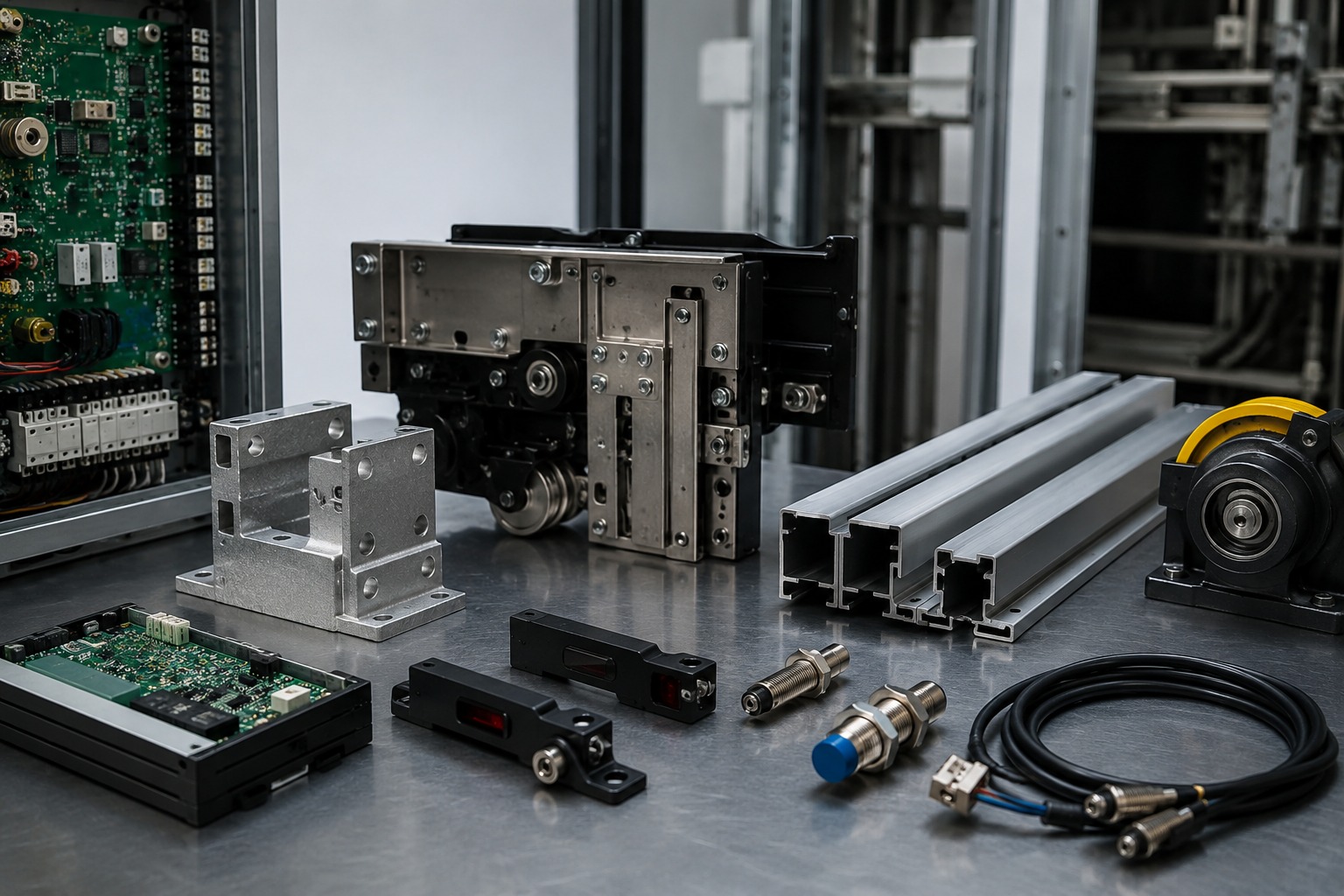
If you own or manage property but do not personally handle elevator maintenance, the safest process is to require every purchase request to include six items: brand, model, part number, clear photos, dimensions, and urgency level. That rule works for high-rise residential buildings in Manhattan, senior living communities in Phoenix, and office towers in downtown Dallas alike.
Product types that usually require strict model matching
Electronic boards, inverters, encoders, weighing devices, power supplies, and communication parts generally need exact or verified-compatible matching. For example, a elevator weighing device board may look similar across versions but use different connectors, thresholds, or communication logic. The same is true for drive-related components and specialty safety inputs.
Focus first on parts with the highest failure rates
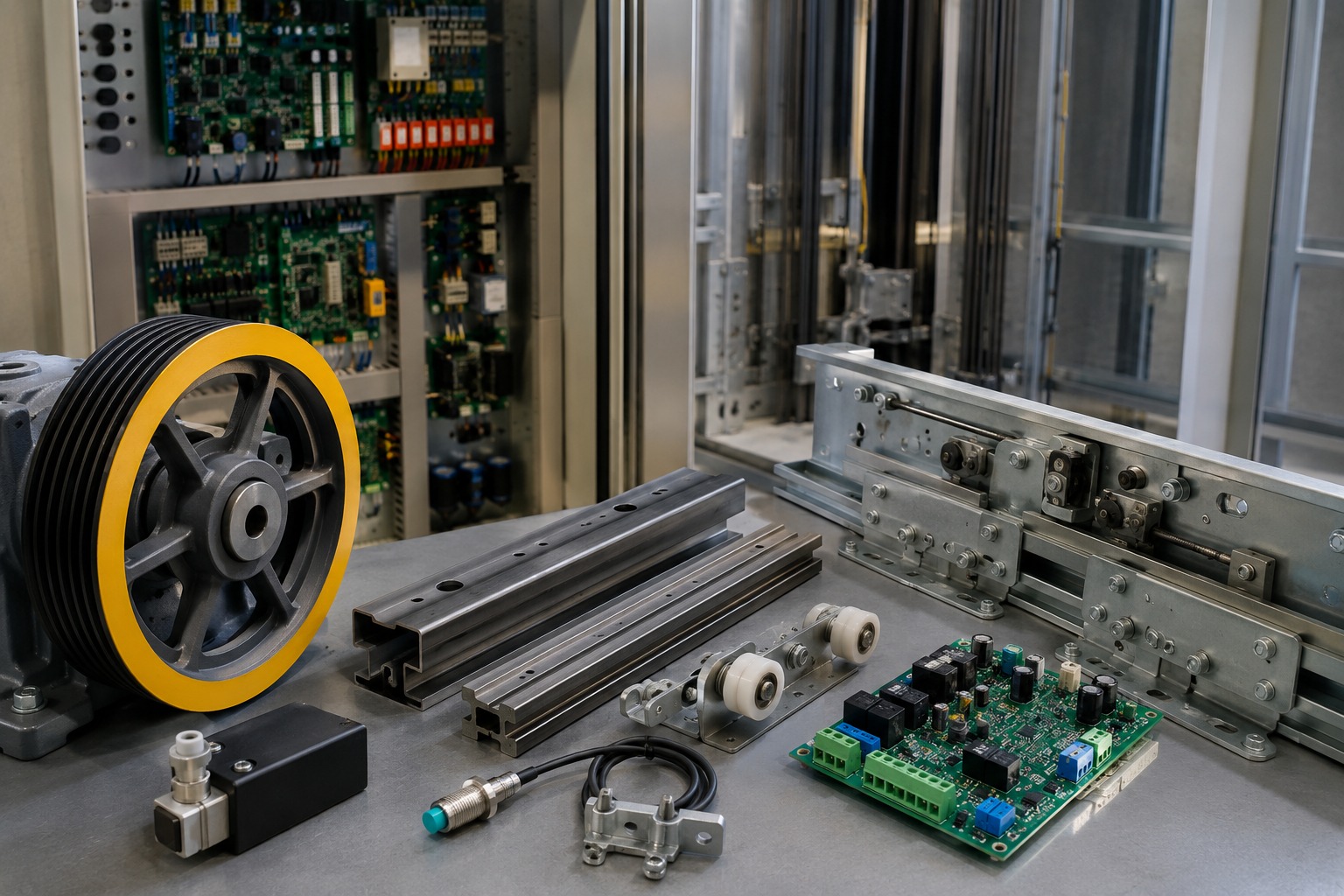
Not every item deserves the same procurement attention. The smartest spare parts strategy prioritizes high-failure and high-downtime components first. These are the parts most likely to create service interruptions and emergency calls. In many U.S. buildings, door-related issues account for a large share of elevator shutdowns, followed by electronic failures caused by age, heat, dust, voltage instability, and normal wear.
For building owners trying to control budgets, this is where cost and reliability should be balanced carefully. Buying only by lowest price often works poorly for failure-prone items, because repeat replacement costs more than one well-verified purchase.
| Part category | Typical failure pattern | Impact on elevator service | Procurement priority | Stock recommendation | Notes for U.S. buyers |
|---|---|---|---|---|---|
| Door locks | Wear, misalignment, contact fatigue | Frequent shutdown or no-run condition | Very high | Keep local safety stock | Critical for busy residential and hospital sites |
| Door operator boards | Heat, power fluctuation, age | Doors fail to open or close correctly | Very high | Stock for older systems | Verify software or revision level |
| Light curtains | Cable damage, sensor faults | Nuisance reversals, door faults | High | One per active model | Common in public-use buildings |
| Contactors and relays | Coil wear, contact pitting | Intermittent operation or failure to start | High | Maintain small stock | Always verify coil voltage |
| Capacitors | Aging, heat stress, bulging | Drive instability or board malfunction | High | Useful for aging equipment | Storage conditions matter |
| Sensors and encoders | Dust, cable issues, wear | Leveling or positioning faults | Medium to high | Stock for critical cars | Request connector photos |
| Guide shoes and liners | Wear from continuous service | Ride quality issues, noise | Medium | Planned replacement stock | Dimension check is essential |
| Buttons and COP parts | Heavy daily use, vandalism | User complaints and accessibility issues | Medium | Stock for high-traffic sites | Appearance match may matter |
The explanation behind this table is operational: prioritize the parts that most often cause shutdowns, entrapments, or repeated call-backs. For a Class A office building or a medical facility, door-related parts and control components usually deserve the fastest approval path.
Industries with the strongest demand for critical spare parts
Residential high-rises, hospitals, hotels, airports, universities, and transit-connected mixed-use buildings usually have the highest urgency for dependable replacement parts. A luxury apartment building in Jersey City may treat a door lock failure as a tenant-retention problem, while a hospital in Boston may treat the same issue as a service continuity risk. The procurement logic is different, but the need for verified compatibility is the same.
The bar chart highlights why some sectors should maintain emergency stock more aggressively than others. Residential towers and hospitals have less tolerance for long outages than lower-traffic facilities.
For mechanical wear items, careful dimension matching is especially important. A property team replacing a worn guide insert should verify profile size, material, and fit rather than ordering by description alone. For example, a 130 mm guide boot lining rubber for elevators should be checked against the installed size and housing design before purchase.
Verify part numbers, photos, and dimensions before you place the order
Verification is where good procurement becomes great procurement. Reliable suppliers do not mind detailed checking; they usually encourage it. A complete verification package can include the old part number, front and back photos, connector close-ups, side profile images, dimensions, coil or voltage data, and any observed fault code. This lowers the chance of mismatch and helps suppliers recommend alternatives when the original reference is discontinued.
Photos matter because many elevator accessories have minor appearance differences that reveal major compatibility differences. One board may have the same basic layout but a different connector count. One contactor may look identical while using a different coil rating. One door lock may share a housing shape but have a different switch arrangement.
| Verification step | What to check | Best evidence | Failure risk if skipped | Time required | Buyer tip |
|---|---|---|---|---|---|
| Read the full part number | All letters, digits, revision marks | Sharp photo of label | Wrong revision ordered | 2 minutes | Zoom in before sending |
| Photograph both sides | Components, ports, terminals | Front and rear images | Connector mismatch hidden | 3 minutes | Use good lighting |
| Measure dimensions | Length, width, depth, hole spacing | Photo with ruler | Part cannot be mounted | 5 minutes | Include mm and inches |
| Confirm voltage/spec | AC/DC rating, amperage, capacity | Label close-up | Electrical incompatibility | 2 minutes | Do not rely on memory |
| Share fault symptoms | Error code, noise, intermittent behavior | Service note or video | Wrong root cause assumed | 5 minutes | Short videos help |
| Confirm mounting orientation | Left/right or vertical/horizontal fit | Installed position photo | Mechanical interference | 3 minutes | Mark direction in image |
The practical takeaway from this table is that ten to twenty minutes of verification can save days of delay. That is especially important when parts are moving to U.S. cities with tight repair windows, union labor scheduling, or limited machine room access.
Examples of parts where specification detail matters
Electrical switching components are a classic example. A Fuji DC48V 18A elevator contactor must match coil voltage and current rating. If the old part is worn or the label is faded, ask for terminal photos and panel context. Likewise, a 400V or 450V capacitor element for elevator use must be checked for capacitance, voltage, size, and installation environment before ordering.
Applications where verification errors are most costly
Hospitals, retirement communities, and luxury residential towers often experience the highest cost from repeat visits because downtime affects vulnerable users and creates reputational pressure. In logistics hubs around Atlanta, Inland Empire warehouses, and New Jersey distribution corridors, service delays can also disrupt freight movement and staffing schedules.
Request testing records and protective packing standards
Even if the part is correctly matched, procurement can still fail if testing is weak or packaging is poor. This matters especially for boards, sensors, displays, power supplies, encoders, and fragile mechanical assemblies. Buyers in the United States should ask what testing is performed before shipment and how the supplier protects the product against impact, moisture, static, and vibration during transit.
Testing standards do not always need to be complicated, but they should be specific. For electronic parts, ask whether the supplier performs visual inspection, connector inspection, power-on checks when applicable, continuity tests, or compatibility review against supplied photos and data. For mechanical parts, ask about dimensional checks, material consistency, and packaging support around protruding elements.
| Requirement | Why it matters | Best practice | Common shipping risk | Recommended proof | Priority level |
|---|---|---|---|---|---|
| Part number verification | Confirms shipment accuracy | Double-check against order and photos | Wrong item picked | Packing list photo | Critical |
| Visual inspection | Finds cracks, corrosion, wear | Pre-shipment QC checklist | Damaged part sent out | QC record or images | High |
| Electrical basic test | Reduces dead-on-arrival risk | Continuity or power verification where suitable | Field time wasted | Test note | High |
| Anti-static protection | Protects sensitive electronics | ESD bag for boards and sensors | Latent board failure | Packing photo | High |
| Cushioning and bracing | Prevents movement in transit | Foam support and rigid carton | Bent terminals or broken housings | Before-seal carton image | High |
| Moisture protection | Useful for sea freight and humid routes | Sealed inner bag and dry packing | Corrosion after arrival | Packaging description | Medium |
This table is important because damage often occurs between warehouse and job site, not inside the supplier鈥檚 facility. Long transit routes into the United States, cross-dock handling, and last-mile courier transfers increase the need for protective packaging.
Technological capabilities to look for in a supplier
A strong elevator parts supplier should be able to review model data, part numbers, label photos, and technical dimensions with speed and accuracy. The most useful capabilities include cross-reference support for major elevator brands, board and electrical component identification, compatibility screening based on field photos, and organized records that help buyers reorder the same item later. In practical terms, that means faster quote turnaround, fewer mis-shipments, and less guesswork when original documentation is incomplete.
2026 trend: traceable quality and digital documentation
Looking ahead to 2026, more U.S. buyers are asking for digital pre-shipment evidence, serialized inventory records, packaging photos, and clearer compatibility files. Sustainability is also becoming part of the conversation. Buyers increasingly want durable packaging with less waste, reduced damage rates, and smarter stock planning to avoid scrapping unused parts. Policy pressure around building uptime, occupant access, and maintenance accountability will continue to favor suppliers that document their process well.
The area chart reflects a realistic shift in the market: more building owners are moving away from purely reactive buying and toward structured spare planning, especially for older elevator systems and high-occupancy properties.
Keep emergency stock for critical elevator systems
Emergency stock is not about filling a storeroom with random parts. It is about identifying which parts can stop service, which of those parts are hard to source quickly, and which buildings cannot tolerate long downtime. For example, a single-car senior housing property in Florida may need a different stock strategy than a four-car office building in Denver or a hotel near O鈥橦are Airport.
A smart emergency stock plan should consider occupancy type, traffic volume, age of equipment, local labor availability, supplier lead time, and freight reliability. If a building relies on a specialized older controller or imported door operator part, keeping one or two critical spares may be far less expensive than repeated emergency shutdowns.
| Building type | Critical part examples | Recommended on-site stock | Reason | Review frequency | Budget priority |
|---|---|---|---|---|---|
| High-rise residential | Door lock, light curtain, contactor, button set | 1 to 2 units per active model | High tenant pressure and daily traffic | Quarterly | High |
| Hospital | Door board, sensors, power supply, communication parts | Dedicated emergency kit | Very low downtime tolerance | Monthly | Very high |
| Hotel | Door operator items, COP buttons, intercom parts | 1 unit each critical item | Guest service impact | Quarterly | High |
| Office tower | Relays, contactors, encoder, display parts | Centralized shared stock | Rush-hour performance concerns | Quarterly | Medium to high |
| Senior living | Door locks, leveling sensors, intercom parts | Immediate-use spare set | Accessibility and safety sensitivity | Monthly | Very high |
| Industrial or warehouse site | Contactor, capacitor, sensors, guide components | Targeted stock by failure history | Freight and labor coordination risk | Semiannual | Medium |
The explanation here is strategic: emergency stock should be risk-based, not generic. Buildings with vulnerable occupants, high public visibility, or limited alternate access should carry stronger spare coverage.
Case study: residential portfolio in the Northeast
A property manager overseeing mid-rise residential assets across Newark, Brooklyn, and Stamford reviewed two years of elevator service logs and found repeated downtime tied to door contacts, light curtains, and contactors. After standardizing a small emergency stock list for each equipment group and requiring photo-based verification before every order, the portfolio reduced repeat service delays and shortened average outage duration significantly.
Case study: hospitality site in California
A hotel operator near LAX had recurring guest complaints due to one elevator with an aging door operator system. The owner approved a targeted stock plan for the highest-risk electrical and door components, plus pre-approved supplier contacts for urgent shipments. Because the right items were locally accessible and model-matched in advance, service interruptions were resolved faster during peak occupancy periods.
Compare supplier responsiveness and delivery performance
Price matters, but response quality matters more when an elevator is down. The best supplier for a U.S. building owner is not always the cheapest quote; it is the supplier that can identify the correct part, communicate clearly, protect the shipment, and deliver within the promised window. A low quote that leads to a wrong shipment is rarely low cost in the real world.
When comparing suppliers, evaluate response time, technical review quality, photo confirmation process, inventory depth, lead time honesty, packaging discipline, and after-sales support. If your property depends on imported components, also ask how the supplier handles urgent air shipment versus standard consolidated freight.
| Supplier factor | What good looks like | Warning sign | How to evaluate | Impact on downtime | Weight in decision |
|---|---|---|---|---|---|
| Response time | Replies within hours with focused questions | Slow or vague follow-up | Track first-response SLA | High | 15% |
| Technical matching | Requests labels, dimensions, and usage details | Quotes instantly without checks | Review quote process | Very high | 25% |
| Inventory visibility | States stock status clearly | Uncertain availability | Ask for readiness timeline | High | 15% |
| Packing quality | Protective packing with photos | Generic carton only | Request shipment images | Medium to high | 10% |
| Delivery reliability | Honest transit windows and tracking | Overpromising lead times | Measure on-time record | High | 20% |
| After-sales support | Helps resolve fit and install questions | Unavailable after shipment | Test communication history | Medium | 15% |
This table explains why a procurement scorecard is useful. Supplier comparison should be evidence-based, especially if you manage multiple properties and want consistent purchasing standards across regions.
The comparison chart illustrates how supplier selection changes operational outcomes. Buyers should not evaluate only product price; they should score the service system around the product.
Local sourcing versus broader sourcing
In major metro areas such as New York, Chicago, Los Angeles, and Miami, local suppliers can be useful for urgent standard items. But broader sourcing can be better for specialized, older, or cross-brand compatible components. The best procurement strategy often combines both: local support for immediate needs and a technically capable supplier for planned orders, harder-to-find accessories, and protective export packing.
Service capabilities that reduce downtime
Strong service capability means more than shipping boxes. It includes responsive communication, careful quote review, practical advice on model matching, clear packaging coordination, and follow-up support when a field technician needs confirmation. U.S. buyers benefit most from suppliers that understand emergency urgency, document each order clearly, and keep communication concise enough for maintenance teams working under time pressure.
Create a preventive replacement schedule
Emergency procurement will always exist, but the biggest savings often come from preventive replacement planning. A preventive schedule uses service history, age, traffic, and failure trends to replace vulnerable parts before they trigger a shutdown. This is particularly valuable in properties with aging controllers, heavy door cycles, or repeated nuisance faults.
Building owners should ask their elevator contractor or in-house engineering team to classify parts into three groups: run-to-failure items with low service impact, monitored items with predictable wear, and critical items that deserve preplanned replacement. Once this structure is in place, procurement becomes more predictable and budgeting becomes easier.
| Component | Typical replacement trigger | Suggested review cycle | Best data source | Downtime risk if delayed | Planning note |
|---|---|---|---|---|---|
| Door lock assembly | Repeated faults or wear signs | Every 3 months | Service call log | Very high | Replace before peak season in high-traffic sites |
| Light curtain | Intermittent reversals or damage | Every 6 months | Door fault history | High | Keep one spare for critical cars |
| Contactor or relay | Cycle count, heat marks, unstable operation | Every 6 months | Panel inspection | High | Verify coil spec before reorder |
| Capacitor elements | Age, swelling, degraded performance | Annually | Electrical inspection | Medium to high | Store in proper conditions |
| Guide shoe liners | Wear, noise, ride quality changes | Every 6 to 12 months | Mechanical inspection | Medium | Order by exact size and profile |
| Buttons and COP parts | Heavy wear, cosmetic damage, failed lamps | Annually | Tenant complaints and inspection | Medium | Appearance consistency may matter |
| Boards and power supplies | Heat aging, recurring faults, obsolete status | Annually or by condition | Error trends and technician notes | Very high | Plan replacement before end-of-life shortages |
This table works best when paired with maintenance records. It transforms procurement from a reactive cost center into a reliability program. That is increasingly important in the United States as owners face higher labor costs, tighter tenant expectations, and more pressure to document building performance.
Manufacturing capabilities that support consistent supply
When evaluating a parts source, ask how product consistency is controlled. Useful manufacturing-related strengths include stable sourcing channels, dimensional checking for mechanical accessories, organized incoming inspection, and protective handling for electronic components. Buyers do not need a factory tour to benefit from these capabilities; they need consistent, repeatable output that makes reordering easier and field installation smoother.
Our approach for U.S. customers
For building owners, maintenance providers, and distributors in the United States, we support procurement with careful model matching, stable quality inspection, and packaging designed to protect elevator components during transport. Our work typically helps customers source compatible replacements for control boards, inverter parts, door operator components, door locks, light curtains, guide shoes, sensors, power supplies, buttons, intercom parts, and related lift accessories used across major elevator brands. The goal is straightforward: reduce downtime, improve ordering accuracy, and make repeat purchasing less risky.
That support is especially useful when equipment records are incomplete, when multiple brands exist in one property, or when modernization history has changed original configurations. By combining technical review, careful handling, and responsive communication, procurement becomes more predictable for U.S. building operations teams.
FAQ about elevator spare parts procurement
How do I know whether a non-OEM or compatible elevator part is safe to buy?
Safety starts with compatibility and verification, not just branding. Confirm the original part number, the exact model, electrical specifications, dimensions, and application details. Ask for photos, testing information, and packing proof. For critical safety-related components, follow your service provider鈥檚 compliance process and local code obligations.
What elevator parts should building owners keep in stock?
The best stock list depends on the building, but many U.S. properties benefit from keeping door locks, light curtains, common relays or contactors, selected buttons, and a few model-specific electronic items for aging systems. Hospitals, senior living sites, and high-rise residential buildings usually need stronger emergency stock plans than low-traffic properties.
How can I reduce wrong-part orders?
Require every request to include brand, model, full part number, photos, dimensions, and voltage or rating data. If the old label is unclear, include installed-position photos and fault descriptions. A formal internal purchase checklist cuts mistakes dramatically.
What is a reasonable supplier response standard?
For urgent requests, a useful standard is same-day acknowledgement with technical follow-up questions and a realistic lead-time estimate. For planned orders, response quality matters more than speed alone. A careful quote with verification questions is usually a better sign than a fast, generic price.
Should I buy based on price or lead time?
You should buy based on total downtime cost. The lowest unit price is not the best value if the part is mismatched, poorly packed, or delayed. Compare total impact: technician return visits, tenant complaints, temporary service disruption, and shipping risk.
How often should I review my elevator spare parts strategy?
At minimum, review it annually. For critical buildings or older systems, review quarterly using service logs, repeat-failure data, and lead-time changes. If you have just completed a modernization, update the spare list immediately to reflect the new configuration.
What changes are expected in 2026?
Expect more demand for digital documentation, better traceability, smarter preventive replacement planning, and stronger interest in sustainable packaging and inventory efficiency. U.S. owners will also continue shifting toward uptime-focused procurement, especially where accessibility, occupancy density, and service expectations are high.
In the end, reliable elevator spare parts procurement in the United States comes down to discipline. Start with exact equipment identification, prioritize high-failure parts, verify part numbers and dimensions, require testing and protective packing, keep emergency stock for critical systems, and compare suppliers by technical accuracy as well as speed. When those steps become standard practice, building owners can reduce downtime, improve maintenance efficiency, and protect both tenant experience and asset value.