
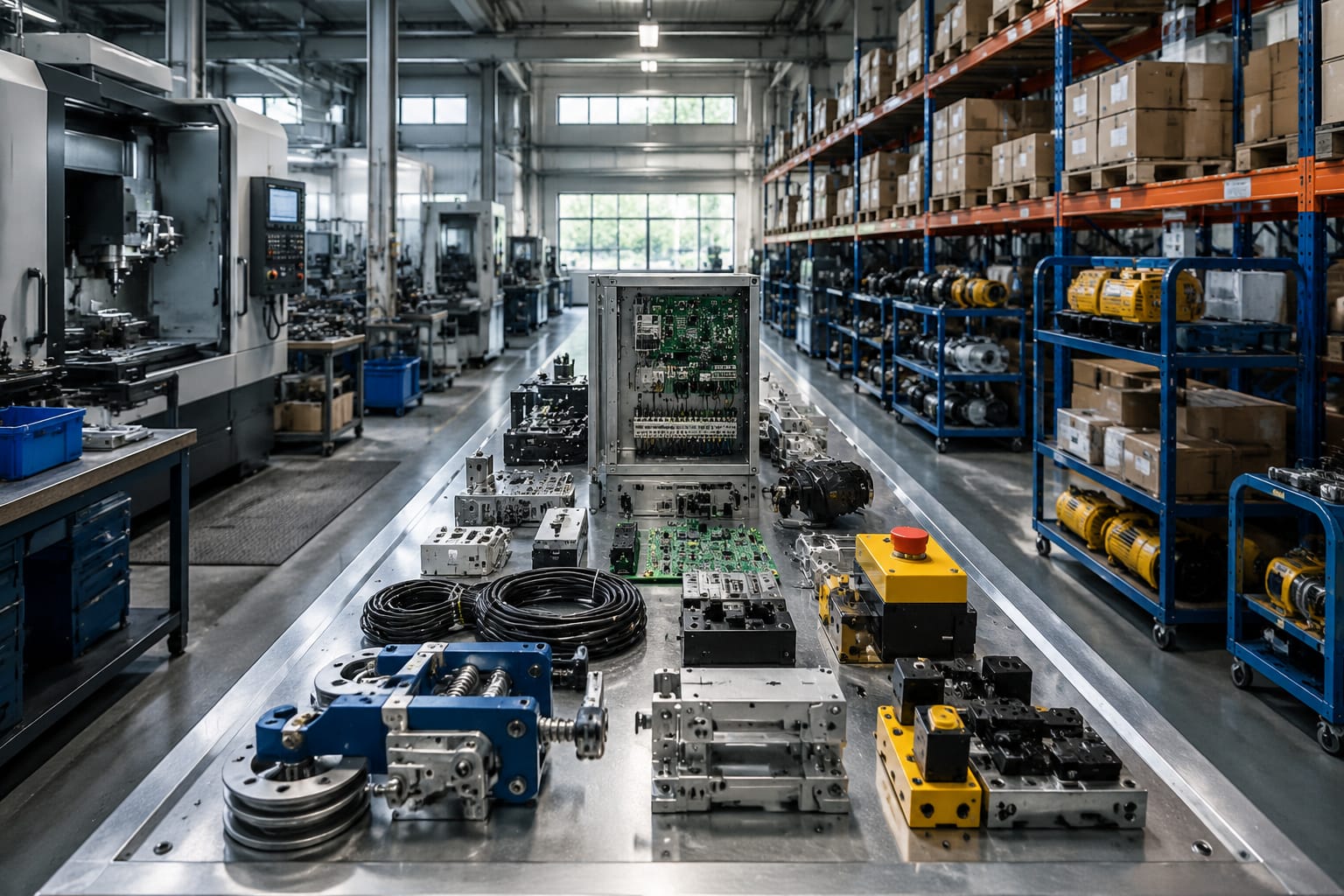
When sourcing replacement or modernization components, the choice between an elevator parts manufacturer and a supplier depends on the part, equipment history, schedule, and level of engineering support required. A manufacturer makes or controls production of a component. A supplier sources, stocks, distributes, or coordinates parts from one or more manufacturers.
Neither option is automatically better. An elevator parts manufacturer may be the stronger choice for custom components, large production runs, or direct engineering collaboration. A supplier may be more practical when you need multi-brand access, a replacement for legacy equipment, mixed line items, or a faster procurement process. The right route is the one that provides a technically compatible part with adequate documentation and dependable support.
Manufacturer and Supplier Roles Explained
An elevator parts manufacturer designs, produces, assembles, or oversees the production of a component. Depending on its business model, the manufacturer may sell directly to elevator OEMs, contractors, distributors, or other industrial buyers. It typically has deeper control over materials, production methods, drawings, testing procedures, and product revisions.
A supplier operates closer to the purchasing and distribution side of the market. Some suppliers maintain inventory, while others source products after receiving an order. A supplier may represent a particular manufacturer, distribute products from several brands, or provide replacement parts made by different producers.
The terms can overlap. A company may manufacture some elevator components while supplying complementary parts made elsewhere. For this reason, do not rely only on the label “manufacturer” or “supplier.” Ask who produced the specific part, who is responsible for quality records, and who will handle technical questions if the component does not fit the application.
Basic comparison
| Consideration | Elevator parts manufacturer | Elevator parts supplier |
|---|---|---|
| Primary role | Makes or controls production of a component | Sources, stocks, distributes, or coordinates components |
| Product access | Often concentrated in its own product family | May provide multiple brands and product categories |
| Customization | Usually stronger for engineered or private-label requirements | May coordinate customization through a production partner |
| Legacy replacement access | May support only its own products or known equivalents | Often useful for locating discontinued or cross-brand parts |
| Order profile | Commonly suited to repeat orders or production quantities | Often suited to mixed orders and individual replacement needs |
| Technical information | Usually closest to original design data | Depends on manufacturer records and supplier expertise |
| Procurement convenience | May require separate orders from several manufacturers | Can consolidate parts from different sources |
A manufacturer is not necessarily the original equipment manufacturer, or OEM, for the elevator in which a part is installed. A component maker may produce controls, sensors, power supplies, door equipment, or mechanical parts that are later integrated into a complete elevator system. Confirm the relationship between the part producer and the elevator OEM before assuming interchangeability.
Product Range and Multi-Brand Access
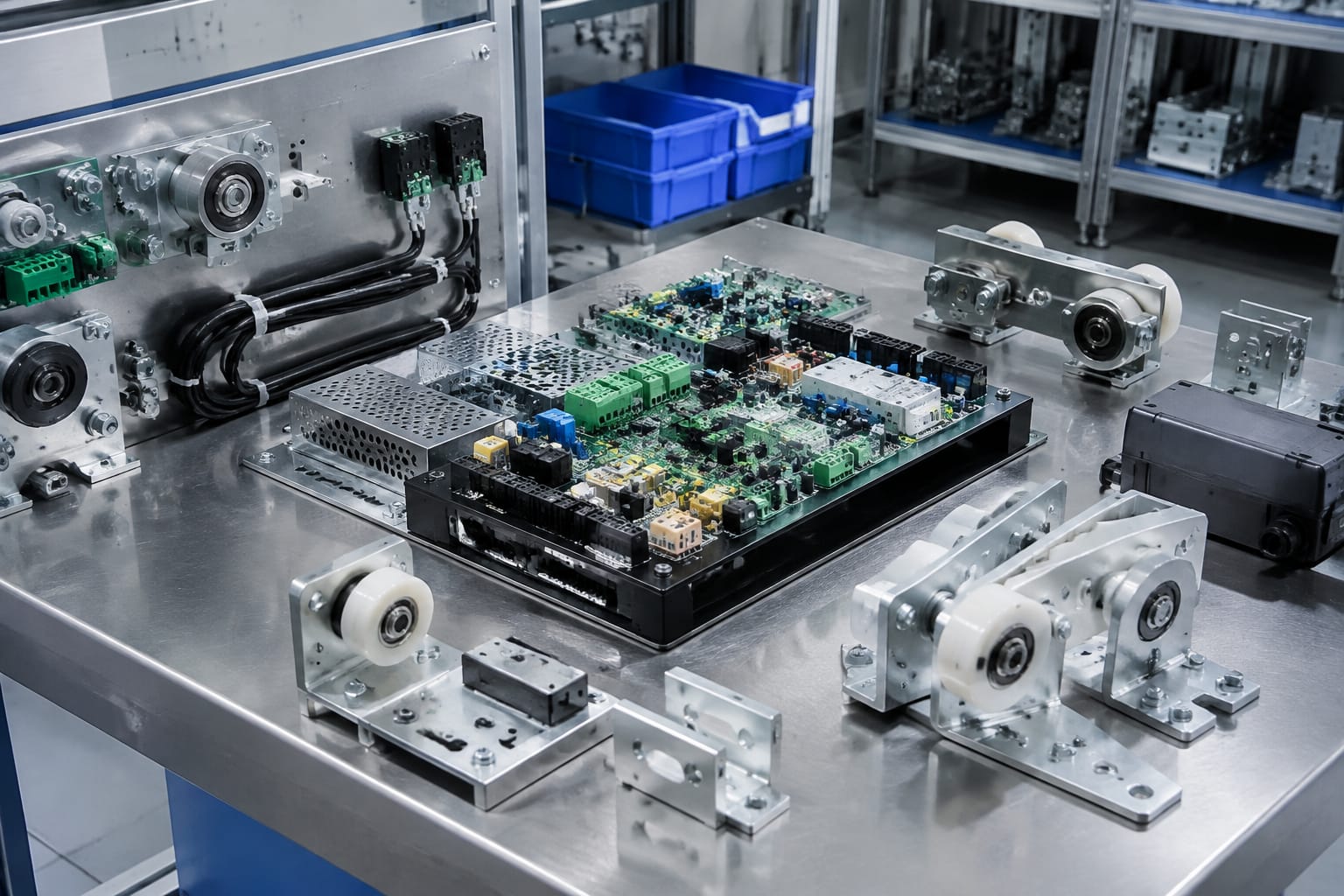
Manufacturers generally focus on a defined product range. That focus can be valuable when you need several related components, consistent revisions, or a part built to a known design. It can also limit your options when the required part belongs to another brand or when the original product has been discontinued.
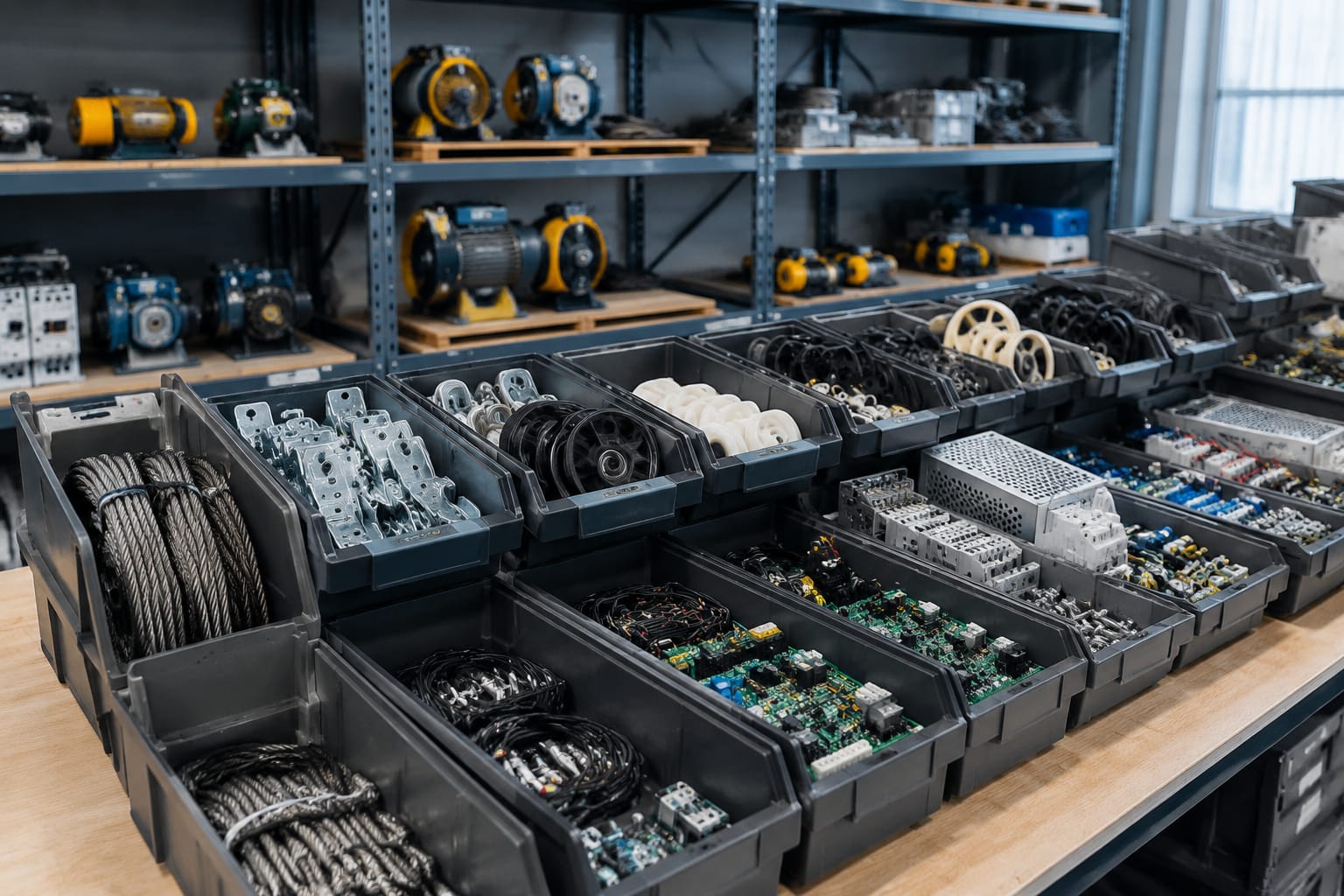
Suppliers often provide broader multi-brand access. A B2B supplier may be able to combine control components, door safety parts, emergency power equipment, and other elevator spare parts in one sourcing process. This is particularly useful for maintenance contractors and modernization companies working on mixed portfolios.
A broad catalog does not guarantee compatibility. Multi-brand access improves sourcing options, but the buyer still needs to verify:
- Original manufacturer and part number
- Elevator or controller model
- Electrical ratings and connection method
- Mechanical dimensions and mounting pattern
- Communication protocol or control-system requirements
- Voltage, current, frequency, and environmental requirements
- Revision level and approved replacement status
- Whether the part is new, refurbished, repaired, or used
For example, a replacement controller or integrated drive-related component should be evaluated as part of the complete control architecture, not treated as a generic electrical item. A supplier can help locate an alternative, but the maintenance contractor or engineer must confirm that the proposed part is suitable for the specific installation.
Likewise, a light curtain replacement requires more than matching the general product description. The sensing arrangement, mounting dimensions, wiring, operating voltage, and interface with the door operator all matter. Review the options for light curtain lift accessories and elevator spare parts alongside the equipment documentation before ordering.
Customization and Engineering Support
A manufacturer is usually the better starting point when the requirement includes a genuine design change. Examples may include:
- A modified mounting plate or enclosure
- A different connector or cable arrangement
- A private-label version
- A changed input or output configuration
- A component designed around a modernization package
- A repeated production part with controlled revisions
The manufacturer can typically assess whether the requested change is technically and economically feasible. It may also provide drawings, bill-of-material information, test criteria, or revision controls that a distributor cannot create independently.
A supplier can still be useful for customized requirements. It may coordinate with a production partner, identify an existing equivalent, or recommend a standard component that avoids unnecessary redesign. This can be more efficient when the requirement is not truly custom and the main challenge is finding a compatible replacement.
Before requesting customization, define the requirement precisely. Provide the available drawings, photographs, nameplate data, wiring information, dimensions, operating conditions, and the reason the existing part cannot be replaced with a standard version. Vague descriptions such as “replacement for an old elevator board” are unlikely to produce a reliable result.
Also consider lifecycle risk. A custom part may solve the immediate compatibility problem but create dependence on a single design or production source. Ask whether future orders will use the same revision, whether replacement documentation will be retained, and what happens if the custom component is later discontinued.
Availability for Legacy Equipment
Legacy equipment is one of the clearest situations in which a supplier may offer practical advantages. Older elevators often contain discontinued parts, revised assemblies, or components whose original manufacturer no longer provides direct replacement support. A supplier with multi-brand sourcing capability may be able to locate remaining stock, identify an equivalent, or arrange production based on available records.
However, “equivalent” does not always mean “drop-in replacement.” A part may match the original function while differing in:
- Physical dimensions
- Wiring terminals
- Firmware or software
- Electrical load
- Safety interface
- Operating temperature range
- Communication protocol
- Adjustment or commissioning procedure
For legacy equipment, gather as much information as possible before contacting a source:
- Photograph the part, labels, connectors, and mounting arrangement.
- Record every visible model number, part number, and revision code.
- Identify the elevator manufacturer, controller, door operator, and approximate installation era if known.
- Document the failure symptoms and whether other components were recently changed.
- Compare the replacement against the original drawings or service documentation.
- Confirm whether field programming, parameter entry, or commissioning will be required.
A manufacturer may provide the most authoritative information when it still supports the original design. A supplier may be more effective when the original route is closed or when several brands must be researched at once. In either case, request written confirmation of the proposed replacement’s compatibility and any limitations.
The same principle applies to emergency power equipment. Before selecting an elevator emergency power supply box for Mitsubishi lift parts, confirm the elevator system, electrical input, output requirements, connection points, and required operating sequence. The product category alone is not enough to establish suitability.
Quality Assurance and Documentation
Manufacturers generally have direct responsibility for production controls, inspection procedures, and product changes. Depending on the component and supplier arrangement, they may be able to provide technical drawings, material information, inspection records, test results, declarations, installation instructions, or traceability documents.
Suppliers vary considerably. A capable supplier should be able to identify the actual producer and provide the documents relevant to the item being quoted. If the supplier cannot answer basic questions about origin, revision, condition, or testing, the buyer should treat the order as higher risk.
The documentation required depends on the part and the project. Before buying, determine which records your company, customer, authority having jurisdiction, or quality system requires. Potentially relevant documents include:
- Product datasheet and dimensional drawing
- Wiring diagram or terminal layout
- Installation and operating instructions
- Part number and revision confirmation
- Inspection or test documentation
- Material or batch traceability, where applicable
- Packaging and labeling details
- Maintenance or troubleshooting information
- Applicable declarations or compliance documentation
Do not assume that a certificate for one model applies to another model or revision. Check that the document identifies the actual product supplied. Also distinguish between a manufacturer’s test record, a declaration of conformity, a third-party certification, and a general statement that a product is “compliant.” These documents serve different purposes.
For safety-related elevator components, document control is particularly important. A visually similar part with a different electrical or operating characteristic can create a serious installation risk. The responsible technical team should review the documentation before installation and follow the applicable codes, manufacturer instructions, and site procedures.
Minimum Orders and Lead Times
Manufacturers often organize production around batch sizes, production schedules, and material availability. As a result, they may set minimum order quantities, especially for customized parts or components requiring a dedicated production run. Larger repeat orders can make direct manufacturer sourcing more practical.
Suppliers may offer more flexibility for mixed requirements, individual replacement parts, and smaller orders. Their value may come from existing inventory, access to several production sources, or the ability to consolidate a purchase. That convenience can be important when a maintenance team is managing multiple service calls or a modernization company needs parts from different brands.
Lead time should be treated as a variable to confirm, not a permanent product characteristic. It can depend on:
- Whether the item is in stock
- Whether the part is standard or customized
- Production queue and material availability
- Required inspection or documentation
- Export and import processing
- Packaging requirements
- Quantity ordered
- Approval of drawings or technical substitutions
Ask for a clear quotation that separates product availability from estimated transit time. Confirm whether the quoted lead time begins at order placement, payment, drawing approval, or another milestone. For urgent replacements, also ask whether the item is new and complete, whether accessories are included, and whether a substitute has different commissioning requirements.
The fastest shipment is not necessarily the fastest route back to service. An incorrectly matched part can lead to returns, additional downtime, and repeated troubleshooting. Technical confirmation should happen before the order is treated as an emergency solution.
Technical Support After Purchase
A manufacturer may provide the deepest support for its own product. This can include installation instructions, parameter guidance, replacement recommendations, troubleshooting information, and clarification of design revisions. The quality of that support depends on the manufacturer’s service structure and on whether the product is still within its active support lifecycle.
A supplier’s support can be valuable when the issue involves multiple brands. A knowledgeable supplier may help compare part numbers, clarify product origin, obtain documentation, and coordinate questions with the relevant manufacturer. This can reduce the administrative burden for contractors and sourcing teams.
Before choosing a source, clarify what support is included and what falls to the buyer or installing contractor. Useful questions include:
- Can technical questions be answered before purchase?
- Will the source review photographs, nameplate information, or drawings?
- Are wiring diagrams and installation instructions included?
- Is programming or parameter guidance available?
- Who handles a suspected manufacturing defect?
- What information is needed to investigate a failure?
- Are replacement parts covered by a stated warranty or return policy?
- Is support available for the specific revision being quoted?
Avoid treating technical support as a substitute for qualified elevator work. Product guidance does not replace the judgment of the responsible contractor, engineer, or other authorized professional. Installation, testing, adjustment, and return to service must follow applicable requirements and site procedures.
Choosing the Right Sourcing Route
Use the following decision framework to select between direct manufacturer sourcing and a supplier.
Choose a manufacturer when:
- You need a custom or modified component.
- You require a repeat production part with controlled revisions.
- One product family represents most of the order.
- You need direct access to original design or engineering information.
- The order quantity satisfies the manufacturer’s minimum.
- The production schedule fits the project timeline.
- You need a formal product-development or private-label relationship.
Choose a supplier when:
- You need parts from multiple elevator brands.
- The equipment is legacy, discontinued, or difficult to identify.
- You need a small quantity or mixed line-item order.
- You want to consolidate purchasing and shipping.
- The priority is locating a documented equivalent.
- You need help comparing several possible sources.
- You are supporting maintenance work across different controller, door, or power-system platforms.
Questions to ask either source
Regardless of the channel, request enough information to make a technical and commercial comparison:
- Who manufactured the quoted part?
- What is the exact part number and revision?
- Is it new, repaired, refurbished, or used?
- Does it replace the original part directly, or is modification required?
- What drawings, wiring information, and instructions are available?
- What are the confirmed electrical and mechanical characteristics?
- Is programming, adjustment, or commissioning required?
- What quantity is available now, and what is the expected replenishment time?
- What minimum order or packaging requirements apply?
- What is the return process if the part is incompatible or defective?
- Which documents will ship with the part?
- Who provides technical support after delivery?
Compare answers in writing. A lower unit price may not represent a lower total cost if it comes with unclear compatibility, missing documentation, additional engineering work, or a long delay caused by reordering.
Common Sourcing Mistakes
The most frequent mistake is searching only by a broad product name. “Elevator inverter,” “door sensor,” or “emergency power supply” describes a category, not a complete specification. Use the original part number and equipment details whenever possible.
Another mistake is assuming that a supplier’s ability to find a part means the part has been technically approved. Sourcing and approval are separate steps. The responsible buyer or technical team must verify the proposed replacement.
Buyers also sometimes overlook revision differences. Two parts with similar labels may use different connectors, firmware, ratings, or control logic. Confirm the revision and any required companion components.
Finally, do not wait until the purchase order to identify documentation needs. If a project requires drawings, inspection records, or compliance information, make those requirements part of the quotation review.
A Practical Selection Checklist
Before placing an order, confirm:
- Original part number and revision recorded
- Elevator and subsystem identified
- Electrical ratings verified
- Mechanical fit verified
- Wiring and communication interface reviewed
- Compatibility with related equipment confirmed
- New or refurbished condition clearly stated
- Required documents listed
- Quantity and minimum order understood
- Lead time and shipping assumptions confirmed
- Programming or commissioning requirements identified
- Return, defect, and support process understood
Kelevator supplies multi-brand elevator spare parts for B2B importers, distributors, maintenance contractors, sourcing teams, modernization companies, and OEM buyers. When evaluating a replacement, use the available equipment data and documentation to determine whether a manufacturer or multi-brand supplier is the more appropriate route for the specific job.
The best next step is to build a complete part record before requesting quotes. Include the part number, revision, equipment model, photographs, dimensions, electrical information, required quantity, and documentation requirements. That gives either a manufacturer or supplier the information needed to provide a more useful and technically reviewable response.
Related product references
For practical catalog examples related to this topic, review Monarch Elevator frequency converter 3000+ integrated machine Lift Controller. Confirm the exact model, dimensions, ratings, and connectors before ordering.