
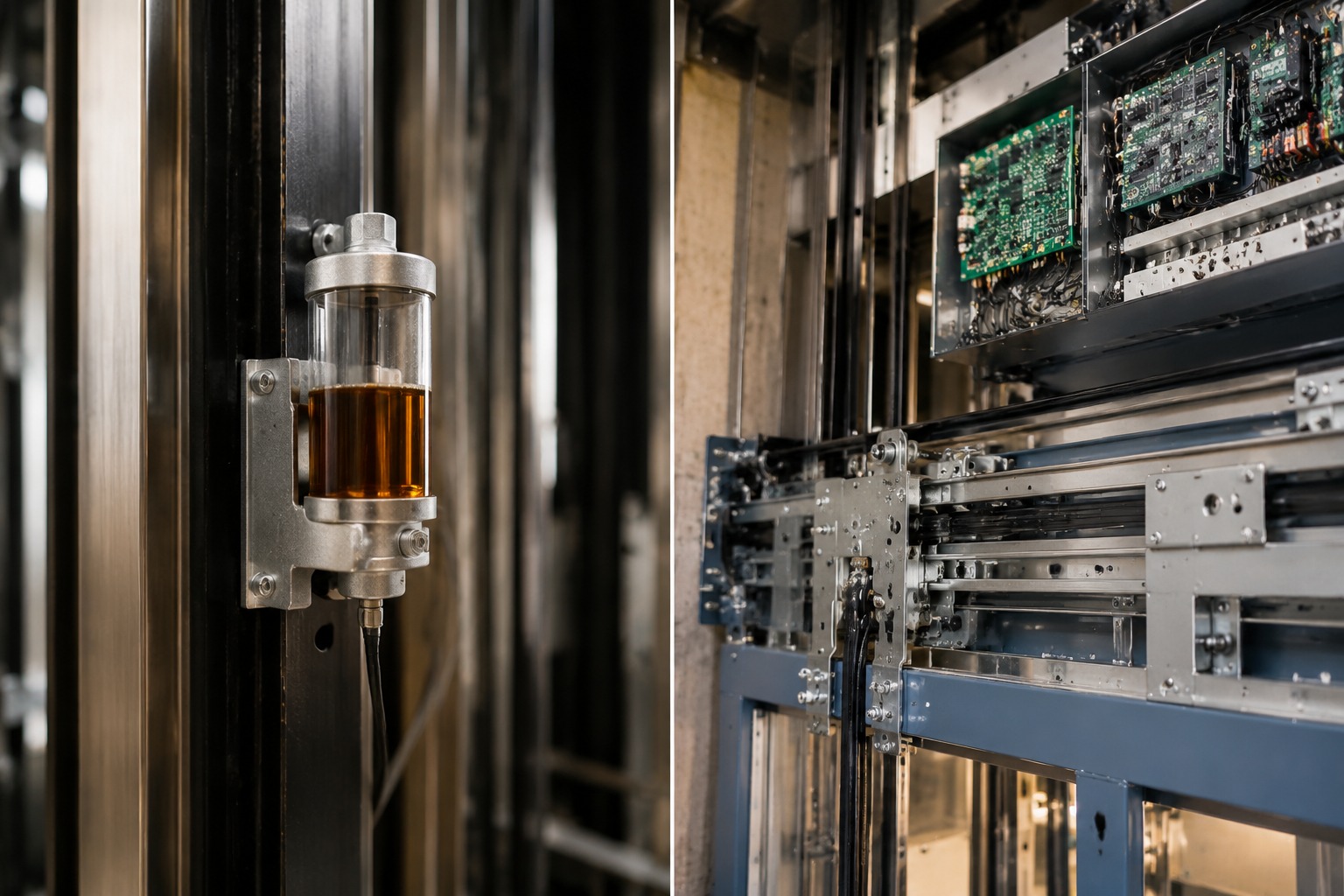
For most elevator systems, guide rail lubrication is a small maintenance task with a very large effect. The oil cup, the felt pad inside it, and the oil collection box in the pit all work together to reduce rail wear, control friction, limit contamination, and help the car and counterweight travel more smoothly. In the United States, where maintenance teams work across aging mid-rise apartments in Chicago, modernization projects in New York City, hospitals in Houston, hotels in Orlando, and mixed-use towers near Los Angeles and Seattle, selecting the right lubrication parts can directly affect ride quality, service intervals, and long-term rail condition.
The short answer is simple: an elevator oil cup feeds lubricant to the guide rail in a controlled way, the felt pad meters and spreads that oil, and the bottom pit oil collection box helps capture runoff before it creates a mess or safety issue. When these parts are correctly matched to elevator speed, rail size, environment, and machine-room or machine-room-less layout, they support cleaner operation and lower wear. When they are ignored, guide shoes can run dry, rails can polish unevenly, debris can mix with oil, and technicians may face more callbacks.
For buyers in the United States market, the best approach is not to treat oil cups as generic accessories. Building age, traffic pattern, climate, elevator brand, modernization history, and code-conscious maintenance practices all matter. A coastal property near the Port of Miami may have moisture and corrosion concerns that differ from a dry inland installation in Phoenix. A busy transit-connected office tower in Boston will not consume lubrication at the same rate as a low-rise residential building in suburban Ohio. Matching parts carefully is the difference between routine upkeep and preventable component wear.
If you are reviewing replacement options, you can start with a broad overview of elevator oil cup parts and lift accessories and then narrow the choice by rail arrangement, cup shape, mounting space, felt density, and pit collection needs. For compact installations, especially where clearance is limited, a small square machine-room-less elevator oil cup may be more practical than a larger standard design. If the felt insert is worn, hardened, or contaminated, replacing it with a compatible elevator oil cup felt pad is often the most cost-effective way to restore proper oil flow. And where runoff management is needed, a bottom pit oil collection box for elevators helps keep the pit cleaner and easier to inspect.
Direct Answer for Building Owners and Maintenance Buyers
Guide rail lubrication matters because elevator guide rails are not passive steel members. They guide the movement of the car and counterweight every day, often thousands of cycles per month. Even where roller guides are used, there are still operating conditions, startup forces, alignment issues, contamination risks, and localized contact areas that benefit from controlled lubrication. On slide guide systems, proper lubrication is even more important because the guide shoe and rail interface depends on it for stable travel and lower wear.
An oil cup is usually mounted so that the felt pad or wick stays in contact with the guide rail. As the elevator moves, the felt lightly deposits a film of oil instead of flooding the rail. That thin film is what helps reduce metal-to-metal friction, prevent scoring, minimize squeal, and keep rail surfaces from becoming either dry or excessively oily. Too little oil can accelerate wear. Too much oil can attract dust, drip into the pit, and create cleanup issues.
For procurement teams, the practical buying rule is this: choose the cup based on fit, choose the felt based on flow control, and choose the oil collection box based on housekeeping and runoff management. Then support all three with a regular inspection and replacement schedule. This is especially important in the United States, where many building portfolios include a mix of legacy equipment, aftermarket modernization parts, and varying maintenance documentation quality.
United States Market Conditions and Buying Trends
The U.S. elevator service market keeps growing through modernization, deferred replacement cycles, and stricter expectations around uptime. In cities such as New York, San Francisco, Atlanta, Dallas, and Philadelphia, many maintenance contractors handle both new and legacy systems in the same route. That creates demand for replacement oil cups, felt pads, and pit accessories that are compatible, easy to match, and available with consistent quality.
Distributors serving trade hubs like Los Angeles/Long Beach, Savannah, Newark, and Houston often see the same pattern: customers want parts that install quickly, ship safely, and reduce the risk of ordering the wrong model. Small parts such as oil cups can delay service if dimensions, mounting orientation, or felt density are not checked in advance. This is why U.S. buyers increasingly prefer suppliers that support model matching, careful packaging, and responsive technical confirmation.
The chart below shows a realistic view of replacement demand growth for guide rail lubrication parts in the United States, driven by modernization activity, traffic recovery in commercial buildings, and more consistent preventive maintenance programs.
One useful way to understand the market is by building type and lubrication sensitivity. The table below explains where oil cup and felt pad selection has the biggest practical effect.
| Building Type | Typical Traffic Level | Lubrication Sensitivity | Common Issue if Underserved | Recommended Focus | U.S. Market Notes |
|---|---|---|---|---|---|
| High-rise office towers | High | Very high | Frequent rail dryness and noise complaints | Stable oil feed and regular felt checks | Common in Manhattan, Chicago Loop, downtown Seattle |
| Hospitals | High and continuous | Very high | Service interruptions affect critical movement | Short inspection intervals and clean pits | Strong demand in major metro healthcare networks |
| Residential mid-rise | Moderate | Medium | Missed maintenance leads to visible rail residue | Balanced oil control and budget replacements | Large installed base across the U.S. |
| Hotels | Variable peak traffic | High | Ride quality complaints during peak occupancy | Consistent felt condition and runoff control | Important in Orlando, Las Vegas, Nashville |
| Warehouses and freight lifts | Heavy-duty | High | Contamination from dust and debris | Frequent cleaning and durable felt material | Seen near logistics corridors and ports |
| Universities and public buildings | Moderate to high | Medium to high | Deferred upkeep during budget cycles | Planned replacement schedules | Common in state and municipal portfolios |
This table shows why there is no single best oil cup for every job. The right decision depends on duty cycle, contamination risk, and access for service.
Why Guide Rail Lubrication Matters
Guide rails must remain dimensionally stable, clean, and protected over years of vertical travel. Lubrication helps in four ways. First, it reduces friction between the rail and the guiding element. Second, it limits wear marks, scratches, and surface damage that can become worse over time. Third, it helps control noise and vibration, especially in older systems where alignment is not perfect. Fourth, it supports more predictable maintenance because the rail condition stays more stable between service visits.
In the United States, the value of proper lubrication is especially clear in modernization projects. Many building owners upgrade controllers, drives, door operators, and communication systems while leaving core rail structures in place. In these cases, the rail is an existing asset that must continue performing well. A relatively low-cost lubrication component can help protect a much more expensive installed system.
Guide rail lubrication also matters from a housekeeping and risk perspective. Dry rails can create wear debris. Over-oiled rails can drip into the pit. Poorly maintained pits can complicate inspections, cleanup, and technician access. In busy commercial environments, maintaining a neat machine room or pit is not just cosmetic; it supports professional service quality and easier condition checks.
The industry demand chart below reflects where lubrication components are most often replaced or reviewed.
For maintenance buyers, the takeaway is straightforward: guide rail lubrication is not a minor consumable issue. It is a rail protection strategy.
Types of Elevator Oil Cups
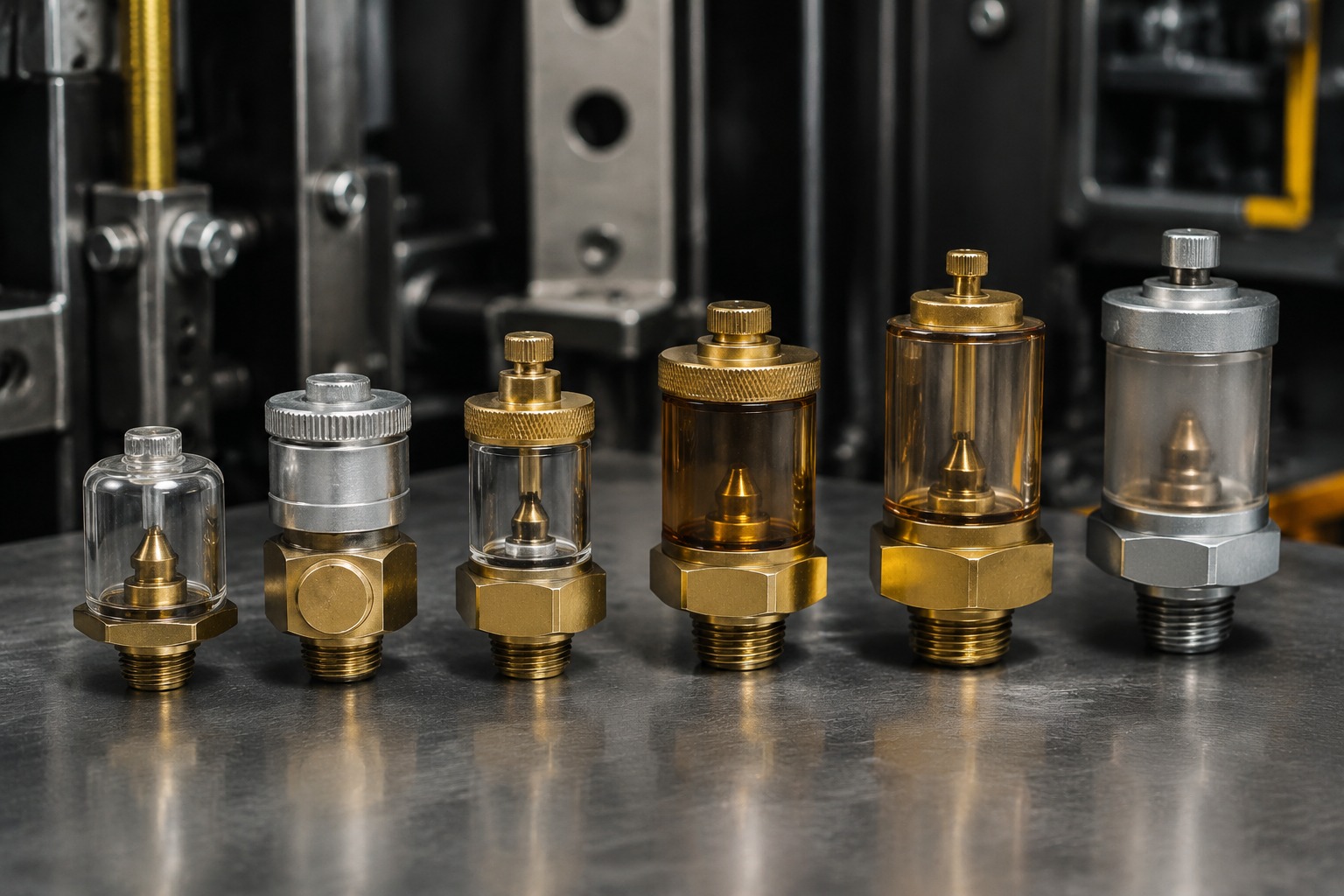
Elevator oil cups come in several forms, and the right type depends on mounting space, rail contact geometry, and service preference. Some are standard rectangular or square units used on conventional layouts. Some are more compact for machine-room-less installations where space is tighter. Some use different felt pad dimensions or denser inserts to control flow. Others are chosen because they are easier to replace during modernization when original OEM parts are no longer readily available.
What matters most is fit and function. If the cup does not sit securely, keep the felt aligned, or maintain steady contact with the rail, the lubrication pattern becomes inconsistent. If the cup is oversized for the space, installation may be awkward. If it is undersized for the operating environment, refill intervals may become too short.
| Oil Cup Type | Typical Use | Main Advantage | Main Limitation | Best For | Buying Tip |
|---|---|---|---|---|---|
| Standard square oil cup | General passenger elevators | Simple fit and broad compatibility | May be too large for compact layouts | Routine replacement stock | Confirm dimensions and mounting points |
| Rectangular oil cup | Legacy or brand-specific setups | Useful for older configurations | Less universal than square types | Modernization jobs | Match by drawing or installed sample |
| Small square MRL oil cup | Machine-room-less elevators | Compact footprint | Lower oil capacity in some designs | Tight shaft spaces | Verify clearance before ordering |
| High-capacity oil cup | High-use installations | Longer refill interval | May require more space | Hospitals and office towers | Check access for servicing |
| Aftermarket matched oil cup | OEM replacement alternatives | Cost-effective sourcing | Requires careful matching | Distributors and contractors | Use photos and measurements |
| Oil cup with replaceable felt insert | Frequent maintenance environments | Easy servicing | Insert quality must be consistent | Route-based maintenance teams | Keep spare felt pads on hand |
The explanation behind this table is important. Buyers often compare price first, but an oil cup that saves a few dollars and does not fit correctly can cost much more in labor, repeat visits, or rail cleanup. That is why many maintenance companies keep common square units in stock while special layouts are ordered after verification.
How Felt Pads Control Oil Flow
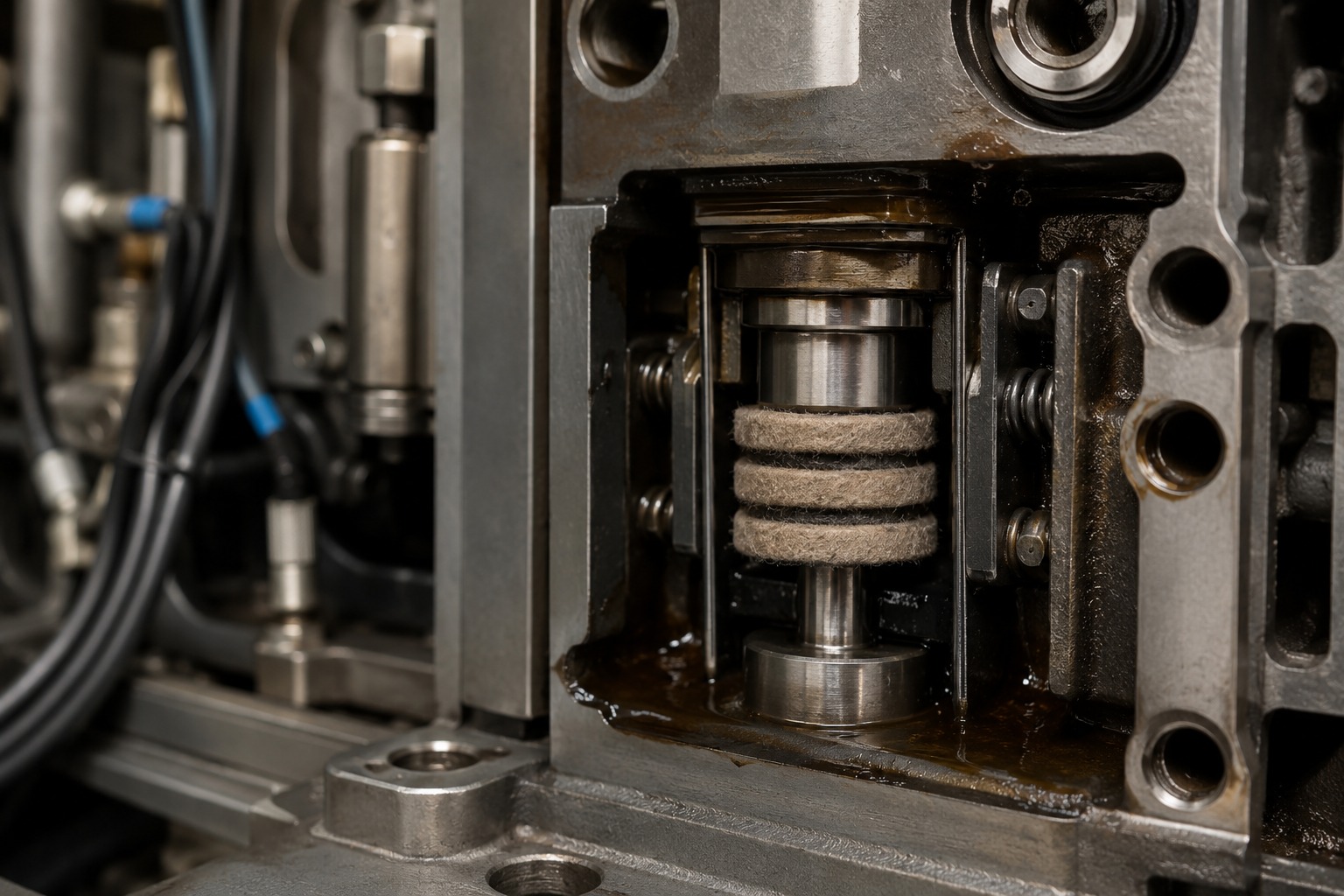
The felt pad is the control element inside the lubrication system. It acts like a reservoir, a metering layer, and a wiper all at once. When the felt is correctly selected, it absorbs oil, releases it gradually, and spreads it in a thin, even film across the rail contact area. When the felt is too dense, too loose, damaged, or contaminated, oil flow becomes erratic.
In practical maintenance terms, the felt pad determines whether the rail receives a controlled film or an uncontrolled mess. A good felt pad should remain structurally stable, maintain contact with the rail, and resist becoming clogged by dust or hardened lubricant residue. Cotton felt remains common because it balances absorption and controlled release well for many elevator environments.
In older buildings near heavy traffic corridors, like central Los Angeles or parts of Newark and Jersey City, pits and hoistways may collect more dust and grime than newer sealed buildings. In these cases, a felt pad may need more frequent inspection because contamination can change oil distribution long before the cup itself appears damaged. In coastal areas such as Miami, Tampa, or Charleston, moisture and airborne salt can also affect rail condition and cleaning frequency.
The area chart below shows how market preference is gradually shifting toward more controlled, service-friendly lubrication setups.
| Felt Pad Condition | Oil Flow Result | Visible Symptom | Operational Effect | Recommended Action | Priority Level |
|---|---|---|---|---|---|
| Clean and properly saturated | Stable, even film | Light rail coating only | Smooth guidance | Maintain current schedule | Normal |
| Too dry | Insufficient transfer | Dull or dry rail contact path | Higher wear risk | Refill and inspect cause | High |
| Over-saturated | Excess transfer | Drips or heavy residue | Dirt attraction and pit mess | Reduce fill and inspect felt density | Medium |
| Hardened with old oil | Irregular transfer | Patchy rail film | Unstable lubrication | Replace felt pad | High |
| Contaminated with dust | Restricted flow | Dark buildup on pad edge | Abrasive contact risk | Clean area and replace pad | High |
| Misaligned against rail | Partial transfer only | Uneven contact mark | Localized wear | Reset or replace assembly | High |
The explanation here is that felt pads are not passive inserts. They actively determine lubrication quality, so replacing a worn pad at the right time often produces a bigger improvement than simply adding more oil.
Machine-Room-Less Oil Cup Selection
Machine-room-less elevators need more careful oil cup selection because installation space is tighter and service access can be more limited. In many MRL systems, technicians must work within smaller clearances, and a compact cup that fits correctly can save time during maintenance while reducing the chance of interference with nearby components.
A small square design is often preferred for MRL use because it balances footprint, easy replacement, and stable felt alignment. However, buyers should still check rail position, bracket style, refill access, and whether the cup will be serviced from a practical working position. The best MRL part is not only compact; it also supports repeatable maintenance without awkward handling.
Modernization contractors in dense U.S. urban markets such as Washington, DC, San Diego, and downtown Denver often encounter MRL retrofits where access conditions vary from one building to the next. In these jobs, photos, measured dimensions, and rail-side clearance checks are more reliable than product names alone. That is why a supplier that helps with model matching can reduce mistakes and downtime.
| Selection Factor | Why It Matters | Risk If Ignored | What to Verify | Best Practice | Ideal Buyer |
|---|---|---|---|---|---|
| Overall cup size | Determines physical fit | Interference with adjacent parts | Length, width, height | Measure installed unit first | Maintenance contractor |
| Mounting style | Ensures secure installation | Loose or unstable contact | Bracket, screw position, clip design | Match the original geometry | Distributor |
| Felt pad dimensions | Controls oil spread | Uneven lubrication | Thickness and contact surface | Order spare inserts together | Service route manager |
| Oil capacity | Affects refill frequency | More technician visits | Reservoir volume | Balance size with service interval | Building owner |
| Refill access | Impacts maintenance time | Skipped service or spills | Top access and working clearance | Choose easy-service layout | Modernization team |
| Compatibility record | Reduces order risk | Wrong part and downtime | Brand, model, photos, dimensions | Request matching support | Procurement teams |
This selection table shows that MRL buying is less about generic category labels and more about dimensional and service-fit accuracy.
Bottom Pit Oil Collection Box Use Cases
The bottom pit oil collection box is often overlooked until a pit becomes visibly dirty or runoff starts to complicate housekeeping. Its role is simple but useful: it catches excess oil or drips before they spread across the pit floor or mix with dust and debris. In buildings with frequent lubrication, older rails, or uneven oil application history, this accessory can make routine inspection much easier.
Typical use cases include modernization projects where lubrication behavior is being stabilized, freight or service elevators with harsher environments, and older buildings where cleanup has been inconsistent. In some installations, the collection box is especially valuable because it helps maintenance teams monitor whether excess oil is being released. If the box fills too quickly, that can indicate an over-oiling problem or a felt condition issue upstream.
For properties with strict facility standards, such as hospitals, corporate campuses, or high-end hotels, pit cleanliness has operational value. A cleaner pit supports faster visual checks and more professional service presentation. In facilities near logistics hubs like Memphis, Louisville, or Inland Empire warehouse zones, the collection box can also help manage dirt mixed with lubricant in high-use service elevators.
The comparison chart below illustrates how buyers in the U.S. often evaluate supplier priorities for lubrication-related parts.
| Use Case | Why an Oil Collection Box Helps | Typical Symptom Without It | Maintenance Benefit | Best Location Type | Priority |
|---|---|---|---|---|---|
| Older passenger elevators | Captures residual drips during stabilization | Oil spots in pit | Easier cleanup and monitoring | Urban retrofit buildings | Medium |
| Freight elevators | Helps manage heavy-use residue | Mixed dirt and oil buildup | Cleaner work area | Warehouses and loading docks | High |
| Hospitals | Supports strict housekeeping | Messy pit appearance | Faster inspections | Healthcare facilities | High |
| Hotels | Reduces pit contamination over time | Repeated maintenance cleanup | Improved service consistency | Hospitality properties | Medium |
| Modernization projects | Provides runoff visibility after part changes | Hard to judge lubrication balance | Useful diagnostic aid | Mixed-use renovations | High |
| MRL systems with limited pit access | Keeps runoff more contained | Messier service conditions | Better pit organization | Compact installations | Medium |
The key explanation is that an oil collection box does not replace correct lubrication. It supports it by containing excess and making inspection easier.
Inspection and Replacement Schedule
The best schedule depends on elevator traffic, environment, and lubricant behavior, but the principle is universal: inspect before performance declines. Waiting until noise, visible dryness, or pit drips appear is usually too late for ideal preventive maintenance. U.S. maintenance companies often combine visual checks with routine route visits, then adjust frequency after observing actual oil consumption and felt wear.
High-traffic buildings may need monthly visual checks and more frequent felt review. Moderate-use residential properties may be able to follow a longer cycle if the rail film stays stable and the pit remains clean. Dusty or corrosive environments should always shorten inspection intervals. A building near the Port of Houston or a coastal Florida property may need more vigilant checks than a clean interior office building in Minneapolis.
For building owners, the practical objective is consistency rather than over-service. Replacing felt pads too late increases wear risk; replacing them too early adds unnecessary cost. A documented schedule based on usage history is the right balance.
| Item to Inspect | Low-Use Building | Moderate-Use Building | High-Use Building | Replace When | Notes |
|---|---|---|---|---|---|
| Oil level in cup | Quarterly | Monthly to quarterly | Monthly | Refill when below target level | Track actual consumption trend |
| Felt pad saturation | Quarterly | Monthly to quarterly | Monthly | Dry, over-saturated, or uneven | Check contact path on rail |
| Felt pad condition | Semiannual | Quarterly | Monthly to quarterly | Hardened, frayed, contaminated | Keep spare pads available |
| Oil cup mounting stability | Semiannual | Quarterly | Quarterly | Loose, cracked, or misaligned | Verify secure rail contact |
| Rail surface film | Quarterly | Monthly to quarterly | Monthly | Visible dryness or excessive residue | One of the best real-world indicators |
| Pit oil collection box | Semiannual | Quarterly | Monthly to quarterly | Filled, dirty, or cracked | Use as a runoff trend indicator |
This schedule should be treated as a field starting point. Actual replacement timing should be adjusted based on building conditions and maintenance records.
Common Lubrication Mistakes
The most common lubrication mistakes are simple: adding too much oil, replacing the cup but not the felt, using a felt pad that does not match the cup, ignoring pit runoff, and assuming all oil cups are interchangeable. These errors are common because lubrication parts are small, inexpensive, and often handled as routine items. But that is exactly why discipline matters.
Another frequent mistake in the U.S. aftermarket is ordering by appearance alone. Two oil cups may look similar in photos but differ in dimensions, mounting details, or felt contact geometry. In mixed-brand portfolios with equipment from Hitachi, Toshiba, KONE, Mitsubishi, and others, this can lead to avoidable mismatches. A supplier that supports careful model matching helps prevent wasted labor.
There is also a training mistake: some teams treat lubrication issues as separate from rail condition, guide shoes, or ride quality. In reality, all of these are connected. If the rail is dry, the guide path may wear differently. If there is heavy oil contamination, dust adheres and forms a grinding paste. If the pit stays dirty, early warning signs are easier to miss.
| Common Mistake | What Happens | Short-Term Effect | Long-Term Effect | Corrective Action | Who Should Watch It |
|---|---|---|---|---|---|
| Overfilling the oil cup | Too much oil reaches the rail | Drips and residue | Dirty pit and contamination | Refill to correct level only | Technicians |
| Ignoring a worn felt pad | Flow becomes uneven | Patchy lubrication | Rail wear risk | Replace felt promptly | Maintenance managers |
| Using the wrong cup size | Poor fit or contact | Installation difficulty | Repeat service calls | Verify dimensions before purchase | Procurement teams |
| Skipping pit collection checks | Runoff goes unnoticed | Mess accumulates | Harder inspections and cleanup | Inspect collection box routinely | Building staff and technicians |
| Ordering by photo only | Mismatch risk increases | Wrong replacement delivered | Downtime and return cost | Use model and measurement matching | Distributors |
| Extending service intervals too far | Problems develop quietly | Late detection | Higher maintenance cost | Use traffic-based schedule | Owners and service providers |
This table makes one point clear: most lubrication failures are process failures, not part failures.
Buying Advice for U.S. Maintenance Companies and Distributors
When buying oil cups and related parts in the United States, the most useful checklist is compatibility first, then consistency, then availability. Compatibility means dimensions, mounting, and felt design match the application. Consistency means the next order performs like the previous one. Availability means stock, protective packaging, and reasonable lead time support your route and project schedule.
Buyers serving New York high-rises, Gulf Coast hospitals, Midwest apartment portfolios, or West Coast modernization projects all face the same business pressure: reduce downtime and avoid repeat visits. That is why many contractors now standardize part verification with photos, measurements, and elevator model details before ordering. Even for small items, this habit saves money.
Industries and Applications
Oil cups, felt pads, and pit oil boxes are used across passenger elevators, freight elevators, service lifts, hospital elevators, hotel systems, apartment buildings, educational facilities, parking structures, and municipal buildings. Applications vary, but the maintenance logic stays the same: keep the rail interface stable, keep the lubricant controlled, and keep the pit manageable.
Freight and industrial applications tend to face more contamination. Hospitality and healthcare applications tend to emphasize ride consistency and cleaner facilities. Residential portfolios often focus on cost-effective scheduled replacement. Office towers prioritize uptime and tenant experience. In every case, small lubrication components support the larger goal of reliable elevator operation.
Case Examples from the U.S. Market
In a mid-rise residential modernization in Jersey City, a maintenance team replaced inconsistent legacy cups with matched aftermarket units and new felt pads. The visible result was not dramatic on day one, but after several months the rails showed a more even lubrication pattern and pit cleanup frequency dropped. In a Houston medical office building, adding a pit oil collection box helped the service provider monitor excess runoff and correct an over-oiling issue before it spread contamination. In a Phoenix hotel property, switching to compact MRL-compatible cups improved service access and shortened routine maintenance time.
These examples show that the value is cumulative. The right part selection does not just solve an immediate issue; it reduces future variability.
Local Suppliers, Lead Times, and Logistics Considerations
U.S. buyers often balance local availability with broader sourcing options. Local stock can help with urgent service calls, but specialized matching support may come from suppliers with wider parts coverage and stronger aftermarket sourcing experience. Ports and inland distribution hubs matter here. Parts moving through Los Angeles, Long Beach, Savannah, Newark, Houston, and Chicago can often reach major metro areas quickly when packaging and documentation are handled well.
For smaller but essential parts like oil cups and felt pads, protective packaging is more important than many buyers expect. Deformed felt, cracked housings, or mixed labeling can create field problems. Buyers should ask whether the supplier checks model details, protects the parts during shipment, and responds quickly if dimensional confirmation is needed.
Our Company Approach
For customers across the United States, our role is to support practical replacement decisions for elevator maintenance companies, distributors, building owners, and modernization contractors.
Technological capabilities
We focus on careful model matching across a broad range of elevator parts, including control boards, inverter and frequency converter components, door operator parts, locks, light curtains, guide shoes, oil cups, sensors, encoders, power supplies, buttons, COP panels, intercom parts, and other lift accessories. For lubrication-related products, that means helping customers confirm cup style, felt pad fit, and application suitability so replacement parts are compatible with the installed system.
Manufacturing capabilities
Our sourcing and quality process emphasizes stable specifications, practical inspection, and protective packaging. Small elevator parts need consistent dimensions and condition on arrival, especially when customers are ordering for route stock or scheduled modernization work. We pay close attention to product consistency, packaging protection, and part readiness so field teams can install with confidence.
Service capabilities
We support responsive communication, application confirmation, and efficient supply for customers who need to reduce downtime. Whether the job is a routine felt pad replacement in a residential property or a more specific MRL oil cup request for a compact urban installation, our service goal is to make sourcing easier, reduce mismatch risk, and help keep elevator systems operating safely and reliably.
2026 Trends: Technology, Policy, and Sustainability
Looking toward 2026, guide rail lubrication practices in the United States are expected to become more data-aware, cleaner, and more standardized. Three trends stand out.
First, technology: maintenance teams are increasingly linking small replacement decisions to broader preventive maintenance programs. As more buildings adopt digital service records and portfolio-level maintenance tracking, lubrication parts will be replaced on evidence-based intervals rather than habit alone. Compact MRL-compatible components and more consistent aftermarket matching support will continue gaining importance.
Second, policy and documentation: building owners and service companies are under ongoing pressure to document maintenance quality more clearly. Even when oil cups themselves are simple parts, the expectation for cleaner pits, predictable service records, and better asset management continues to rise across commercial and institutional properties.
Third, sustainability: reduced waste, cleaner operation, and more precise lubricant use are becoming practical goals, not just marketing language. A system that uses the correct felt density, avoids over-oiling, and captures excess runoff in the pit is simply more efficient. In a large portfolio, these small improvements add up through less cleanup, fewer discarded materials, and better component life.
FAQ About Elevator Oil Cups
What does an elevator oil cup do?
It stores lubricant and delivers it gradually to the guide rail through a felt pad or similar contact material, helping maintain a controlled oil film.
How often should an elevator oil cup be checked?
That depends on traffic and environment. High-use buildings may need monthly checks, while lower-use buildings can often follow quarterly review intervals if rail condition remains stable.
Can I replace only the felt pad?
Yes, often you can replace only the felt pad if the cup body is still in good condition. This is a common and cost-effective maintenance step.
How do I know if the felt pad is bad?
Look for hardness, fraying, contamination, dryness, uneven contact, or a patchy rail oil pattern. Any of these signs can indicate poor flow control.
Are all elevator oil cups interchangeable?
No. Dimensions, mounting style, capacity, and felt geometry can differ. Careful matching is important, especially in mixed-brand or modernized systems.
When is a bottom pit oil collection box useful?
It is useful when there is excess runoff, a need for cleaner pits, or a desire to monitor lubrication behavior more clearly in older or high-use systems.
What is the best option for machine-room-less elevators?
A compact oil cup sized for limited space is usually the best starting point, but dimensions and access must still be verified before purchase.
Why does over-lubrication cause problems?
Excess oil attracts dirt, creates drips, complicates pit cleanup, and can hide the real condition of the rail and felt pad.
Should building owners keep spare oil cups and felt pads in stock?
Yes, for larger portfolios or high-traffic properties, keeping common replacement items in stock can reduce service delays.
What should I send to a supplier for accurate matching?
Provide elevator brand, model if available, photos of the installed part, key dimensions, and any notes about mounting orientation or space limitations.
In the United States market, the best lubrication program is practical, consistent, and application-specific. When oil cups, felt pads, and pit oil collection boxes are selected and maintained correctly, they help protect guide rails, improve service cleanliness, and support more reliable elevator operation over time.