
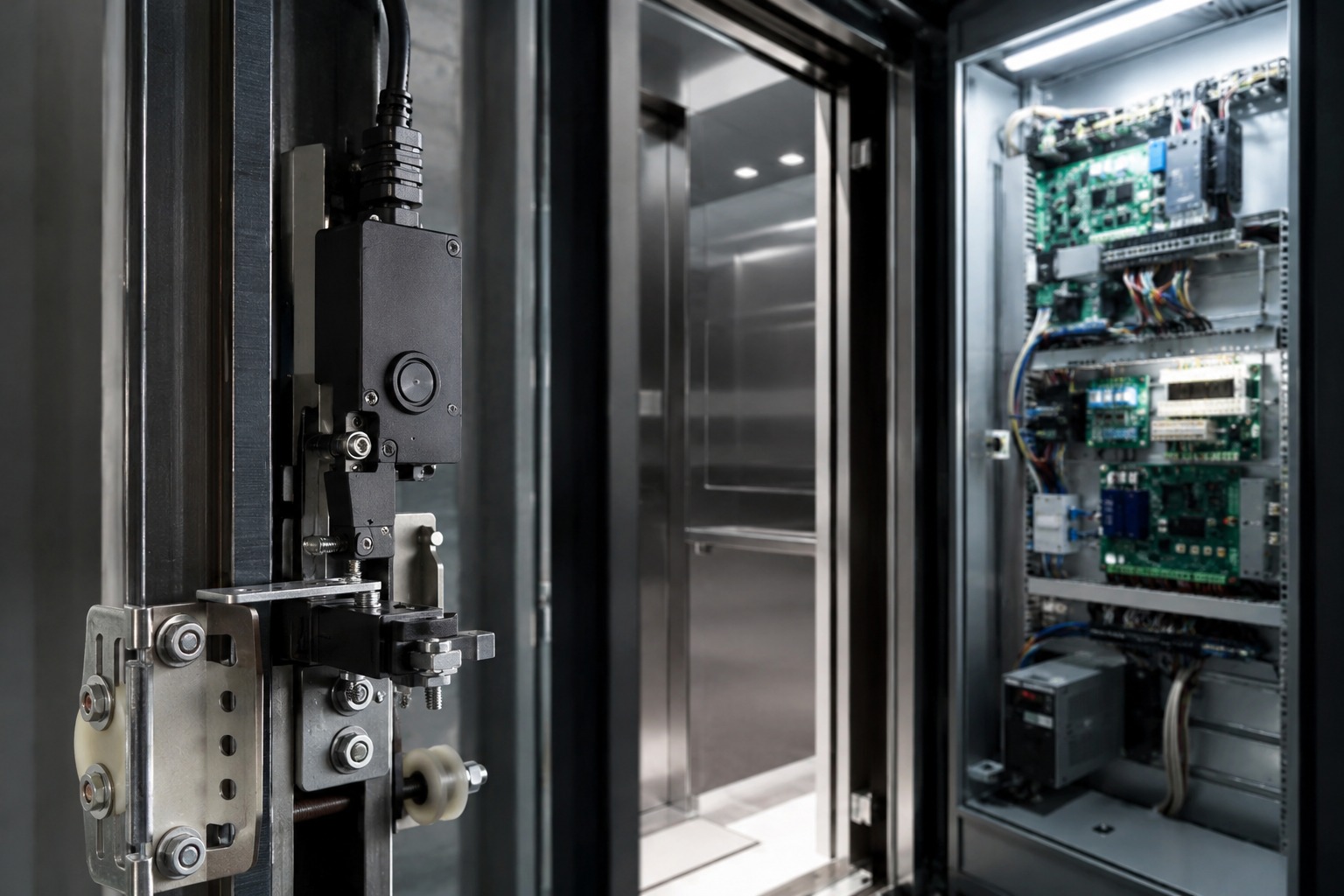
Elevator leveling sensors and accurate floor stops in the United States
Accurate elevator leveling is not a small comfort issue. It is a core safety, liability, and performance concern for building owners, maintenance companies, and modernization contractors across the United States. When a car stops too high or too low at the landing, passengers can face a trip hazard, carts may snag at the threshold, and operators may receive complaints that point to a deeper control or sensing issue. In hospitals, hotels, offices, transit hubs, and residential towers, reliable leveling also improves ride confidence and protects the reputation of the property.
At the practical level, a leveling sensor gives the control system the position information it needs to slow, align, and stop the car at the landing zone. If the sensor signal is weak, intermittent, dirty, misaligned, or incompatible with the controller logic, the car may re-level too often, hunt near the floor, or open doors with an unacceptable sill difference. That is why maintenance teams in major U.S. markets such as New York City, Chicago, Los Angeles, Houston, Atlanta, Miami, Seattle, and Dallas routinely treat leveling feedback as a priority during service calls.
For buyers, the challenge is not just finding “a sensor.” It is finding a compatible replacement with stable switching performance, the right mounting format, suitable sensing distance, dependable packaging, and sourcing support that reduces downtime. This guide explains why leveling accuracy matters, what failure signs to watch for, how photoelectric and magnetic detection compare, what to know when sourcing GLS 326 style parts, how to check installation position and adjustment, how to test leveling after replacement, and how to build a preventive maintenance plan that fits U.S. building conditions and service expectations.
Many contractors also need responsive parts support across diverse brands and modernization scenarios. In that context, product pages such as GLS 326 leveling sensor for elevator applications, broader options for elevator leveling sensors, and related elevator position detection sensors can help maintenance teams narrow model matching before ordering.
United States market context for elevator leveling parts
The U.S. elevator service market is shaped by aging building stock, code expectations, modernization cycles, and the need to keep vertical transportation available in high-traffic properties. In dense urban centers like Manhattan, Boston, San Francisco, and Washington, DC, older installations often require careful sensor matching because original components may be discontinued or integrated into legacy control logic. In fast-growth regions such as Texas, Florida, Arizona, and the Carolinas, contractors are balancing new construction with maintenance demand from mid-rise mixed-use buildings, healthcare campuses, and logistics facilities.
Supply chain planning matters as well. Parts often move through trade gateways such as the Port of Long Beach, Port of Los Angeles, Port of Newark, Houston, Savannah, and rail-linked inland hubs around Chicago and Memphis. For maintenance firms, reliable sourcing is about more than shipping speed. It includes correct labeling, anti-damage packaging, lot consistency, and responsive communication when a field technician needs to confirm connector style, sensing method, voltage range, or mounting dimensions before dispatch.
From a 2026 trend perspective, three forces will influence leveling sensor demand in the United States: continued modernization of aging elevators, stronger attention to accessibility and liability reduction, and wider use of predictive maintenance data. Sustainability will also matter. Building owners increasingly want components with stable service life, lower replacement frequency, and reduced emergency callouts, because every unnecessary truck roll adds cost and carbon impact.
How leveling sensors reduce trip hazards and improve ride quality
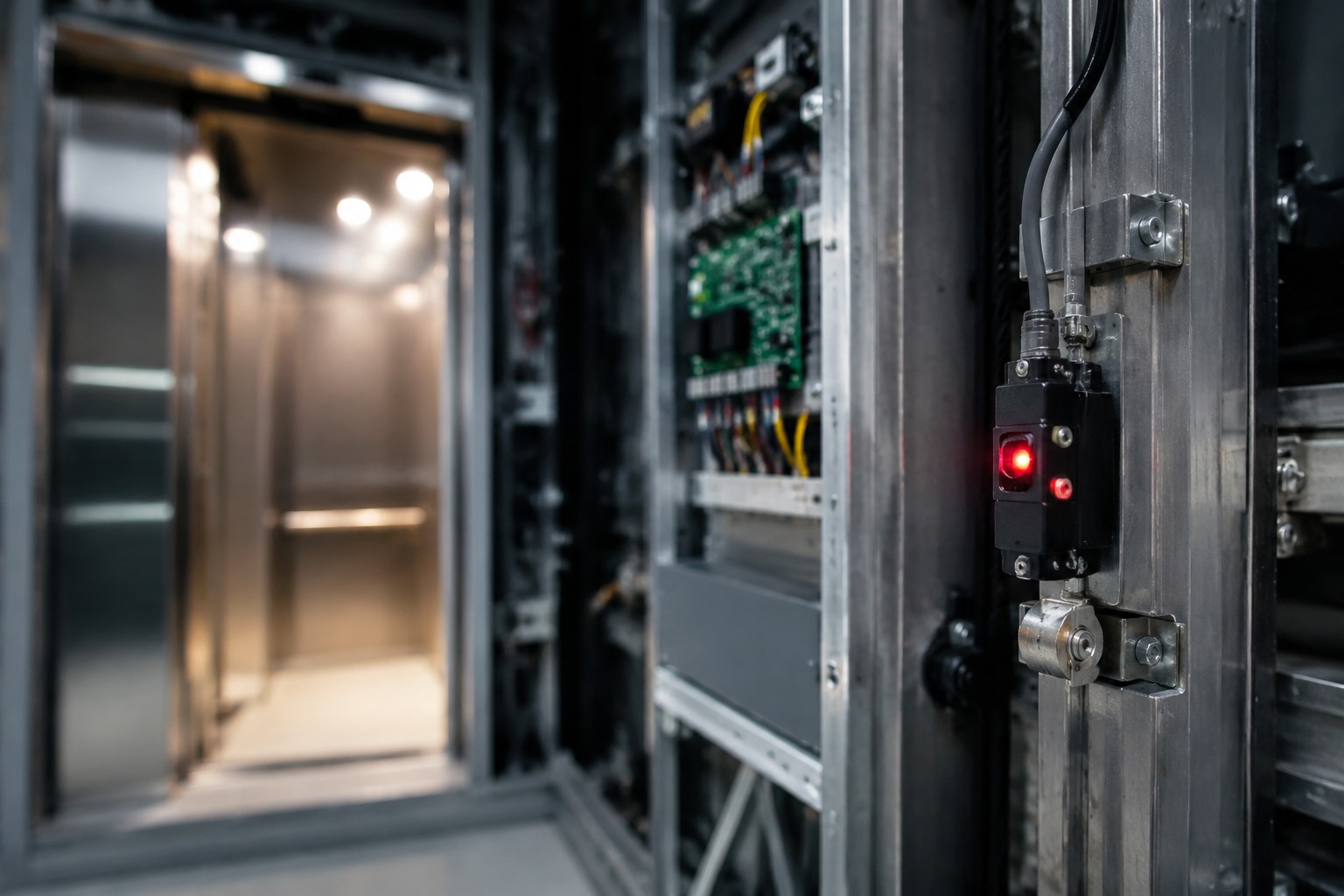
Leveling sensors reduce trip hazards by helping the elevator controller determine when the car has reached the correct landing zone and whether re-leveling is needed after loading changes. Even a small vertical misalignment can create a noticeable lip between the car sill and hall sill. For passengers using wheelchairs, walkers, rolling luggage, food-service carts, mail carts, or hospital beds, that lip can become more than an inconvenience. It can cause abrupt wheel impact, loss of balance, or delayed movement through the doorway.
Ride quality improves when the control system receives clean, repeatable signals. Accurate feedback supports smoother deceleration, tighter stopping consistency, and fewer nuisance corrections. In premium office towers in New York or Class A mixed-use properties in Los Angeles, ride feel directly affects tenant satisfaction. In healthcare settings in Houston or Philadelphia, stable leveling supports safe transport of patients and equipment. In retirement communities in Florida and Arizona, dependable floor alignment reduces risk for mobility-limited residents.
Leveling accuracy also matters from an operational standpoint. Repeated re-leveling cycles can indicate drift, brake performance issues, load-related movement, or poor sensor feedback. Those extra corrections add wear to related components and can increase service calls. A building manager may only notice the symptom as a complaint that “the elevator bumps” or “stops unevenly,” but behind that complaint there may be a sensor alignment issue, a contaminated target, a damaged cable, or a mismatch between replacement part characteristics and the original application.
For modernization contractors, leveling performance is one of the quickest ways occupants judge whether an upgrade was successful. Door operation, dispatch timing, and interior appearance all matter, but inconsistent floor stopping immediately undermines confidence. That is why careful selection and installation of leveling sensors remains a high-value maintenance practice even when the sensor itself is a relatively small part.
Why elevator leveling accuracy matters
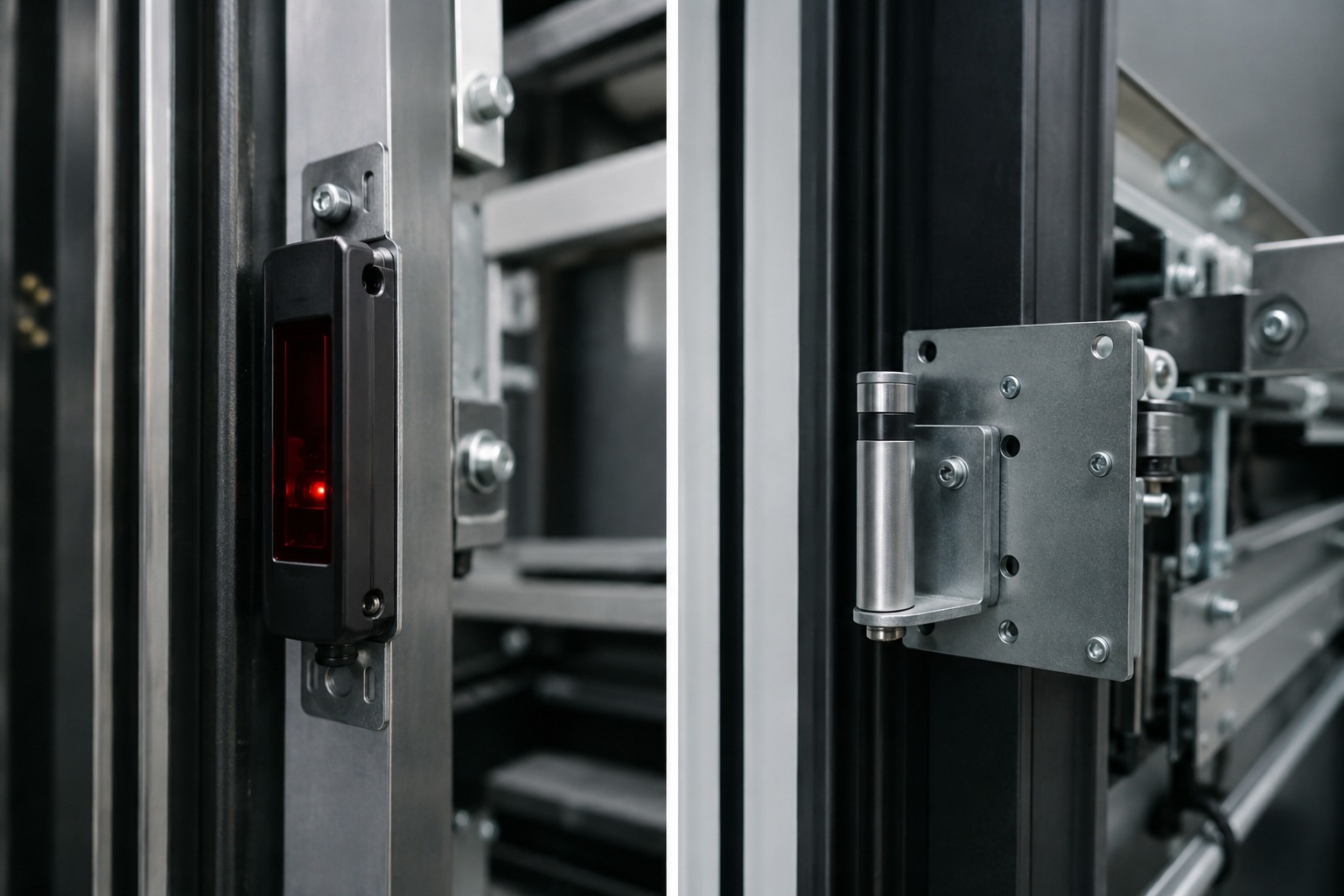
Elevator leveling accuracy matters because it sits at the intersection of safety, code compliance, usability, and equipment protection. A car that does not stop within the expected landing zone can trigger passenger concern, increased call-backs, and potential exposure for the building owner. In busy commercial buildings, small recurring level errors can add up to significant complaint volume. In public properties such as airports, universities, and medical centers, a poor stop can affect user flow and accessibility.
There are several technical reasons accurate leveling deserves attention:
- It helps reduce passenger trip-and-fall risk at the threshold.
- It supports smoother loading and unloading of wheeled traffic.
- It reduces door zone uncertainty and nuisance door behavior.
- It limits repeated re-leveling cycles that can increase wear.
- It gives technicians clearer diagnostic outcomes when troubleshooting ride or stop issues.
- It supports modernization goals where owners expect more consistent performance.
In the United States, leveling tolerance expectations are influenced by equipment design, local enforcement, and maintenance standards. While the exact acceptable behavior depends on the controller, drive, brake, and sensing system, technicians know that even modest inconsistencies tend to worsen if the root cause is not addressed. A sensor that occasionally misses a target today may become a no-start, no-level, or repeated re-level problem tomorrow.
Local conditions also play a role. Coastal properties in Miami, Tampa, New Orleans, and the Northeast may face humidity and corrosion pressure. Warehouses and industrial sites near inland logistics hubs can have higher dust exposure. High-rise cores in Chicago or New York may experience vibration, airflow, and heavy usage patterns that test mounting security and cable routing. Leveling accuracy is therefore not only an engineering concept; it is a field-service reality shaped by the building environment.
  Why leveling accuracy matters in real U.S. applications


      Application
      Main risk of poor leveling
      Operational impact
      User impact
      Maintenance consequence
      Priority level


      Office towers
      Trip hazard during peak traffic
      Tenant complaints and lobby delays
      Reduced ride confidence
      More call-backs
      High


      Hospitals
      Cart and bed threshold interference
      Patient transport disruption
      Safety concern for staff and patients
      Urgent troubleshooting
      Critical


      Hotels
      Luggage wheel snagging
      Guest dissatisfaction
      Perceived poor service quality
      Fast cosmetic and functional response
      High


      Residential high-rises
      Falls for elderly or children
      Frequent resident complaints
      Daily inconvenience
      Repeat service visits
      High


      Airports and transit
      Heavy rolling traffic obstruction
      Flow interruption
      Accessibility concerns
      Rapid fault escalation
      Critical


      Industrial facilities
      Load transfer instability
      Handling delays
      Lower operator confidence
      More system wear
      High


This table shows that leveling accuracy is not only about comfort. The consequences differ by property type, but each row points to the same conclusion: consistent floor stopping protects users and reduces downstream service cost.
Common leveling sensor failure signs
Most leveling sensor problems do not begin as total failures. They often start with intermittent symptoms that appear only under certain loads, at certain floors, or after temperature and humidity changes. Recognizing those signs early helps maintenance teams avoid more disruptive shutdowns.
Common symptoms include the car stopping slightly above or below the landing, inconsistent stop height from trip to trip, frequent re-leveling after passengers enter or exit, doors refusing to open at the expected point, and fault histories that suggest unstable landing-zone detection. In some cases, technicians may observe a strong pattern at one or two floors only, which can point to target alignment or mounting issues rather than a system-wide control fault.
Other visible warning signs include cracked housings, loose brackets, oil or dust buildup on photoelectric surfaces, damaged connectors, insulation wear on cables, corrosion on terminals, and evidence that a sensor has shifted from its original position due to vibration. If a replacement sensor has recently been installed, the issue may involve sensing distance, logic compatibility, or target geometry rather than part quality alone.
Common leveling sensor failure signs and likely checks
Observed symptom
What it may indicate
Likely first inspection point
Possible severity
Effect on riders
Recommended response
Car stops slightly high
Misalignment or late signal
Sensor position and bracket stability
Medium
Trip risk at exit
Check alignment and stop repeatability
Car stops slightly low
Weak detection or target drift
Target condition and gap
Medium
Wheel impact at sill
Inspect target and re-adjust
Frequent re-leveling
Unstable feedback or load movement
Signal consistency and brake behavior
High
Ride annoyance
Review sensor signal and mechanical causes
Doors do not open reliably at floor
Door zone not confirmed
Sensor output and controller input
High
Entrapment concern
Immediate diagnostic review
Issue occurs only at one landing
Localized target or mounting problem
Specific floor target alignment
Medium
Inconsistent experience
Inspect floor-specific hardware
Intermittent faults after rain or humidity
Moisture, contamination, insulation weakness
Cable, connector, and housing seal
High
Unpredictable stops
Dry, clean, and test insulation path
The symptoms in this table are useful because they help narrow troubleshooting. A repeated low stop at multiple floors points in one direction; a problem isolated to one landing points in another. Good diagnosis starts with symptom patterns, not assumptions.
Photoelectric sensor versus magnetic detection
Both photoelectric and magnetic detection methods are used for elevator position and leveling functions, but they do not behave identically in the field. Choosing between them depends on the original design, controller expectations, environmental conditions, and how the target or vane is implemented.
Photoelectric sensing typically relies on a light beam and optical response. Its strengths often include clear switching, straightforward target recognition, and suitability in applications where the system was designed around specific optical geometry. However, photoelectric devices can be more sensitive to dust, oil mist, lens contamination, and some alignment errors. In a machine-room-less installation or hoistway environment with airborne debris, maintenance discipline becomes especially important.
Magnetic detection often uses magnets or magnetic flags with a sensor that responds to field changes. This approach can offer strong resistance to some forms of dirt or visible contamination and may be preferred in rugged conditions. At the same time, magnetic systems require correct field strength, spacing, and orientation. They may also behave differently near ferrous materials or under installation variations that alter signal margins.
Neither method is universally “better.” The best choice is usually the one that matches the elevator’s original design logic and service environment. When a technician substitutes one detection style for another without full compatibility review, new issues can appear even if the part “fits.” That is why source verification and model matching are essential.
Photoelectric versus magnetic detection for elevator leveling
Comparison point
Photoelectric
Magnetic
Field advantage
Main caution
Best-use scenario
Detection principle
Optical beam or reflected light
Magnetic field response
Depends on original design
Do not cross-substitute casually
OEM-matched applications
Sensitivity to dirt
Higher if lens or path gets dirty
Usually lower for visible dust
Magnetic in dusty sites
Still needs inspection
Industrial or dusty environments
Alignment demand
Often more precise
Depends on gap and field geometry
Application-specific
Poor setup affects repeatability
Controlled, well-maintained installations
Response consistency
Very good when clean and aligned
Very good when spacing is correct
Both can perform well
Signal margin matters
High-use passenger elevators
Maintenance focus
Lens cleaning and target check
Gap, magnet strength, and mounting
Clear PM routines
Neglect causes intermittent faults
Planned maintenance portfolios
Replacement risk
Logic or geometry mismatch
Field strength or orientation mismatch
Can be controlled with matching
Verify specs before purchase
Modernization and repair sourcing
This comparison shows why technicians should focus on compatibility, not preference alone. A well-matched photoelectric sensor can outperform a poorly matched magnetic device, and the reverse is also true.
GLS 326 sensor sourcing notes
When sourcing a GLS 326 style leveling sensor or similar replacement, the most important step is model confirmation. Buyers should verify part marking, electrical characteristics, mounting form, connector or wiring style, sensing method, and intended elevator application before placing an order. A visual match alone is not enough, especially in modernization work where prior substitutions may already exist in the field.
For U.S. buyers, strong sourcing support means more than stock availability. It should include careful model matching, image confirmation when needed, stable quality inspection, and protective packaging that reduces transit damage between warehouse and jobsite. This is especially relevant when parts are dispatched to maintenance companies serving multiple cities at once, from New Jersey and New York to California, Texas, Georgia, and Illinois.
From a technology perspective, a capable supplier should understand the practical differences among sensor families, the relationship between switching behavior and controller input expectations, and the importance of dimensional consistency. That technical capability helps reduce ordering errors and unnecessary return cycles. On the manufacturing side, quality-focused suppliers usually emphasize stable incoming material control, lot traceability, and packing methods that protect the sensor body, cable, and mounting surfaces. On the service side, responsive communication, cross-checking support, and shipment updates matter because downtime often costs much more than the part itself.
For buyers reviewing available options, product-specific details can be checked through a GLS 326 photoelectric elevator leveling sensor listing. Where the exact field condition is still being confirmed, a broader page for replacement elevator leveling sensor options can support comparison. If the application involves related position feedback rather than landing alignment alone, an additional elevator position detection sensor reference may be useful during verification.
In the United States market, buyers also care about packaging durability because parts may move through long routes from coastal ports to inland service branches. Protective packing is not a minor detail when shipments pass through transfer points around the Port of Long Beach, Newark distribution corridors, Houston freight routes, or Chicago rail networks. A sensor that arrives with bent brackets, cracked housings, or stressed connectors creates avoidable delay.
  GLS 326 and similar replacement sourcing checklist


      Sourcing item
      Why it matters
      What to confirm
      Common buyer mistake
      Impact if overlooked
      Best practice


      Part number and markings
      Prevents mismatch
      Exact label and revision
      Ordering by appearance only
      Wrong output behavior
      Use clear photos and records


      Electrical characteristics
      Ensures controller compatibility
      Voltage, output type, polarity
      Assuming “universal” fit
      No detection or unstable input
      Match data before shipment


      Mounting dimensions
      Affects installation speed
      Hole spacing and body size
      Ignoring bracket geometry
      Field modification delays
      Compare drawings or photos


      Sensing method
      Must match system design
      Photoelectric or magnetic type
      Substituting without review
      Persistent leveling errors
      Keep to intended detection logic


      Packaging quality
      Protects in transit
      Cushioning and labeling
      Buying lowest-cost freight only
      Arrival damage
      Use protective packing standards


      Supplier response speed
      Reduces downtime
      Pre-sale and after-sale support
      Choosing based on price alone
      Long troubleshooting cycles
      Prefer responsive technical support


The explanation behind this table is simple: the best sourcing result comes from combining technical matching, manufacturing stability, and service responsiveness. Price matters, but a cheaper incorrect sensor is usually the most expensive outcome.
Installation position and adjustment checks
After a new leveling sensor is sourced, installation quality becomes the next critical step. A correct part can still perform poorly if it is mounted at the wrong position, set at the wrong gap, or aligned inconsistently with the target, vane, or magnetic element. For that reason, technicians should always compare the new installation with the original setup, the controller requirements, and the physical geometry of the hoistway components.
First, inspect bracket rigidity. A bracket that flexes under vibration can create intermittent switching and inconsistent stop height. Second, confirm the sensing face is oriented correctly toward the target path. Third, check that cable routing avoids pinch points, sharp edges, and moving parts. Fourth, inspect for contamination sources such as oil mist, dust accumulation, water ingress paths, or loose debris that may affect sensor performance over time.
Adjustment should be performed methodically. Small changes can produce large effects in door zone timing and leveling accuracy. If the system uses more than one sensor for position or zone confirmation, their relationship must also be preserved. Replacing one component without understanding the full sensing sequence can create misleading results.
Because elevator work presents safety hazards, installation and adjustment should be completed only by qualified elevator personnel using proper lockout, access, and testing procedures. The goal is not simply to make the car “look level” once. The goal is to restore repeatable, safe performance over multiple cycles and loads.
  Installation position and adjustment checkpoints


      Checkpoint
      What to inspect
      Why it affects leveling
      Typical field issue
      Correction approach
      Verification method


      Bracket stability
      Movement, looseness, metal fatigue
      Shifts sensing point
      Vibration loosens fasteners
      Secure or replace bracket
      Repeat cycle observation


      Sensor orientation
      Face angle and direction
      Changes detection window
      Installed slightly twisted
      Re-align to target path
      Signal confirmation during travel


      Sensing gap
      Distance to target or magnet
      Reduces switching margin
      Gap too wide after replacement
      Adjust to correct tolerance
      Multi-trip consistency test


      Target condition
      Wear, contamination, damage
      Weakens response
      Bent vane or dirty surface
      Clean or replace target
      Visual plus functional test


      Cable routing
      Strain, rub points, connector fit
      Causes intermittent signal loss
      Harness vibrates on moving parts
      Re-route and secure
      Shake test and continuity review


      Environmental exposure
      Moisture, dust, oil, temperature
      Degrades reliability
      Lens contamination or corrosion
      Add shielding and PM cleaning
      Trend monitoring over time


This checklist is useful because it separates installation issues from sourcing issues. If the part is correct but the sensor face is twisted or the gap is wrong, the symptom may look like a bad part even though the root cause is setup.
Testing leveling after replacement
Testing after replacement should be structured, documented, and repeated under realistic operating conditions. A quick single-floor test is not enough. The elevator should be observed through multiple landing approaches, directions of travel, and load conditions whenever service procedures permit. Consistency is the target.
Start with visual confirmation that the sensor is secure, correctly wired, and free from obstruction. Then verify signal recognition through the controller input or the applicable diagnostic method. Run the car to multiple floors and observe stop accuracy at each landing. If the installation allows, compare unloaded and loaded behavior because some leveling complaints appear only when the car settles under passenger entry or exit.
Technicians should also watch for delayed door opening, repeated re-leveling, or floor-specific anomalies. If one landing shows a different result, inspect that target area rather than immediately re-adjusting the new sensor globally. In some cases, the replacement uncovers a pre-existing problem that was hidden by the old part’s drift or weakened sensitivity.
For service organizations, documentation matters. Recording floor stop observations, controller input behavior, and any adjustment made creates a useful reference for future preventive maintenance and helps justify the repair outcome to building managers.
  Post-replacement leveling test plan


      Test step
      Purpose
      What to record
      Pass indicator
      Fail indicator
      Next action if failed


      Visual installation review
      Confirm safe setup
      Mounting, cable, gap, cleanliness
      No visible defects
      Loose or misaligned parts
      Correct hardware position


      Input signal confirmation
      Verify controller sees sensor
      Switching status by approach
      Stable signal
      Intermittent or missing input
      Check wiring and adjustment


      Upward landing stops
      Check one travel direction
      Stop height by floor
      Consistent alignment
      High or low variance
      Re-inspect sensing window


      Downward landing stops
      Check opposite direction
      Stop height by floor
      Repeatable result
      Direction-specific error
      Review control and brake behavior


      Loaded operation check
      Observe settling effects
      Re-level frequency and accuracy
      No excessive correction
      Frequent re-leveling
      Examine brake, load, and signal stability


      Final documentation
      Create service record
      Part used and test outcome
      Clear maintenance log
      Missing traceability
      Update records before handoff


The table above matters because successful replacement is not only installation. It is verified performance. Good documentation also reduces confusion if another technician returns later for an unrelated issue.


  Case example: mid-rise office building in Chicago
  A service team handling a mid-rise office property in Chicago faced recurring complaints that one elevator stopped low at the lobby during morning traffic. The initial suspicion was brake drift, but the issue appeared mostly on downward approach to one landing. Inspection found a slightly shifted sensor bracket and contamination on the target area. After replacing the worn sensor, correcting bracket alignment, and documenting stop performance across several floors, the building saw complaint volume drop noticeably. The main lesson was that symptom pattern by floor and direction helped avoid a misdiagnosis.
Case example: hospital service route in Texas
In a Texas healthcare facility, re-leveling frequency had increased after heavy cart traffic and seasonal humidity changes. The maintenance provider reviewed cable routing, sensor cleanliness, and target alignment during replacement. Post-installation testing included repeated loaded runs because transport beds and supply carts changed settling behavior. The final result was stable floor alignment and fewer disruptive corrections, which mattered greatly for staff workflow.
Preventive maintenance recommendations
Preventive maintenance for elevator leveling sensors should be tailored to traffic level, environment, and equipment age. In high-use U.S. buildings, waiting for obvious misleveling before inspection is rarely cost-effective. A planned routine can catch contamination, bracket movement, cable wear, and target damage before they become passenger-facing events.
For photoelectric systems, lens and target cleanliness should be checked regularly, especially in dusty, humid, or oily environments. For magnetic systems, bracket security, spacing, and magnet condition deserve similar attention. Across both types, maintenance teams should review connector tightness, insulation condition, and signs of vibration or impact. Service records should note whether stop consistency is changing over time, because gradual drift can be easier to miss than sudden failure.
In our experience supporting parts supply for maintenance firms and distributors, strong preventive results come from combining three capabilities. First, technological capability: helping customers confirm compatible sensor models and application details so they install the right part the first time. Second, manufacturing capability: maintaining stable quality inspection and protective packing so replacement components arrive ready for service. Third, service capability: responding quickly with cross-checking support and shipment coordination so downtime is minimized for building owners and contractors.
Looking toward 2026, preventive maintenance is likely to become more data-driven. More portfolios will use fault history, stop trend logs, and callback frequency to identify elevators that need proactive sensor review. Policy and accessibility expectations may also push owners to address leveling inconsistencies sooner. Sustainability will reinforce this direction, because preventing failures reduces scrap, emergency logistics, and unnecessary equipment wear.
  Preventive maintenance schedule for leveling sensors


      Maintenance item
      Typical frequency
      Main goal
      Who benefits most
      Risk if skipped
      Notes


      Visual sensor inspection
      Monthly or per route cycle
      Catch physical damage early
      High-traffic buildings
      Undetected mounting drift
      Fast, low-cost check


      Lens or sensing face cleaning
      Monthly to quarterly
      Maintain signal clarity
      Dusty or humid sites
      Intermittent detection
      Use approved cleaning method


      Bracket and fastener check
      Quarterly
      Prevent vibration shift
      Older equipment
      Stop inconsistency
      Look for metal fatigue


      Cable and connector inspection
      Quarterly
      Protect signal continuity
      MRL and tight spaces
      Intermittent faults
      Watch strain points


      Landing accuracy trend review
      Quarterly to semiannual
      Spot gradual drift
      Properties with complaints history
      Late fault detection
      Use service records


      Replacement planning for aging sensors
      Annual review
      Avoid emergency downtime
      Large building portfolios
      Rush orders and outages
      Stock matched spare units


This preventive schedule shows that modest routine checks can prevent many expensive service disruptions. The aim is not excessive maintenance, but timely attention to known failure patterns.
Buying advice for maintenance companies, distributors, and owners
Buying elevator leveling sensors in the United States is easiest when the purchaser gathers field details before requesting quotation. The most useful information includes the existing part number, photos of the sensor and mounting area, elevator brand and application, connector style, and a description of the fault. If the issue is isolated to one landing or one travel direction, that should also be stated because it helps distinguish sensor replacement needs from related mechanical issues.
Distributors should prioritize suppliers that can support model matching across multiple brands and accessory categories, not only one sensor family. Maintenance firms benefit when they can source control boards, door operator parts, door locks, light curtains, guide shoes, oil cups, encoders, power supplies, buttons, COP panels, intercom parts, and sensors from a responsive channel that understands elevator compatibility concerns. That reduces purchasing friction and helps standardize quality expectations.
Building owners and modernization contractors should also think about lifecycle cost rather than piece price alone. A correctly matched, well-packed, promptly delivered sensor that reduces callbacks is often the better value. This matters especially for portfolios across several cities where service teams need consistent support from the same sourcing partner.
Industries and applications where leveling sensors matter most
Leveling sensors matter in almost every elevator application, but some industries feel the impact more sharply. Healthcare relies on smooth threshold transfer. Hospitality depends on guest comfort and luggage movement. Commercial office portfolios need low complaint rates and reliable peak handling. Residential towers need consistent user confidence. Airports, rail stations, and public institutions require accessibility and predictable throughput. Industrial sites and distribution buildings may have lower aesthetic expectations, but they still need safe, repeatable loading behavior.
Across these applications, the parts supply requirement is similar: dependable compatibility, stable quality, and service that helps maintenance teams move quickly from diagnosis to repair. In large regional markets such as Southern California, the Northeast corridor, the Gulf Coast, and the Midwest, customers often prefer suppliers who can support both routine replacements and modernization-related matching questions.
Our role as a parts supply partner
We support the United States elevator aftermarket as a professional parts supplier focused on practical field needs. Our technological capability centers on careful model matching and compatibility review across elevator sensors and related accessories. That helps maintenance companies and distributors reduce the risk of ordering errors when handling legacy equipment, substitutions, and modernization projects.
Our manufacturing capability is reflected in stable quality inspection and protective packaging. For small but critical parts such as leveling sensors, position detection devices, and related lift accessories, consistency and transit protection matter. Customers need products that arrive in dependable condition whether the shipment is heading to a service branch near Newark, a contractor in Dallas, a distributor in Los Angeles, or a maintenance team in Atlanta.
Our service capability is built around responsive communication, sourcing support, and helping customers reduce downtime. Building owners, maintenance firms, and modernization contractors often need quick confirmation on matching, lead time, and shipment progress. That practical support is as important as the part itself when an elevator is out of service or producing repeated complaints.
FAQ about elevator leveling sensors
What does an elevator leveling sensor do?
It provides position-related feedback that helps the control system stop the elevator car accurately at the landing and maintain proper door-zone behavior.
What are the most common signs of a bad leveling sensor?
Frequent re-leveling, stops that are slightly high or low, inconsistent landing accuracy, intermittent door-zone recognition, and faults that appear only at certain floors are common signs.

Can a dirty sensor cause misleveling?
Yes. On photoelectric systems, contamination on the sensing face or target can reduce signal quality. Dirt, oil film, or moisture can create intermittent or delayed detection.

Is photoelectric better than magnetic detection?
Not universally. The best choice is the one that matches the elevator’s original design, controller logic, and environment. Compatibility is more important than general preference.

How do I know if a GLS 326 style sensor is the right replacement?
Confirm the existing part number, electrical characteristics, mounting dimensions, sensing method, and application details. Product images and site photos can help verify the match before ordering.

Can poor leveling be caused by something other than the sensor?
Yes. Brake behavior, controller settings, target alignment, bracket movement, cabling issues, and load-related settling can all contribute. The sensor is important, but it is part of a larger system.

Should building owners keep spare leveling sensors in stock?
For high-traffic buildings or portfolios with older equipment, keeping matched spares can reduce downtime and avoid emergency shipping costs, especially when the same model is used across several units.

How often should leveling sensors be inspected?
That depends on traffic and environment, but routine visual checks and periodic cleaning or alignment verification are good practice, especially in dusty, humid, or high-use properties.

What trends will shape elevator leveling sensor maintenance in 2026?
Expect broader use of predictive maintenance, faster replacement planning for aging equipment, stronger attention to accessibility and liability, and more focus on durable components that support sustainability goals.

What is the best way to reduce ordering mistakes?
Provide the part marking, photos, application details, and any symptoms seen in the field. A supplier that supports careful model matching can significantly improve first-order accuracy.
Final takeaway
Elevator leveling accuracy matters because it directly affects safety, ride quality, accessibility, and maintenance cost. The most effective approach combines early symptom recognition, correct detection method matching, careful sourcing, accurate installation, thorough testing, and preventive maintenance. For maintenance companies, distributors, building owners, and modernization contractors in the United States, success usually depends on one principle: choose the right sensor, verify the setup, and document the result. That disciplined process keeps elevators stopping where they should—safely and consistently.