
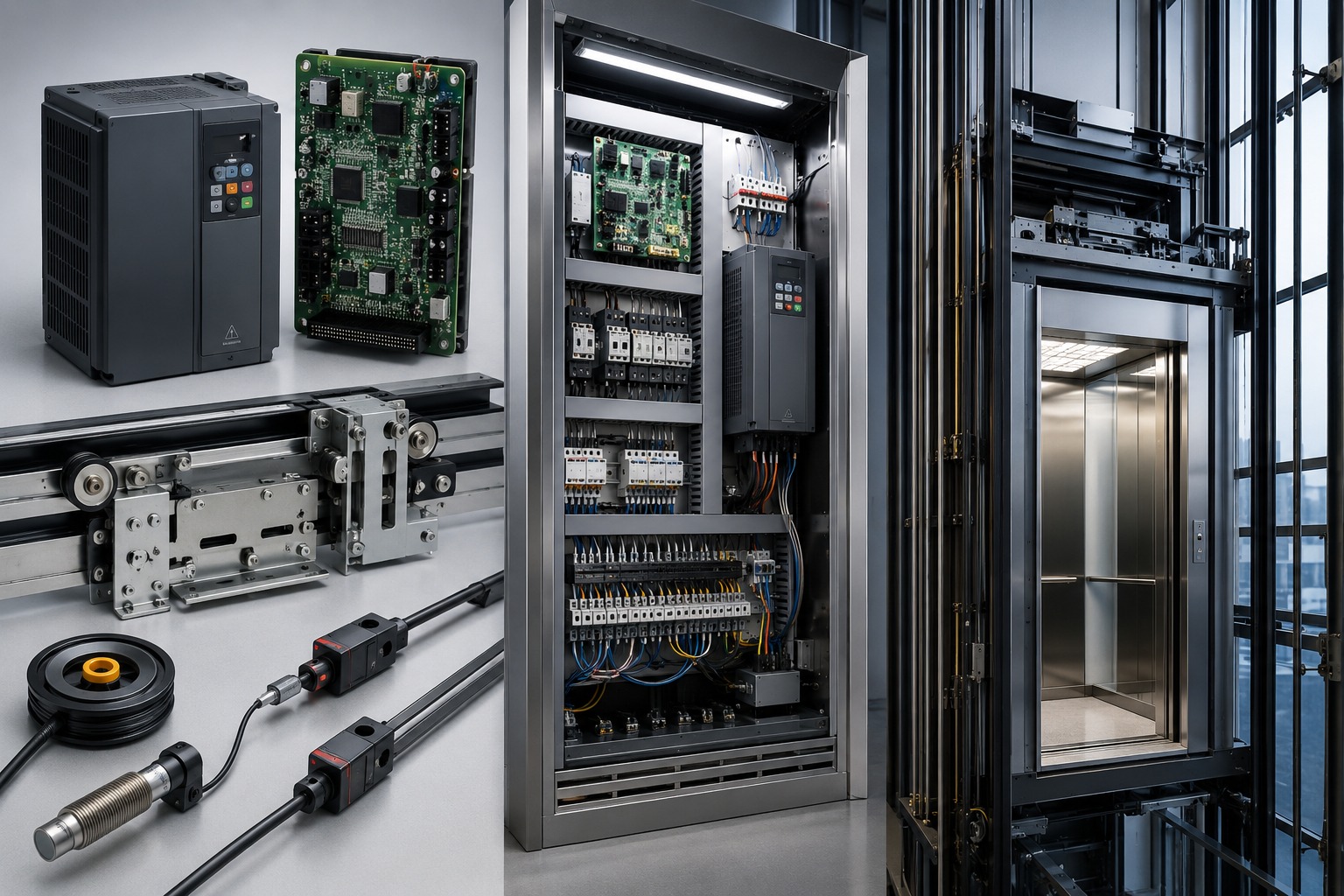
An elevator inverter is the drive that controls motor speed, acceleration, deceleration, torque, and stopping accuracy. In practical terms, it is one of the main parts that determines whether a lift feels smooth or jerky, whether it wastes electricity or runs efficiently, and whether repeated faults turn into expensive downtime. For building owners, elevator maintenance companies, distributors, and modernization contractors across the United States, buying the right inverter is not only about kilowatt rating. It is also about voltage, motor type, control logic, encoder feedback, braking behavior, cabinet space, software parameters, and brand-specific compatibility.
If you need a direct buying answer, start with three questions. First, is the existing inverter failing because of age, heat, capacitor wear, IGBT damage, communication faults, or poor motor control? Second, does the replacement match the elevator鈥檚 motor data, controller interface, encoder requirements, input power, and braking setup? Third, is the supplier capable of confirming exact model matching, conducting quality inspection, and packaging the unit for safe transit to U.S. job sites from New York and Chicago to Los Angeles, Houston, Miami, and Seattle? When those three points are handled correctly, ride comfort, restart speed, and long-term reliability usually improve.
The U.S. market has a mix of aging mid-rise buildings, hospital and hotel modernization work, warehouse and mixed-use construction, and strict expectations for uptime. That makes careful sourcing especially important for KONE, Hitachi, Toshiba, Mitsubishi, and other branded systems where a generic drive may not be a true substitute without engineering review. In many projects, buyers compare original model numbers with compatible replacements, assess lead times through ports such as Long Beach, Savannah, Newark, and Houston, and balance budget against commissioning risk.
For buyers reviewing available options, it can help to compare dedicated product pages such as a KONE elevator inverter solution for U.S. lift modernization, a Hitachi elevator inverter replacement source, a 22kW elevator frequency converter for commercial buildings, or an HGE 15kW frequency converter for lift spare parts. The best choice depends on exact application details rather than only nameplate power.
How an Elevator Inverter Works in Real Buildings
An elevator inverter, often called a frequency converter or VFD in the field, converts fixed incoming electrical power into a variable output that allows the lift motor to run at precisely controlled speed and torque. During startup, the inverter ramps the motor smoothly instead of applying full power suddenly. During travel, it continuously adjusts frequency and voltage to keep motion stable despite passenger load changes. Near the floor, it slows the car in a controlled way so the elevator levels accurately and doors can open with minimal bounce or re-leveling.
This function matters in every type of U.S. property. In a New York office tower, smooth acceleration reduces complaints from tenants. In a Chicago hospital, accurate floor leveling supports stretcher movement and patient safety. In a Dallas residential building, energy-efficient speed control lowers operating costs. In an Atlanta hotel, reduced motor stress can help decrease unscheduled outages during peak guest traffic. The inverter therefore affects comfort, energy use, motor life, brake coordination, and controller stability at the same time.
Modern elevator inverters also support fault diagnostics, communication with the main controller, current monitoring, regenerative or braking functions in some systems, and adjustable parameters for motor tuning. This is why a replacement unit must be selected with care. Even when two drives look similar, different firmware behavior, terminal assignments, or encoder handling can produce nuisance trips, poor ride quality, or unsafe stopping performance if incorrectly matched.
| Inverter Function | What It Controls | Impact on Ride | Impact on Energy Use | Impact on Reliability | Buyer Note |
|---|---|---|---|---|---|
| Soft start | Acceleration ramp | Reduces jerks at launch | Avoids peak stress | Lowers motor shock | Check ramp parameter range |
| Speed regulation | Travel frequency | Stable car movement | Improves efficiency at partial load | Prevents overcurrent stress | Match with controller logic |
| Torque control | Motor output torque | Better response under load | Optimizes power draw | Protects brake and machine | Confirm motor data setup |
| Deceleration | Stopping curve | Smoother landing | Limits waste during braking | Reduces stop-related faults | Verify braking resistor needs |
| Floor leveling | Low-speed precision | Accurate landing | Shorter correction cycles | Fewer re-level trips | Encoder compatibility is critical |
| Fault protection | Overcurrent, overvoltage, heat | Prevents shutdown under unsafe conditions | Stops damaging inefficiency | Protects the entire drive train | Review fault history before buying |
The table above shows why elevator inverters are not simple commodity parts. Their effect reaches beyond speed control and into the total operating behavior of the lift system.
Signs an Elevator Inverter Needs Replacement
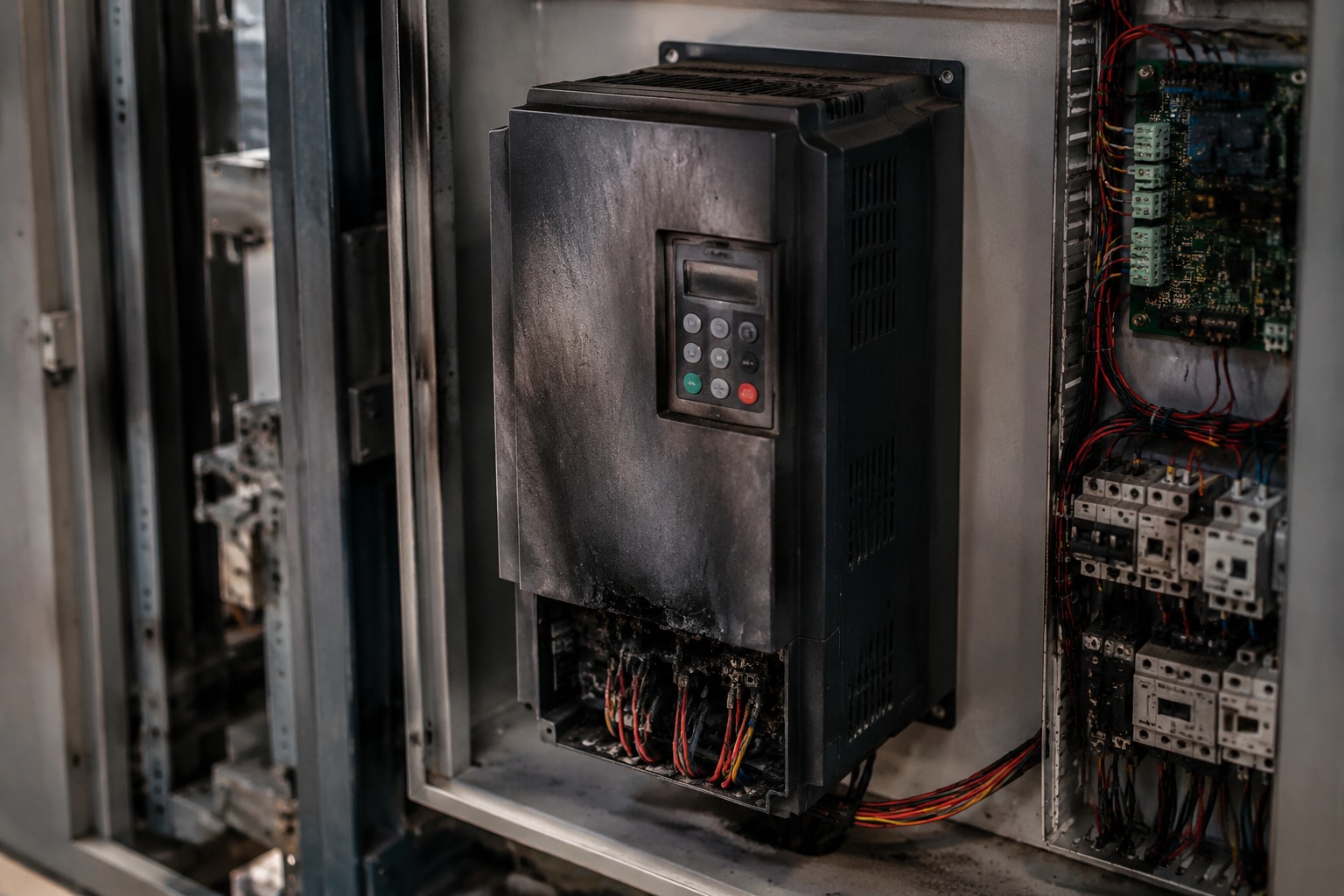
Not every inverter fault means immediate replacement, but several symptoms strongly suggest that the drive is nearing end of life or already causing operating risk. The most common issue is intermittent tripping that becomes more frequent in warm machine rooms, especially during heavy traffic. Aging capacitors lose capacity over time, cooling fans wear out, solder joints weaken from thermal cycling, and IGBTs can become unstable after years of load fluctuations. In older buildings in cities such as Boston, Philadelphia, and San Francisco, heat buildup and dust contamination are especially common in machine rooms with limited airflow.
Other warning signs include rough acceleration, motor humming, inconsistent floor leveling, delayed starts, overcurrent trips during takeoff, and communication alarms between inverter and controller. If a technician has already replaced related items such as encoder cables, fans, contactors, or brake parts but the drive still generates erratic faults, the inverter becomes the most likely root cause.
There is also a business side to replacement timing. If a drive is obsolete, parts are no longer available, and resets are only temporary, waiting may increase downtime and emergency labor cost. For property managers in high-traffic buildings, a planned replacement during a scheduled shutdown is usually less expensive than repeated callback visits.
| Symptom | Likely Cause | Operational Risk | Short-Term Action | Replacement Urgency | Field Comment |
|---|---|---|---|---|---|
| Frequent overcurrent trips | IGBT stress, motor mismatch, parameter drift | Unexpected shutdowns | Check motor data and load | High | Common in aging commercial lifts |
| Overheat alarms | Fan failure, dust, poor ventilation | Thermal damage | Clean and inspect cooling path | Medium to high | Machine room heat is a major factor |
| Jerky ride or harsh stop | Control instability, worn components | Poor passenger comfort | Review tuning and encoder input | Medium | Often noticed first by tenants |
| Floor leveling errors | Encoder fault, speed feedback issue | Trip hazard and callbacks | Test feedback circuit | High | Critical in hospitals and senior housing |
| Intermittent communication faults | Board deterioration or interface issue | Control loss | Inspect wiring and controller signals | Medium to high | Brand-specific systems need precise matching |
| Drive unavailable or obsolete | End-of-life model | Extended downtime if failure occurs | Plan replacement in advance | High | Best handled before a shutdown happens |
The table above helps buyers separate repairable conditions from signs that replacement should be scheduled soon. If two or more high-risk symptoms appear at the same time, it is wise to start sourcing immediately.
How to Choose Inverter Capacity and Compatibility
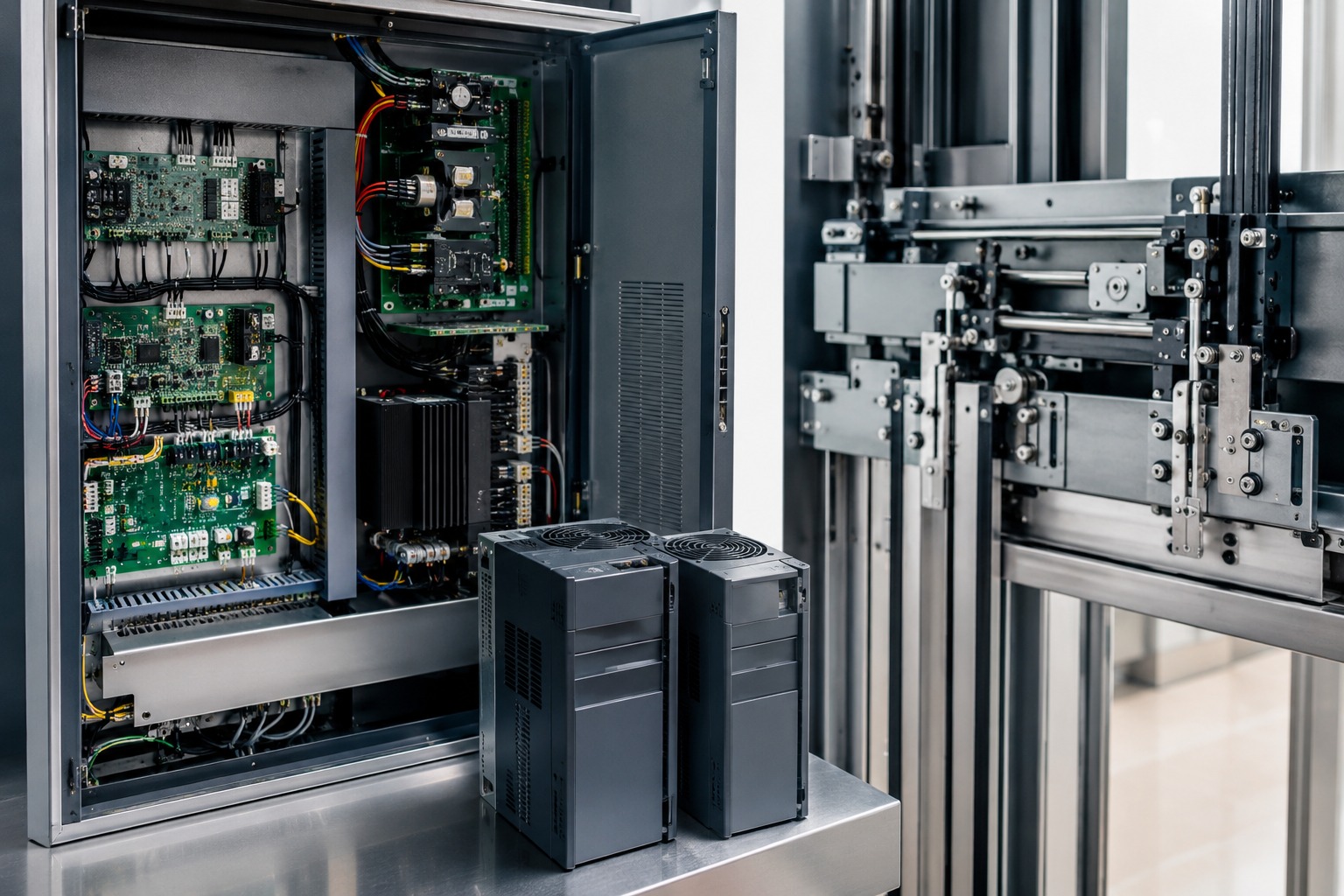
Choosing capacity starts with the elevator motor nameplate, but it should never stop there. Buyers need to confirm rated power in kilowatts or horsepower, rated voltage, full-load current, rated frequency, and motor speed. Next, identify the motor type: geared induction machine, gearless permanent magnet motor, or another configuration. Then confirm whether the system uses open-loop or closed-loop control and what kind of encoder or resolver feedback is required.
Capacity must be selected with enough current margin for real elevator duty cycles. Elevators do not behave like simple conveyor loads. They accelerate, reverse direction, decelerate often, and operate under varying passenger weights. That means continuous current, peak overload capacity, braking behavior, and thermal design all matter. If you undersize the inverter, nuisance trips and overheating are likely. If you oversize without checking compatibility, you may introduce tuning problems, cabinet fit issues, or unnecessary cost.
Compatibility is equally important. U.S. buyers should verify input power supply, output current, braking resistor or regenerative arrangement, communication interface, controller terminal layout, software parameter structure, cabinet dimensions, and environmental rating. In modernization work, space constraints inside older control cabinets in cities like Baltimore, Cleveland, and St. Louis often affect the final selection.
| Selection Item | Why It Matters | What to Check | Typical Buyer Mistake | Result of Mismatch | Recommendation |
|---|---|---|---|---|---|
| Motor power rating | Base sizing reference | kW/HP on nameplate | Using old documentation only | Under or oversizing | Verify on-site data |
| Rated current | Determines real load handling | Drive output current vs motor FLA | Focusing only on kW | Overcurrent trips | Prioritize current match |
| Input voltage | Power supply compatibility | 208V, 380V, 460V class, etc. | Ignoring building supply variation | Drive damage or non-start | Confirm measured site voltage |
| Control mode | Affects ride tuning | Open-loop or closed-loop vector | Assuming any VFD can replace elevator drive | Poor leveling and comfort | Use elevator-suitable logic |
| Encoder feedback | Needed for precise speed and leveling | Pulse type, voltage, connector | Missing feedback specification | Positioning errors | Match encoder exactly |
| Braking setup | Controls deceleration energy | Resistor value, regenerative unit | Reusing incompatible brake components | Overvoltage trips | Review braking circuit fully |
| Physical dimensions | Must fit cabinet and cooling path | Mounting size and clearance | Buying without cabinet check | Installation delays | Measure space before order |
The safest buying process is to provide the supplier with drive model number, motor nameplate photo, controller brand, fault codes, encoder details, cabinet photos, and any existing parameter backup. This reduces the risk of delays after the part reaches the job site.
KONE Elevator Inverter Buying Considerations
KONE systems often require careful model matching because the inverter works as part of a larger control ecosystem involving the controller, motor, door operation logic, and travel profile settings. Buyers should not assume that a physically similar drive is interchangeable. In KONE replacements, the practical questions are whether the inverter matches the original control philosophy, whether the connectors and terminals line up properly, whether software parameters can be transferred or recreated, and whether the drive is suitable for the exact machine type in the elevator.
For modernization contractors working in high-rise markets such as Manhattan, Jersey City, Chicago Loop, and downtown Los Angeles, a KONE inverter purchase is often driven by a need to minimize downtime. That means lead time, identification accuracy, and packaging quality are almost as important as price. A drive that arrives quickly but is mismatched can create a longer outage than waiting for a properly confirmed replacement.
When evaluating a KONE elevator inverter for United States maintenance and modernization work, buyers should confirm original part number references, motor application, compatibility notes, and whether any commissioning adjustments will be needed. For distributor buyers, documentation support and responsive pre-shipment confirmation are especially valuable because they reduce return risk.
| KONE Buying Factor | Why It Is Important | What to Request from Supplier | Risk if Ignored | Best for Which Buyer | Decision Priority |
|---|---|---|---|---|---|
| Original model verification | Ensures direct matching | Nameplate confirmation and photos | Wrong unit ordered | All buyers | Very high |
| Controller compatibility | Needed for proper communication | Interface details | Fault alarms or no run | Maintenance firms | Very high |
| Parameter support | Speeds commissioning | Setup guidance or baseline data | Longer startup time | Contractors | High |
| Cabinet fit | Important in retrofits | Dimensions and cooling requirements | Rework in machine room | Modernization teams | Medium |
| Lead time and logistics | Reduces outage duration | Stock status and dispatch timing | Extended shutdown | Building owners | High |
| Protective packaging | Prevents transit damage | ESD and shock-protection method | Arrival defects | Distributors | Medium |
This table shows that KONE purchasing success depends on both engineering fit and supply chain discipline.
Hitachi Inverter Sourcing Notes
Hitachi elevator inverter sourcing usually centers on exact identification and realistic replacement planning. Many buyers first search by series or exterior appearance, but those clues are not enough. Different revisions may use different interfaces, firmware logic, power sections, or parameter behavior. For this reason, sourcing should begin with the full model number, serial data if available, controller information, and any visible labels on associated boards or connectors.
In the U.S. market, Hitachi-equipped elevators may appear in office buildings, apartments, public infrastructure, and mixed-use developments, especially where long service life means older components are still running. In cities such as Seattle, Denver, Phoenix, and Houston, replacement projects often involve balancing urgency against the need to avoid a second shutdown caused by a wrong part. Accurate sourcing is therefore more valuable than buying the fastest or cheapest unit without technical review.
When comparing options, buyers can review a Hitachi elevator inverter source for replacement and spare parts and provide detailed site information before ordering. If the application points to a standard power range, the supplier may also recommend alternatives such as a 22kW elevator frequency converter or an HGE 15kW lift frequency converter after compatibility review. The key is that substitution should be engineered, not assumed.
| Hitachi Sourcing Step | Purpose | Information Needed | Common Problem | How to Reduce Risk | Outcome |
|---|---|---|---|---|---|
| Read full model code | Identify exact drive version | Nameplate photo | Partial number only | Share clear close-up images | Higher matching accuracy |
| Confirm motor data | Validate capacity | kW, current, voltage | Drive fits but load does not | Use motor nameplate and site meter data | Stable operation |
| Check controller interface | Ensure command compatibility | Terminal and signal details | No response after install | Map input and output points | Faster commissioning |
| Review fault history | Avoid replacing the wrong part | Error codes and symptoms | External issue mistaken for drive failure | Compare trip logs with field tests | Better diagnosis |
| Assess lead time | Plan outage window | Stock and transit schedule | Building left out of service too long | Coordinate shipping route early | Improved project timing |
| Request packaging details | Protect electronics in transit | Carton, foam, antistatic method | Shock or moisture damage | Use protective export packaging | Safer delivery to site |
As shown above, Hitachi sourcing is strongest when procurement teams and field technicians share complete information before purchase.
Installation and Commissioning Checks
Even the right inverter can perform poorly if installation and startup are rushed. Before energizing the drive, technicians should inspect incoming voltage, grounding, cabinet ventilation, brake circuit connections, motor wiring, encoder wiring, and all terminal points for tightness and polarity. If the replacement drive has different dimensions or heat dissipation needs, the panel layout may need adjustment. In coastal U.S. markets such as Miami, Tampa, and New Orleans, moisture control and corrosion inspection are especially important.
Commissioning should include parameter entry based on verified motor data, acceleration and deceleration tuning, brake timing checks, low-speed leveling tests, no-load and full-load travel tests, and repeated run cycles to confirm thermal stability. It is also important to record final parameters and any modified wiring so future service teams can work efficiently.
| Commissioning Check | What to Inspect | Why It Matters | Pass Standard | Failure Risk | Documentation Needed |
|---|---|---|---|---|---|
| Incoming power test | Voltage and phase balance | Protects the drive at startup | Within equipment tolerance | Immediate fault or damage | Meter reading record |
| Grounding inspection | PE connection and bonding | Reduces electrical noise and safety risk | Secure, low resistance | Unstable operation | Ground verification note |
| Motor wiring check | Output phase sequence and insulation | Ensures proper rotation and load control | Correct connection confirmed | Trip or reverse issue | Wiring checklist |
| Encoder feedback test | Signal type and stability | Critical for leveling accuracy | Consistent feedback signal | Rough ride and floor errors | Feedback test log |
| Brake coordination test | Brake release and pickup timing | Prevents rollback and harsh starts | Smooth synchronized action | Unsafe motion or shocks | Timing notes |
| Repeated run test | Multiple loaded cycles | Verifies heat and fault stability | No abnormal trips | Hidden thermal faults remain | Run report |
The checklist above is useful because many elevator callback issues happen after installation, not before. A disciplined startup process prevents avoidable service visits.
Maintenance Tips for Elevator Frequency Converters
Routine maintenance extends inverter life and makes replacement planning easier. The first rule is thermal management. Heat is one of the biggest enemies of power electronics. Keep filters, fans, and heat sinks clean, and verify that cabinet airflow has not been blocked by added wiring or stored materials. In older properties, machine room temperatures should be monitored during summer peaks, especially in regions such as Arizona, Texas, and the Southeast.
Second, monitor electrical condition. Loose terminals, fluctuating supply voltage, grounding problems, and degraded braking components can all shorten inverter life. Third, review fault history regularly instead of only clearing alarms. Repeated low-level warnings often reveal a developing issue long before a shutdown occurs. Fourth, back up parameters whenever possible. This is critical in modernization and service fleets where multiple technicians may work on the same route.
Maintenance teams should also watch the surrounding elevator system. A failing encoder, dragging brake, worn motor bearings, or controller issue can make the inverter appear faulty. Good diagnostics save money by preventing unnecessary drive replacement.
| Maintenance Task | Recommended Frequency | Main Benefit | Warning Sign Found | Cost Impact | Service Tip |
|---|---|---|---|---|---|
| Clean cooling path | Quarterly or site-dependent | Lower internal temperature | Dust, blocked fins | Reduces premature failure | Use non-damaging cleaning method |
| Inspect cooling fan | Every service cycle | Maintains airflow | Noise, low speed, vibration | Low-cost preventive action | Replace before peak season |
| Tighten terminals | Semiannually | Improves electrical stability | Heat marks, looseness | Prevents fault trips | Follow torque guidelines |
| Review fault logs | Monthly in busy sites | Early diagnosis | Repeated minor alarms | Avoids emergency labor | Track patterns over time |
| Verify encoder condition | As part of travel quality checks | Supports precise leveling | Intermittent feedback errors | Limits callbacks | Inspect cable shielding too |
| Backup parameters | After changes and annually | Speeds recovery after failure | Missing setup data | Shortens downtime | Store copy with job records |
The practical message is simple: preventive care is cheaper than urgent replacement, and good records make every future repair faster.
U.S. Market Conditions, Product Types, and 2026 Trends
The United States elevator service market is shaped by three major forces: modernization of aging building stock, demand for energy efficiency, and pressure to reduce downtime in occupied properties. Mid-rise residential towers in Florida and Texas, institutional facilities in the Midwest, mixed-use projects on the West Coast, and transit-related vertical transportation in major cities all contribute to ongoing demand for inverter replacement and upgrade work.
Product types in the market generally include original branded replacement inverters, engineered compatible units, standard frequency converters adapted for lift use where appropriate, and higher-spec drives for demanding duty cycles. Buyers in large logistics and trade corridors such as Los Angeles/Long Beach, Houston, Savannah, and Newark often pay close attention to shipping availability and customs timing, because project schedules can be tight.
Looking toward 2026, several trends are likely to matter more. First, building owners are prioritizing sustainability and energy management, which supports demand for more efficient drive systems and better tuning. Second, predictive maintenance is expanding, with more interest in fault trend analysis instead of purely reactive service. Third, modernization projects increasingly require documentation, traceability, and safer component replacement practices. Fourth, policy pressure around building performance and reliability may encourage earlier replacement of unstable legacy drives rather than repeated stopgap repairs.
The line chart above illustrates a realistic upward demand trend driven by modernization and replacement cycles in the U.S. market.
The bar chart shows where replacement demand is strongest, with office and residential properties leading due to installed base and traffic intensity.
The area chart reflects a shift toward planned replacement programs, a sign that buyers increasingly value risk reduction and uptime management.
The comparison chart confirms what many field teams already know: accurate model matching and technical response are often more important than the lowest quoted price.
Technology, Manufacturing, and Service Capabilities Buyers Should Look For
When choosing a supplier, buyers should evaluate more than catalog breadth. On the technology side, a strong supplier can review part numbers, controller relationships, motor data, and application details to reduce mismatch risk. This matters when sourcing elevator control boards, inverters, door operator parts, encoders, sensors, power supplies, and other related lift accessories across multiple brands. Technical support should include careful identification, compatibility checking, and practical communication with maintenance teams before the order is finalized.
On the manufacturing and quality side, buyers benefit from suppliers that apply stable inspection procedures, condition checks, and protective packaging for sensitive electronics. Inverter modules, control boards, feedback devices, and communication parts can be damaged by shock, static, or moisture during transport. For U.S.-bound shipments moving through major hubs like Los Angeles, Newark, Savannah, or Houston, export packaging quality is not a minor detail. It directly affects whether a part is ready to install when it reaches the job site.
On the service side, responsive communication and organized model matching are essential. Maintenance companies and building owners often need quick answers because a lift may already be down or showing unstable behavior. A supplier that can assist with model confirmation, provide realistic lead-time expectations, and support replacement sourcing for brands such as Hitachi, Toshiba, KONE, Mitsubishi, and others helps reduce downtime and procurement friction. For distributors, the ability to source compatible replacement parts across categories can simplify repeat purchasing and fleet support.
Buying Advice by Application, Industry, and Real-World Case Patterns
Buying priorities vary by application. In hospitals and senior living facilities, smooth leveling and reliability are usually the top concerns. In office buildings, repeated callbacks and tenant complaints may drive replacement decisions. In hotels, fast recovery from breakdowns is critical. In industrial and warehouse sites, resistance to thermal stress and variable loading may matter more. In residential towers, budget and long-term serviceability often lead the discussion.
A typical case pattern in a Chicago office building is an older drive that trips intermittently during morning traffic. The maintenance team first checks wiring and fans, but repeated overcurrent alarms continue. After confirming motor current, encoder condition, and control interface requirements, they source a matched replacement and complete commissioning over a weekend shutdown. The result is fewer complaints, smoother stopping, and reduced callback labor.
In a Houston mixed-use property, a drive may still run but be obsolete, with no dependable spare boards available. The owner chooses proactive replacement before hurricane season because an extended outage would affect tenants and deliveries. In a Miami residential tower, corrosion and heat may accelerate the failure cycle, making cabinet inspection and cooling improvements part of the inverter replacement plan. In a Seattle hospital, commissioning accuracy matters most, so parameter recording and repeated run tests become central to acceptance.
These examples show why the best purchasing approach depends on industry, traffic profile, environmental exposure, and service expectations, not only on drive power rating.
FAQ About Elevator Inverters
What does an elevator inverter do?
It controls motor speed and torque so the elevator starts smoothly, travels steadily, stops accurately, and uses power more efficiently.
How do I know if an elevator inverter needs replacement?
Frequent trips, overheating, jerky travel, leveling errors, repeated communication faults, and obsolete or unsupported models are common warning signs.
Can I replace an elevator inverter with any standard VFD?
Not safely in most cases. Elevator applications require close review of motor type, control mode, encoder feedback, controller interface, braking behavior, and ride-performance needs.
How do I choose the right inverter capacity?
Start with motor nameplate power and current, then verify input voltage, overload requirement, duty cycle, control logic, encoder type, and cabinet fit. Current matching is often more important than power rating alone.
What should I provide to a supplier before ordering?
Share the full inverter model number, motor nameplate, fault codes, controller brand, encoder details, cabinet photos, and any parameter backup. This information improves matching accuracy.
Are KONE and Hitachi inverter replacements brand-sensitive?
Yes. These systems often depend on specific interfaces and setup logic, so exact confirmation is strongly recommended before purchase.
What commissioning checks are most important?
Verify incoming power, grounding, motor wiring, encoder feedback, brake timing, parameter setup, and repeated loaded run performance.
What maintenance extends inverter life?
Keep the cooling path clean, inspect fans, tighten terminals, review fault logs, monitor encoder condition, and back up parameters after changes.
What trends will matter most in 2026?
Greater emphasis on energy efficiency, planned modernization, predictive maintenance, documentation quality, and sustainable building operation will influence inverter buying decisions in the United States.
Where should U.S. buyers focus when comparing suppliers?
Prioritize model matching accuracy, technical review, quality inspection, protective packaging, realistic lead times, and responsive support. Those factors usually reduce downtime more effectively than choosing the lowest price alone.
For U.S. elevator professionals, the best inverter purchase is the one that fits the exact system, arrives in protected condition, commissions efficiently, and supports safe long-term operation. When that process includes careful technical review, stable quality checks, and responsive service, building owners and maintenance teams gain what matters most: smoother ride quality, lower downtime risk, and a more dependable lift system.