
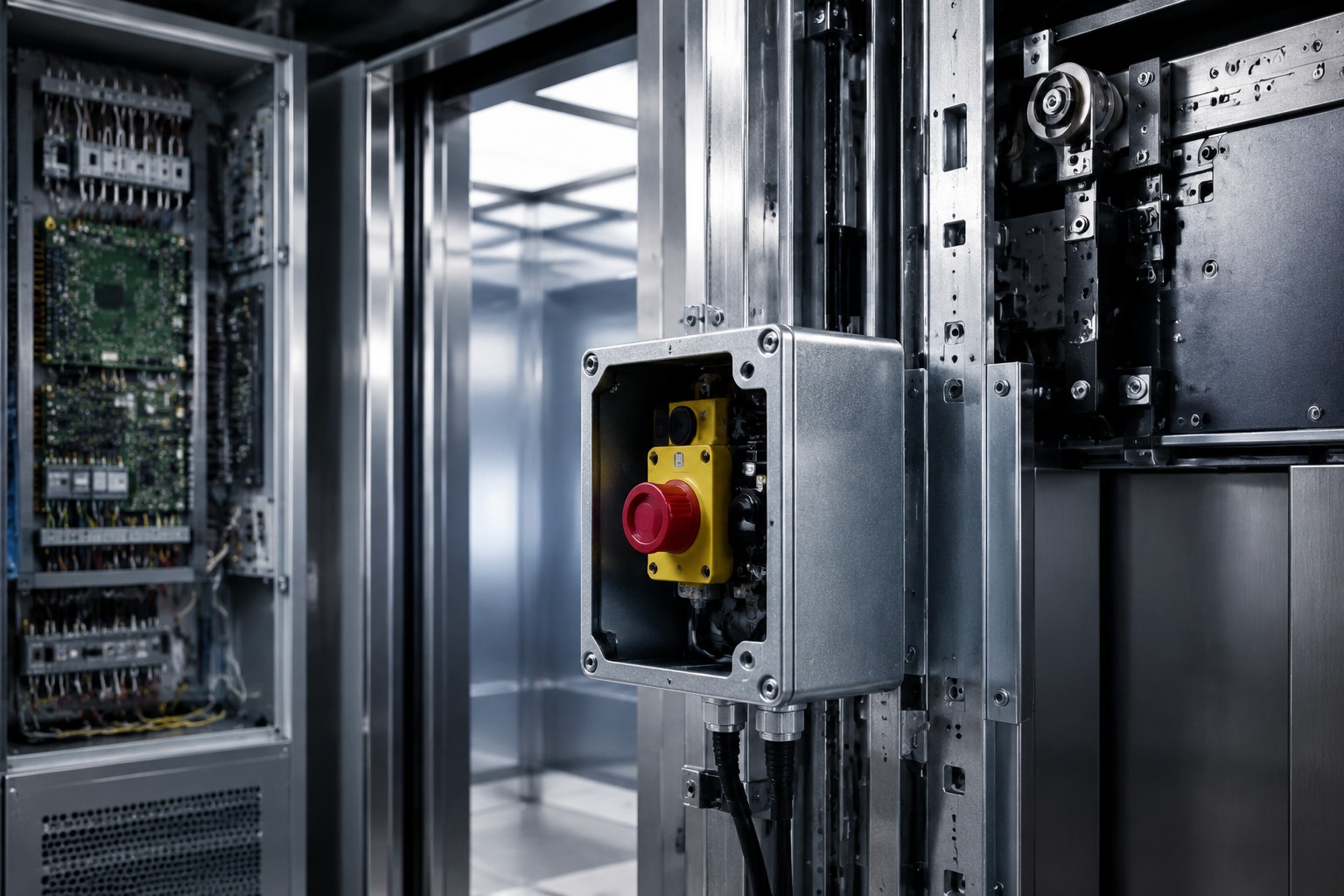
An elevator inspection box is a service control device used during maintenance, troubleshooting, and inspection work on the car top, in the hoistway, or near controlled service access points. In the United States, technicians rely on inspection boxes to move the car at reduced speed, stop motion immediately, and isolate normal operation while work is being performed. For building owners, service companies, modernization contractors, and distributors, choosing the right inspection box is not only about finding a matching part number. It is about control reliability, connector compatibility, safe installation, and predictable performance in the field.
Directly stated: a well-matched elevator inspection box helps technicians work more safely, reduces accidental movement risk, supports code-conscious maintenance procedures, and shortens downtime when a damaged or aging unit needs replacement. This is especially important in dense service markets such as New York City, Chicago, Los Angeles, Houston, Miami, Seattle, and Atlanta, where elevator traffic is high and maintenance windows are tight. It also matters in trade and logistics hubs near the Port of Los Angeles, Port of Long Beach, Port Newark, Savannah, and Dallas-Fort Worth, where warehouses, hotels, hospitals, offices, and multifamily towers depend on reliable vertical transportation.
Because inspection boxes are used in controlled maintenance situations, buyers should evaluate them with the same discipline used for control boards, door operator parts, sensors, and power supplies. The right sourcing partner should be able to help confirm model matching, wiring expectations, connector style, and packaging quality before shipment. If you are comparing options for a replacement or planning a broader lift modernization stock strategy, this guide explains what to check and how to reduce risk.
For buyers reviewing available parts, an elevator inspection box and LCA mobile switch box option can be evaluated alongside the specific car top service requirements of the installed system. In some cases, related electrical support items such as a 12V inspection light power supply or an elevator intercom terminal component are also reviewed during the same maintenance cycle because safe service access often involves lighting, communications, and temporary operating control.
The US market continues to see demand from three directions at once: maintenance replacement, modernization, and emergency repair. Aging stock in major metro areas creates recurring need for compatible service boxes, while newer commercial and mixed-use projects push for cleaner wiring layouts, better ergonomics, and easier troubleshooting. At the same time, 2026 trends are already influencing procurement decisions, including stronger attention to sustainability, documentation traceability, technician safety training, and parts standardization across regional service fleets.
What an elevator inspection box includes
A typical elevator inspection box includes a protective enclosure and a set of maintenance controls designed for temporary service operation. The exact layout varies by elevator brand, controller family, and service application, but most units include core functions that allow a technician to take control of car movement from a protected inspection position. In many buildings across the US, these boxes are mounted or connected where technicians can reach them while maintaining a stable working position on the car top.
Common elements include an inspection/normal selector, up and down jog buttons, an emergency stop switch, terminal points or a fixed harness, labeling, and a durable cable entry system. Depending on the model, the unit may also include a key switch, lamp connections, communication points, or additional service buttons. Enclosure material can range from molded industrial-grade plastic to coated metal, with design choices influenced by shaft conditions, expected service life, and exposure to dust, vibration, or moisture.
In practical field use, the inspection box must do three things well: clearly transfer control authority, allow predictable low-speed movement, and stop motion without hesitation. Poor switch feel, weak labeling, brittle housings, or uncertain connector fit can create service delays and increase error risk. That is why inspection boxes should be matched carefully to equipment configuration rather than treated as a generic accessory.
| Component | Primary Function | Why It Matters | Typical Failure Concern | Inspection Tip | Replacement Priority |
|---|---|---|---|---|---|
| Emergency stop switch | Immediately interrupts motion command | Critical for technician protection | Sticky contacts or worn mechanism | Check positive engagement and reset feel | Very high |
| Inspection/normal selector | Transfers operating mode | Prevents unintended normal operation | Loose detent or ambiguous position | Verify clear mode indication | Very high |
| Up button | Commands controlled upward movement | Supports positioning during service | Intermittent contact response | Test response consistency | High |
| Down button | Commands controlled downward movement | Supports positioning during service | Delayed return or poor tactile feedback | Check spring return and contact state | High |
| Cable or harness | Connects control signals to system | Ensures stable communication and power path | Cracked insulation or conductor fatigue | Inspect bend points and jacket condition | High |
| Enclosure and labeling | Protects controls and identifies functions | Reduces misuse and environmental wear | Broken cover, faded markings | Confirm legibility and sealing quality | Medium to high |
The table above shows that the inspection box is not a single switch, but a safety-critical control assembly. Buyers who only compare price may overlook the importance of tactile reliability, connector quality, and the legibility of service markings. For US maintenance teams handling mixed portfolios across office towers in Manhattan, hospitals in Houston, resorts in Orlando, and campuses in Phoenix, clear and durable controls save time every time the car top is accessed.
LCA mobile switch box use cases
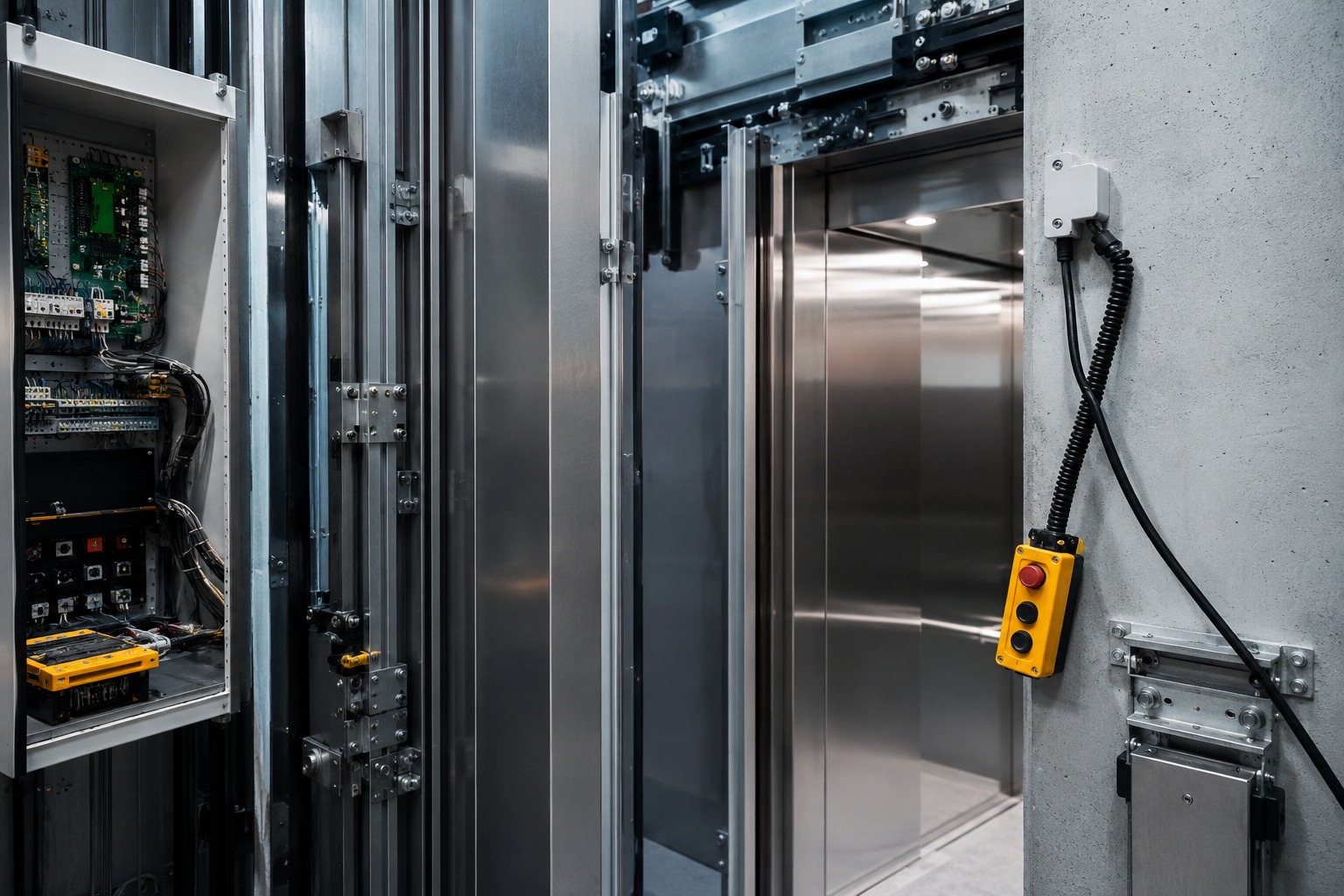
An LCA mobile switch box is commonly used when technicians need a portable or dedicated inspection control method that fits a specific elevator maintenance workflow. In real-world service settings, these units are used during troubleshooting, car top access, adjustment work, door timing checks, sensor verification, and certain modernization stages where normal operating interfaces are not suitable for direct technician control. The “mobile” concept is especially useful where access conditions vary between job sites or where a replacement needs to support field handling during service procedures.
In the United States, common use cases include preventive maintenance visits in mid-rise apartment buildings, corrective repairs in hotels, and modernization work in older commercial towers where wiring layouts may differ from current standard expectations. A mobile switch box can also be relevant for training environments, controlled commissioning procedures, and temporary service setups during replacement of damaged fixed controls, provided all work follows site procedures, code expectations, and manufacturer guidance.
Service companies in regional markets such as Denver, Charlotte, Nashville, Minneapolis, and San Diego often maintain inventory of frequently used switch assemblies because travel time between jobs adds cost. If a maintenance crew arrives at a site and finds a broken inspection control unit, having a compatible mobile box or replacement assembly can shorten restoration time significantly.
| Application | Building Type | Purpose | Benefit | Common Buyer | Risk If Incorrectly Matched |
|---|---|---|---|---|---|
| Routine car top maintenance | Office buildings | Controlled movement during inspection | Safer service access | Maintenance contractor | Unreliable operation |
| Door system adjustment | Hotels | Positioning the car for access and testing | Faster repair cycle | Service mechanic | Improper signal behavior |
| Troubleshooting intermittent faults | Hospitals | Manual inspection-mode movement | Better fault isolation | Technical supervisor | Diagnostic confusion |
| Modernization stage work | Commercial towers | Temporary service control during upgrades | Supports phased replacement | Modernization contractor | Project delays |
| Training and demonstration | Technical training centers | Controlled simulation of service tasks | Improves technician familiarity | Training provider | Unsafe learning setup |
| Emergency replacement stock | Mixed property portfolios | Quick response when original box fails | Reduced downtime | Distributor or building owner | Extended outage |
The explanation here is simple: an LCA mobile switch box is valuable because downtime costs money, and emergency parts availability matters. In cities with high labor rates and compressed service windows, replacement speed can be as important as unit cost. For buyers managing elevators in logistics corridors around New Jersey, Southern California, and Texas, having a dependable source for matching mobile switch boxes can reduce callback frequency and improve technician efficiency.
The line chart illustrates a realistic pattern seen across the elevator service sector: a steady increase in replacement demand driven by aging installed bases, modernization activity, and growing expectations for documented maintenance safety. By 2026, many buyers are expected to prioritize compatibility data and traceable quality checks over basic low-cost sourcing.
Control mode and emergency stop functions
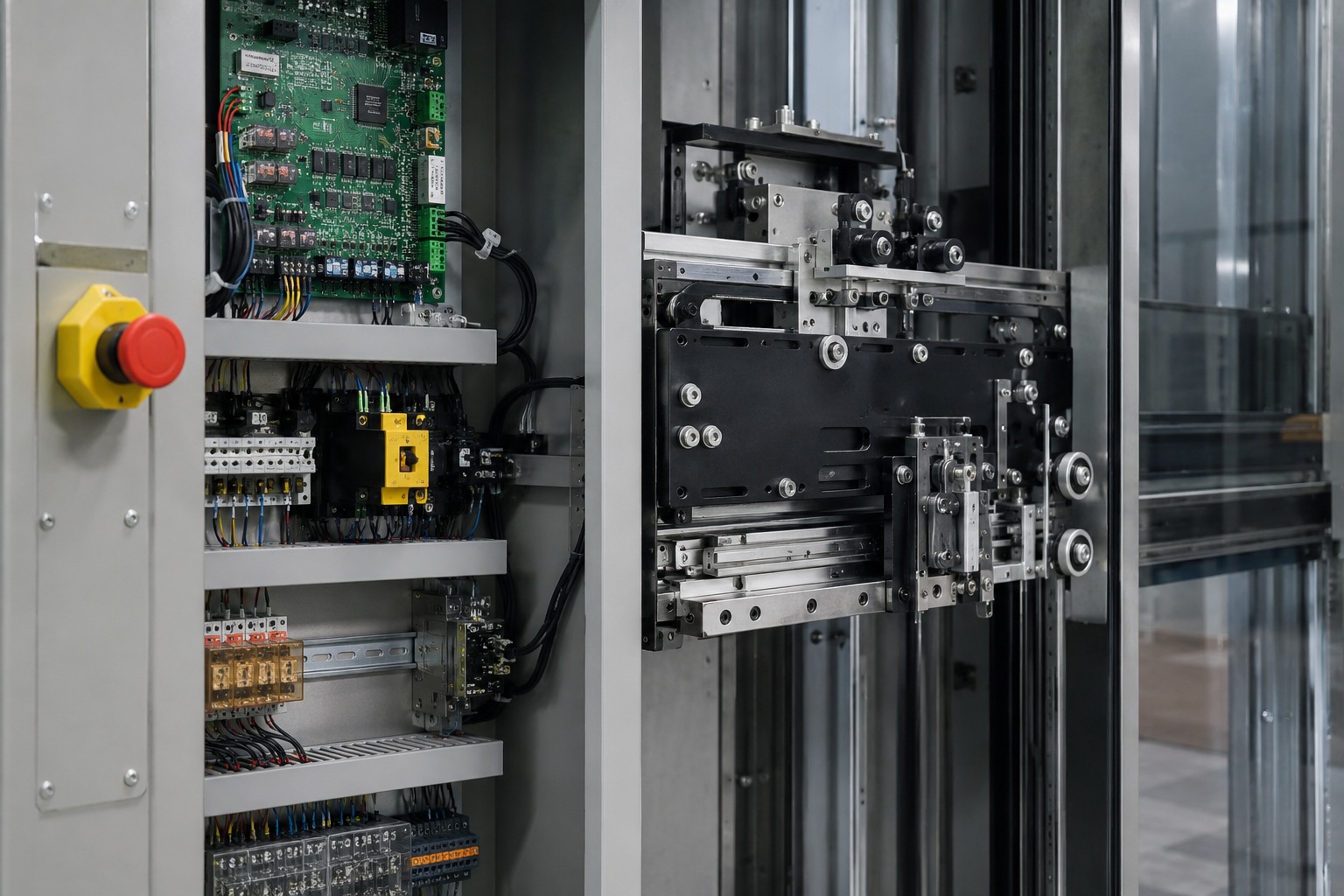
Control mode transfer is the heart of the inspection box. When a technician switches from normal operation to inspection mode, the elevator should no longer respond as it would for passenger service. Instead, movement is placed under controlled maintenance command, typically through hold-to-run directional buttons and a clearly defined service logic path. This reduces the chance of unintended automatic operation while personnel are on the car top or otherwise engaged in maintenance tasks.
The emergency stop function is equally important. A properly functioning stop switch should interrupt the motion command path decisively and be easy to identify by touch and sight. In practical field conditions, this matters when noise, low light, stress, or cramped shaft access makes fine control more difficult. A vague, worn, or inconsistent stop device is unacceptable for safe maintenance work.
For US buyers, emergency stop reliability should be treated as a non-negotiable feature. Whether the elevator serves a downtown hospital in Boston, a high-rise condominium in Miami, a university building in Columbus, or a distribution center in Memphis, the stop function must operate predictably every time. Replacement decisions should also consider whether the selector and stop arrangement align with the original equipment logic and field training practices used by the maintenance team.
| Feature | Expected Behavior | Operational Value | Test Method | Typical Service Issue | Recommended Action |
|---|---|---|---|---|---|
| Inspection mode selection | Clearly transfers control from normal mode | Protects maintenance personnel | Verify mode indicator and command response | Ambiguous mode change | Replace if detent or contact is unreliable |
| Normal mode restoration | Returns system to standard operation only when appropriate | Prevents accidental service handoff | Confirm clean transition after testing | Mode not clearing correctly | Recheck wiring and selector integrity |
| Emergency stop activation | Interrupts motion immediately | Critical incident prevention | Simulate controlled stop condition | Delayed response | Do not return to service until corrected |
| Emergency stop reset | Requires deliberate reset action | Avoids unintended restart | Check reset feel and state indication | Loose reset mechanism | Replace switch assembly |
| Directional jog buttons | Move car only while actively pressed | Fine positioning during maintenance | Check hold-to-run behavior | Button sticking | Replace control element |
| Label clarity | Functions remain easy to identify | Reduces human error | Visual inspection under service lighting | Faded markings | Replace or relabel to approved standard |
The main lesson from this table is that inspection mode and stop functions must be validated as a system, not only as individual switches. Service reliability comes from consistent interaction between the selector, buttons, cabling, and the receiving control circuit.
Cable and connector compatibility
One of the most common causes of replacement delays is cable or connector mismatch. An inspection box may look correct externally but still be unsuitable if the pinout, connector shape, harness length, strain relief, conductor count, shielding, or termination style differs from the installed requirement. In elevator maintenance, visual similarity is not enough.
Connector compatibility matters because the inspection box is part of a live service control chain. A poor fit can lead to intermittent operation, fault codes, difficult installation, or unsafe troubleshooting conditions. In older US installations, especially those modernized in stages over many years, technicians may encounter mixed-generation components. This makes model verification essential.
Buyers should confirm brand, model family, application position, connector photos, cable length, and any known revisions before ordering. A reliable supplier will request detailed photos or nameplate information and help compare them against available stock. This is especially useful when dealing with national portfolios where one property in Philadelphia may use a different revision than a similar property in St. Louis or Portland.
| Compatibility Item | Why It Must Match | How to Verify | Common Mismatch Problem | Impact on Service | Buyer Advice |
|---|---|---|---|---|---|
| Connector type | Ensures physical connection | Compare connector photos and dimensions | Different shell shape | Cannot install | Request close-up image confirmation |
| Pin configuration | Supports correct signal routing | Check drawings or wiring labels | Different pin count | Incorrect function behavior | Never assume interchangeable pinout |
| Cable length | Affects routing and technician reach | Measure existing harness | Too short or excess slack | Poor installation quality | Match actual field requirement |
| Wire specification | Supports durability and signal integrity | Review material and gauge details | Underspecified conductor | Premature wear | Choose service-grade materials |
| Mounting points | Ensures secure installation | Compare enclosure base and brackets | Hole pattern mismatch | Rework on site | Confirm dimensional drawing in advance |
| Revision or generation | Prevents hidden design differences | Cross-check part marking and machine records | Same model name, different revision | Uncertain operation | Document old and new unit details |
This table highlights a frequent procurement truth: matching an inspection box is often more about details than about broad model family. The closer the documentation, the smoother the replacement. This is where supplier discipline matters. Strong sourcing teams typically support customers with careful model matching, clear pre-shipment inspection, and protective packaging that reduces damage during transit to US destinations from coastal ports to inland distribution centers.
The bar chart reflects how demand varies by building type. Hospitals and residential towers usually show high replacement urgency because service continuity and occupant dependence are especially sensitive. Commercial offices also remain a major category due to age, traffic volume, and modernization schedules in central business districts.
Installation safety checks
Before an elevator inspection box is put into use, installation safety checks should be completed methodically. The exact procedures depend on the equipment design and site rules, but the basic principle is universal: no replacement should be considered acceptable until mechanical security, electrical matching, functional response, and labeling clarity have all been reviewed. In the US, this aligns with the broader emphasis on documented maintenance practices and careful return-to-service procedures.
Start with the enclosure condition. Check for cracks, loose hardware, sharp edges, and inadequate cable strain relief. Next, verify that the harness route is protected from pinch points, moving equipment, and repetitive flex stress. Then confirm terminal or connector engagement. After that, evaluate the control elements themselves: selector action, button travel, stop function, and label visibility. Finally, inspect the surrounding service area, including lighting and communication readiness, because safe maintenance depends on more than one component.
These checks are especially important in older shafts where dust, oil residue, vibration, or previous field modifications may affect installation quality. A replacement performed in a 1970s office tower in downtown Chicago can present different field conditions than one performed in a newer mixed-use property in Austin or Bellevue.
| Step | What to Check | Why It Matters | Acceptable Result | Typical Problem | Corrective Measure |
|---|---|---|---|---|---|
| 1 | Enclosure integrity | Protects internal controls | No cracks or loose cover | Impact damage in transit | Replace damaged housing |
| 2 | Mounting security | Prevents movement during operation | Stable attachment | Improper bracket alignment | Adjust or refit mounting points |
| 3 | Cable routing | Avoids wear and snagging | Clear of moving hazards | Harness rubbing on edges | Add protection and reroute |
| 4 | Connector seating | Ensures stable electrical path | Fully engaged and secure | Partial connection | Reconnect and verify lock |
| 5 | Control labeling | Reduces misuse risk | Easy to read | Faded or missing legends | Replace or relabel properly |
| 6 | Service area readiness | Supports safe technician work | Adequate light and communication | Poor visibility | Address lighting before service |
The takeaway from this checklist is that installation safety is both a component issue and a site issue. For that reason, some buyers source inspection boxes together with supporting items such as inspection lighting or communication components during the same planned shutdown.
Testing before returning to service
Once the box is installed, it should be tested before the elevator is returned to normal operation. The goal is to confirm correct mode transfer, directional control behavior, emergency stop operation, and stable restoration to normal service logic. Testing is where hidden wiring errors, weak contacts, or ambiguous switch action are most likely to appear.
A disciplined testing process helps avoid callbacks and reduces the chance of a technician discovering a problem only after the elevator has been handed back. For buildings with strict uptime expectations, such as healthcare facilities, airports, and premium residential towers, this matters a great deal. Airports near major travel hubs and convention-heavy cities like Las Vegas and Orlando often place particular importance on minimizing repeat service interruptions.
Good practice includes documenting the unit used, the date installed, key observations, and any remaining related issues in the car top service area. If the replacement was part of a broader fault correction, note whether other components such as connectors, lamps, intercom terminals, or adjacent wiring were also addressed.
The area chart shows a broader market trend: buyers are moving away from “looks similar” sourcing and toward documented compatibility, test readiness, and traceable quality checks. This trend is expected to grow further in 2026 as service organizations standardize procurement and training procedures.
| Test Item | Objective | Expected Result | Common Failure Sign | Immediate Response | Recordkeeping Note |
|---|---|---|---|---|---|
| Mode transfer test | Confirm inspection control activation | Normal operation isolated appropriately | Mixed or unclear control response | Stop testing and recheck connections | Log selector response |
| Up direction test | Verify controlled upward movement | Movement only while commanded | Delay or no response | Inspect button and signal path | Log response time |
| Down direction test | Verify controlled downward movement | Movement only while commanded | Intermittent operation | Check switch and wiring | Log consistency |
| Emergency stop test | Confirm immediate interruption | Motion command cuts out decisively | Slow stop or no interruption | Remove from service until corrected | Log stop performance |
| Reset and restoration test | Ensure proper recovery after stop condition | Deliberate reset and stable logic | Unexpected restart tendency | Do not release to service | Log reset method |
| Final normal mode confirmation | Return elevator to standard operation | System resumes normal service correctly | Residual fault or mode lockout | Re-diagnose before handoff | Log final status |
This testing table is important because it turns replacement into a controlled process rather than a simple parts swap. Returning an elevator to service without confirming control behavior can create avoidable risk and repeat labor cost.
Maintenance tips for inspection boxes
Inspection boxes are rugged service components, but they still require periodic attention. Over time, repetitive use, vibration, dust, oil mist, temperature shifts, and shaft conditions can affect switch feel, labeling, enclosure integrity, and cable life. Preventive inspection can catch many of these issues before a breakdown occurs.
Maintenance teams should check button action, selector detent feel, stop switch condition, label readability, cable jacket condition, connector tightness, and mounting stability. Any sign of intermittent control should be investigated promptly, because service controls are too important to defer. If the unit is in a harsh environment or in a property with heavy maintenance frequency, review intervals may need to be shorter.
For portfolio managers, it is often useful to classify inspection boxes as planned spare items for high-traffic properties. This is especially true in older urban markets such as New York, Philadelphia, Baltimore, and San Francisco, where aging infrastructure can make emergency sourcing more difficult under time pressure.
From a sustainability perspective, 2026 purchasing trends increasingly favor longer-life components, better protective packaging, accurate model matching that reduces returns, and quality control processes that minimize repeat shipments. Efficient sourcing is not only a cost issue; it also reduces waste and unnecessary freight movement.
The comparison chart underlines what buyers value most: accurate model matching, stable quality inspection, technical support, and responsive communication. These factors often matter more than small price differences when the cost of elevator downtime is considered.
In terms of supplier evaluation, buyers should look for three broad capabilities. First, technological capabilities: the ability to verify part data, compare connector and harness details, and assist with model confirmation for brands such as Hitachi, Toshiba, KONE, Mitsubishi, and other installed systems. Second, manufacturing capabilities: steady quality inspection, reliable materials, clean assembly standards, and protective packaging that helps parts arrive in field-ready condition. Third, service capabilities: fast communication, willingness to review photos and nameplates, support for urgent sourcing, and practical coordination for maintenance companies, distributors, building owners, and modernization contractors.
These three capabilities are what separate a dependable elevator parts partner from a simple trader. In the US market, where jobs may be coordinated across multiple states and delivered to urban towers, suburban campuses, and industrial facilities, consistency matters. Buyers need a source that understands part matching, shipment protection, and the operational pressure behind every replacement order.
FAQ about elevator inspection boxes
What is the main purpose of an elevator inspection box?
Its main purpose is to provide controlled service operation during maintenance and inspection tasks, typically from the car top or another authorized service position. It allows safe low-speed movement and includes an emergency stop function.
Is an inspection box the same as a normal operating panel?
No. An inspection box is intended for maintenance control, not regular passenger use. It changes the operating mode so technicians can work under controlled conditions.
When should an inspection box be replaced?
Replace it when switches become intermittent, labels are no longer legible, the housing is damaged, the cable shows wear, the emergency stop is unreliable, or compatibility issues appear after prior field modifications.
Can I order by appearance only?
That is not recommended. Connector type, pin configuration, cable length, mounting details, and revision level should be confirmed. Visual similarity alone can lead to installation failure or unsafe behavior.
Why are LCA mobile switch boxes useful?
They are useful for maintenance, troubleshooting, modernization stages, and emergency replacement scenarios where a suitable service control method is needed quickly and reliably.
Do inspection boxes matter for modernization projects?
Yes. During modernization, temporary or replacement service controls may be needed while other components are upgraded. Proper matching helps keep the project moving and reduces technician delays.
What other parts are often reviewed at the same time?
Inspection lighting power supplies, intercom-related parts, harnesses, connectors, and nearby control accessories are often checked during the same maintenance window because all affect safe service access.
How can buyers in the US reduce sourcing risk?
Provide clear photos, part labels, connector images, cable measurements, and elevator brand/model details. Work with a supplier that emphasizes model matching, quality inspection, and responsive support.
What trends are shaping elevator inspection box purchasing in 2026?
The biggest trends are stronger safety documentation, better compatibility verification, sustainability through fewer returns and less waste, and more standardized spare-part planning across regional maintenance fleets.
Who typically buys these parts?
Maintenance companies, distributors, building owners, facility managers, and modernization contractors all buy inspection boxes, especially when reducing downtime is a high priority.
In summary, the right elevator inspection box supports safe service, controlled maintenance movement, and faster restoration of elevator availability. In the United States, the best buying decisions come from combining careful compatibility checks with practical field knowledge. Whether the need is a direct replacement, an LCA mobile switch box for service use, or supporting parts for a broader maintenance plan, buyers should prioritize safe control function, connector accuracy, and supplier responsiveness.
For companies managing elevators across major US markets, the most effective strategy is to source from a partner that understands the realities of maintenance work: pressure to reduce downtime, the need for careful model matching, and the importance of stable quality inspection and protective packaging. That approach helps technicians return elevators to service safely and helps owners avoid repeat interruptions.