
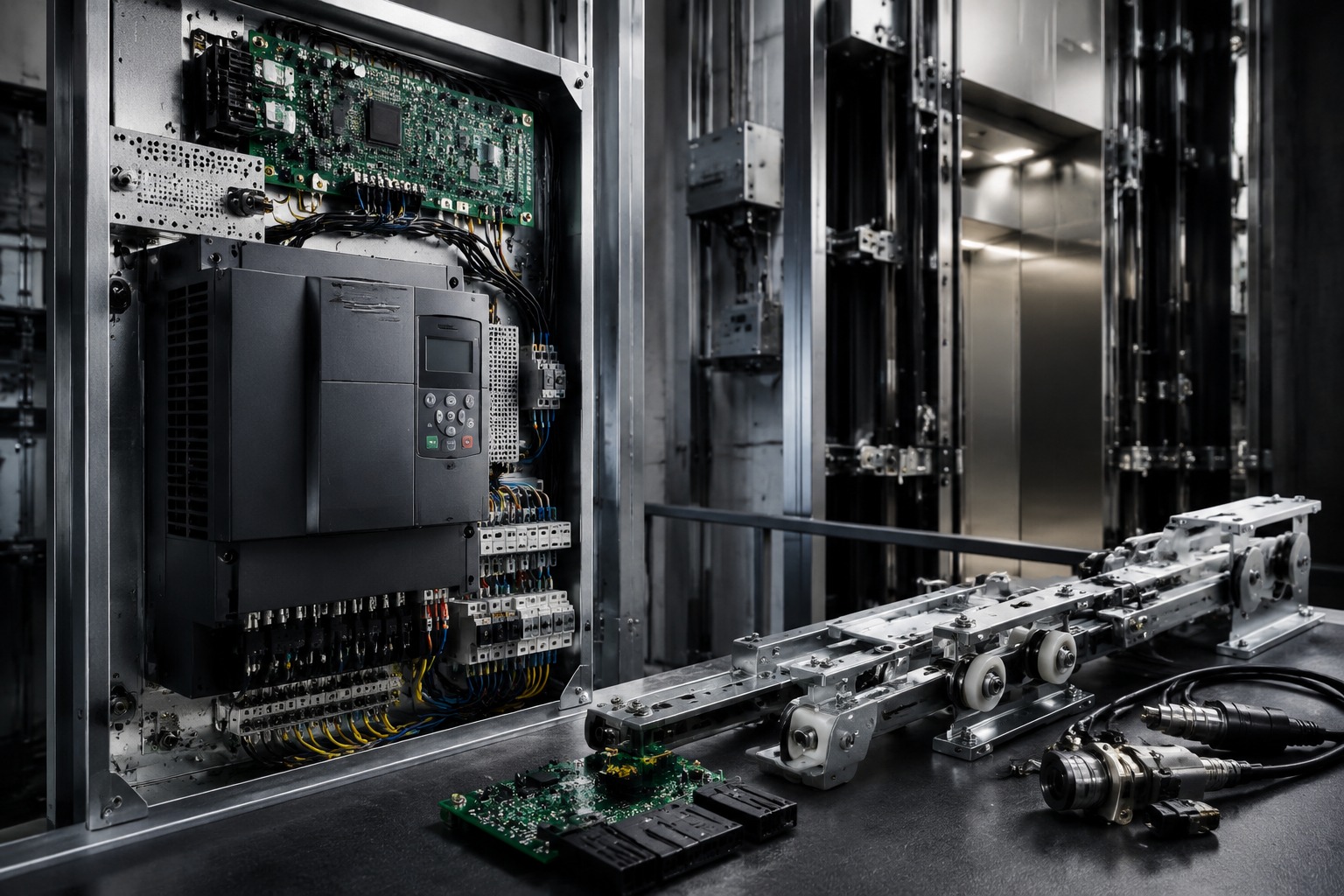
For modern elevator systems in the United States, a properly selected frequency converter is one of the most important components for ride quality, leveling accuracy, motor protection, and energy performance. In simple terms, the drive regulates motor speed, torque, acceleration, and deceleration so the elevator starts smoothly, runs steadily, and stops accurately at the floor. Whether you manage a mid-rise office building in Chicago, a hotel in Orlando, a hospital in Houston, or a residential tower in New York City, the right elevator drive strategy can reduce nuisance shutdowns, shorten repair cycles, and help modernization budgets go further.
This guide is written for elevator maintenance companies, distributors, modernization contractors, and building owners who need practical purchasing and service information. It covers the difference between a frequency converter and an inverter, how to choose 15KW and 22KW models, what common fault codes usually mean, when replacement becomes more cost-effective than repair, how to evaluate motor and braking compatibility, how to plan cabinet cooling, and what technicians should verify during commissioning. It also includes U.S.-specific market notes, examples from major logistics and service regions such as Los Angeles, Miami, Dallas, Seattle, Newark, and Atlanta, plus actionable maintenance recommendations for longer service life.
In the U.S. replacement market, availability and matching accuracy matter almost as much as the part itself. For that reason, many buyers now prioritize suppliers that can help confirm model numbers, voltage class, brake resistor requirements, encoder feedback, I/O mapping, and packaging protection before shipment. A good sourcing partner does more than sell a box; it helps reduce downtime, avoid mismatched parameters, and keep elevators operating safely.
Frequency Converter Versus Inverter
In elevator projects, the terms 鈥渇requency converter鈥?and 鈥渋nverter鈥?are often used interchangeably, but they are not always identical in a strict technical sense. In broad industrial language, a frequency converter is a variable speed drive that changes input power into a controlled output frequency and voltage for motor speed control. An inverter is often considered the power conversion stage that converts DC to AC. In practice, many elevator professionals say 鈥渋nverter鈥?when referring to the complete elevator drive unit. The safest approach in procurement is to confirm the exact application, control mode, motor data, and connector configuration rather than relying only on terminology.
For U.S. elevator maintenance teams, the main issue is not wording but compatibility. A general-purpose industrial inverter may power a motor, but an elevator-specific frequency converter usually includes motion tuning suited to lift duty, smoother low-speed torque control, stronger leveling behavior, brake coordination logic, fault handling aligned with elevator controllers, and better communication with encoders and safety-related inputs. This distinction becomes especially important in modernization work, where existing machines, hoistway conditions, and controller signals may vary from site to site.
Older hydraulic-to-traction upgrades, machine-room modernization jobs, and controller retrofits in cities such as Boston and San Francisco often reveal why elevator-specific drive functions matter. Precise ramp control reduces passenger discomfort. Better torque management helps prevent rollback at start. Controlled deceleration improves floor leveling. Diagnostic visibility shortens troubleshooting time. These gains are especially valuable in buildings with heavy traffic, such as medical centers, airports, transit hubs, and mixed-use towers.
| Item | General Inverter | Elevator Frequency Converter | Why It Matters |
|---|---|---|---|
| Primary use | Pumps, fans, conveyors, simple machines | Passenger and freight elevator control | Elevator duty needs smoother ride and safer stopping logic |
| Low-speed torque | Often adequate for industrial loads | Optimized for lift start and creep speed | Improves launch comfort and floor leveling |
| Brake coordination | Limited or external handling | Usually tuned for motor/brake release timing | Reduces rollback and start shock |
| Encoder support | Varies by model | Common in closed-loop elevator applications | Better speed feedback and accuracy |
| Fault logic | Industrial fault list | Application-focused alarms and protections | Faster diagnosis for lift technicians |
| Ride tuning | Basic acceleration/deceleration adjustment | Advanced S-curve and comfort tuning | Supports premium ride quality |
| Modernization fit | May require more adaptation | Usually easier to integrate in lift systems | Reduces commissioning risk |
The table above shows why elevator buyers in the United States should not treat all VFDs as interchangeable. When buildings in regions with high labor cost and strict downtime expectations need quick recovery, the more suitable product is usually the one with elevator-focused logic, predictable parameter behavior, and easier model matching.
The growth trend above reflects a realistic increase in replacement and modernization demand driven by aging installations, rising tenant expectations, energy management goals, and the need to secure compatible spare parts before failures become disruptive. Looking toward 2026, smart diagnostics, more energy-conscious retrofits, and pressure for lower lifecycle cost are likely to increase demand further.
How to Select 15KW and 22KW Models
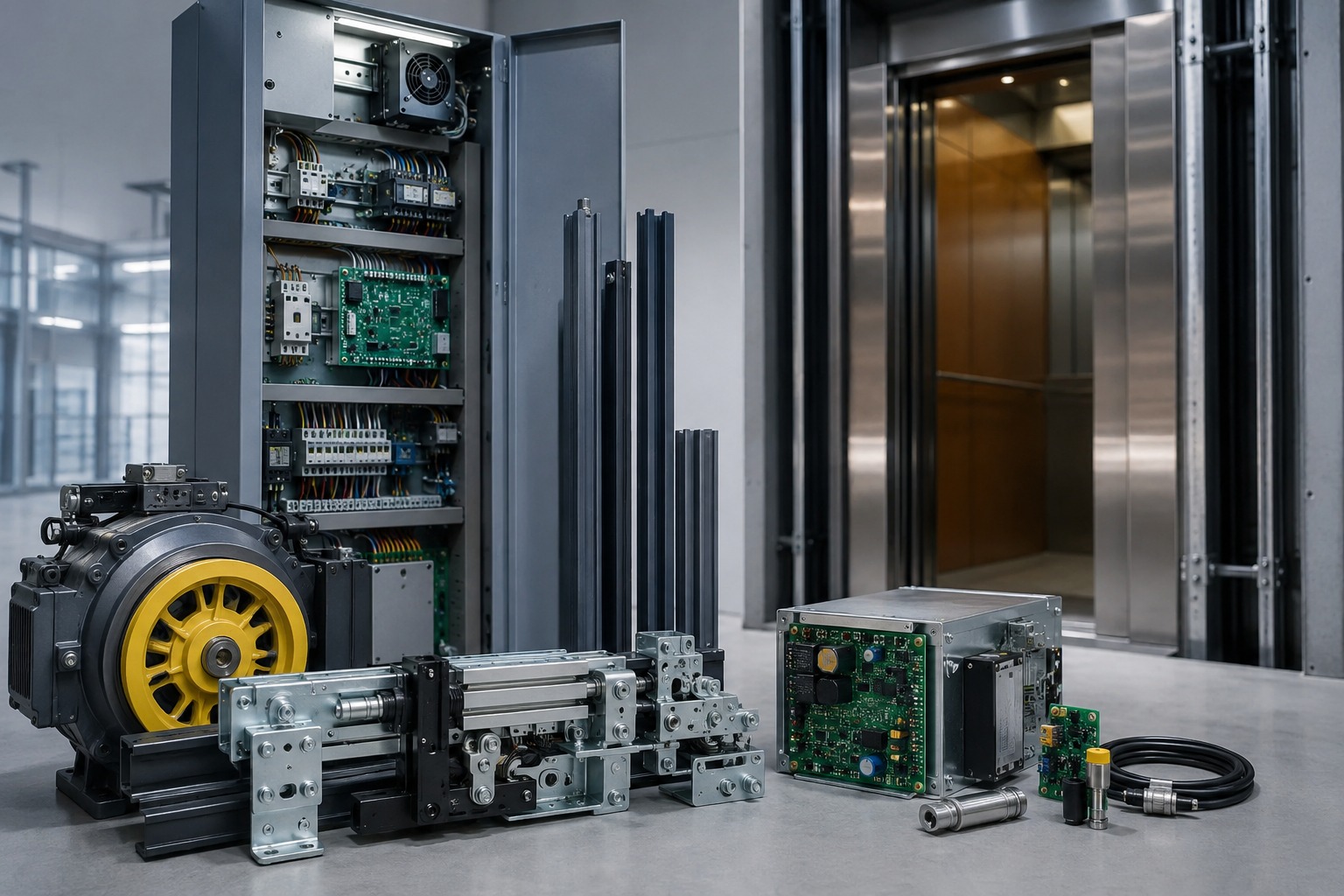
Choosing between 15KW and 22KW elevator frequency converters should never be based on motor nameplate power alone. Technicians should review rated motor current, supply voltage, load profile, car capacity, speed, start-stop frequency, traction machine type, feedback method, and whether the application requires a braking unit or resistor. In many U.S. modernization jobs, the best match is the one that safely handles real operating current with margin for acceleration, heat, and building traffic patterns.
A 15KW model is commonly suitable for lighter passenger elevator applications, especially in low- to mid-rise buildings with moderate duty cycles. A 22KW model is more often selected where motor current is higher, where there is heavier passenger flow, for freight use, or where the installation requires more torque reserve or thermal headroom. Buyers comparing options can review our 15 kW elevator frequency converter and 22 kW elevator frequency converter pages when validating part selection for replacement or modernization.
In U.S. coastal markets such as Miami, Los Angeles, and Seattle, environmental factors should also influence selection. Elevated ambient temperatures, salt air exposure in some locations, and machine room ventilation limitations can all justify moving from a minimum-size drive to a model with stronger current capacity or better thermal performance. In inland logistics and distribution hubs like Dallas, Columbus, and Kansas City, freight elevators may require higher torque reserve due to heavier loading cycles.
| Selection Factor | 15KW Often Fits When | 22KW Often Fits When | Technician Note |
|---|---|---|---|
| Motor rated power | Within lower traction range | Higher power machine or upgraded load | Always confirm rated current, not power alone |
| Motor rated current | Drive current margin remains comfortable | Current draw approaches upper threshold | Current is the safer sizing basis |
| Building traffic | Residential or moderate office use | High traffic office, hotel, hospital, freight | Duty cycle affects heat and lifespan |
| Acceleration demand | Standard ride profile | Higher torque reserve needed | Review start torque and ramp tuning |
| Machine room temperature | Well-ventilated space | Hot cabinet or poor airflow environment | Thermal margin reduces nuisance trips |
| Braking energy | Lower regeneration events | Frequent deceleration or heavier loads | Check braking unit and resistor sizing |
| Modernization risk | Existing data well documented | Unknown conditions or tight uptime needs | A larger safe margin may reduce call-backs |
The checklist above helps explain why experienced purchasers rarely rely on a one-line description. A drive may 鈥渇it鈥?by kilowatt, yet still be undersized by current, thermal load, or braking demand. For fast-moving projects in the United States, especially when old documentation is incomplete, accurate model matching prevents return freight, repeat site visits, and extended outages.
Where replacement needs involve legacy brands or mixed systems, some buyers also compare alternative drive platforms such as this Emerson elevator inverter option to support maintenance planning or modernization decisions. Cross-checking connector style, control mode, feedback requirements, and keypad parameter structure is essential before ordering.
Buying Advice for U.S. Contractors and Building Owners
Before buying, collect the existing drive nameplate, motor nameplate, controller model, wiring photos, parameter backup if available, error history, and brake resistor details. Ask whether the application is open-loop or closed-loop, whether a permanent magnet synchronous motor is used, and whether the machine room has stable cooling. In cities with expensive elevator downtime such as Manhattan, Washington, D.C., and San Jose, the upfront effort spent on matching often saves far more than the cost difference between two drive sizes.
Common Fault Codes and Replacement Triggers
Fault codes differ by brand and model, but the most common categories in elevator drives are overcurrent, overvoltage, undervoltage, overheating, encoder fault, phase loss, ground fault, brake feedback abnormality, and communication error. A single alarm does not automatically mean the drive is bad. Many faults originate from peripheral issues such as unstable incoming power, deteriorated motor insulation, poor grounding, loose terminals, failing cooling fans, contaminated boards, or aging brake components.
That said, there are clear replacement triggers. If a drive repeatedly trips after proper troubleshooting, if spare boards are obsolete, if electrolytic capacitors show age-related decline, if power modules overheat under normal load, or if parameter memory becomes unstable, replacement may be the safer and more economical choice. In the U.S. service market, repeated call-backs are expensive. A building owner in Phoenix or Denver may prefer a controlled replacement during a scheduled outage rather than risk multiple random shutdowns during peak occupancy.
| Fault Category | Typical Meaning | Likely Causes | Immediate Check |
|---|---|---|---|
| Overcurrent | Output current exceeded threshold | Motor issue, short circuit, wrong tuning, abrupt load change | Inspect motor, output wiring, current data, acceleration settings |
| Overvoltage | DC bus voltage too high | Regeneration energy, braking resistor fault, utility fluctuation | Check brake unit, resistor value, deceleration ramp |
| Undervoltage | Input supply too low | Weak mains, loose input terminals, phase issue | Measure incoming voltage under load |
| Overtemperature | Drive internal heat exceeded limit | Fan failure, blocked vents, hot cabinet, overload | Inspect airflow and cabinet temperature |
| Encoder fault | Feedback signal lost or invalid | Damaged cable, loose connection, failed encoder, noise | Verify shield grounding and signal integrity |
| Phase loss | Missing or imbalanced phase | Supply issue, contactor failure, wiring defect | Check input phases and power connections |
| Communication error | Controller and drive data mismatch | Cable issue, parameter mismatch, board fault | Review protocol settings and ports |
The table above is useful because it separates symptom from root cause. Replacing a drive without checking the braking circuit, motor condition, or cabinet heat can lead to the same fault appearing on the new unit. Good replacement decisions should be evidence-based.
| Condition | Repair Usually Makes Sense | Replacement Usually Makes Sense | Reason |
|---|---|---|---|
| Single fan failure | Yes | No | Low-cost part and easy preventive fix |
| Dirty heatsink or blocked ventilation | Yes | No | Cleaning can restore temperature margin |
| One-time undervoltage event | Yes | No | Often external power issue |
| Repeated IGBT/power module trips | Sometimes | Often yes | High risk of recurring failure and heat damage |
| Obsolete control boards unavailable | No | Yes | Parts supply risk extends downtime |
| Unstable memory or parameter corruption | Sometimes | Often yes | Reliability concern for life-safety equipment |
| Multiple faults across aging unit | Rarely | Yes | Total cost and outage risk usually increase |
For building owners, replacement triggers often come down to reliability economics. If a drive has become a repeat source of entrapment callbacks, lost tenant confidence, or urgent technician dispatches, the indirect cost may exceed the parts budget. This is especially true in hospitals, senior living properties, airports, and public-use facilities where downtime carries operational and reputational consequences.
Motor Compatibility and Braking Needs
Motor compatibility is one of the most important and most overlooked parts of drive selection. Elevator frequency converters must match the motor type, rated current, rated voltage, frequency, speed feedback method, and control strategy. The main categories encountered in U.S. elevator work are geared traction motors, gearless permanent magnet synchronous motors, and some legacy induction motor systems. Each requires a drive that supports the proper control mode and tuning approach.
Closed-loop applications with encoder feedback are common where ride quality and leveling precision are critical. If the motor and drive are mismatched, technicians may see poor launch behavior, noisy operation, hunting at low speed, floor leveling drift, or faults during heavy load transitions. It is not enough to know the brand; buyers need the exact model, motor data, and often the original parameter map.
Braking needs are equally important. Elevators create regenerative energy during deceleration and, depending on load direction, during travel. If that energy is not handled correctly, the DC bus voltage can rise and cause overvoltage trips. Some systems use braking resistors and brake units, while others may involve regenerative solutions in more advanced setups. For many replacement projects, the practical requirement is simply to verify whether the new drive supports the existing resistor arrangement and whether resistor ohm value and wattage are appropriate.
| Check Item | What to Verify | Risk if Ignored | Recommended Action |
|---|---|---|---|
| Motor type | Induction or PM synchronous | Wrong control mode, unstable motion | Confirm nameplate and original drive settings |
| Rated current | Actual motor current at rated load | Drive undersizing or nuisance trips | Use current as a primary sizing reference |
| Encoder type | Incremental, resolver, or other feedback | Speed feedback alarms, poor leveling | Match interface and cable shielding |
| Brake release timing | Electrical command and mechanical response | Rollback or harsh start | Tune brake opening and closing sequence |
| Braking resistor | Resistance value and power rating | Overvoltage trips or resistor overheating | Check manufacturer guidance before startup |
| Duty cycle | Trips per hour and traffic intensity | Thermal overload and reduced lifespan | Allow margin for high-use buildings |
| Grounding/noise control | Shield and cabinet bonding quality | Encoder noise, control instability | Apply proper grounding practice |
These checks are especially important in modernizations where an existing motor remains in place while the drive is replaced. In markets such as Philadelphia and Detroit, where many buildings operate older equipment, mixed-generation systems are common. A disciplined compatibility review lowers startup risk and reduces return visits.
The industry demand chart shows where replacement urgency is strongest. Hospitals and office buildings often have low tolerance for downtime. Industrial and freight applications may require higher torque reserves and robust braking arrangements, while hotels and residential towers often prioritize comfort and noise reduction.
Heat Dissipation and Cabinet Fan Planning
Heat is a silent life-reduction factor in elevator electronics. Even a correctly sized frequency converter can fail early if cabinet ventilation is poor. The drive generates heat through switching losses, current load, and ambient conditions. If that heat is trapped in a crowded control cabinet or hot machine room, component aging accelerates. Capacitors dry out faster, fans wear sooner, and repeated overtemperature alarms may begin long before catastrophic failure.
Cabinet fan planning should therefore be treated as part of drive selection, not as an afterthought. Technicians should assess enclosure size, vent placement, dust conditions, ambient machine room temperature, nearby heat sources, and whether airflow passes effectively across the drive heatsink. In warm regions such as Arizona, Texas, Florida, and parts of Southern California, summer conditions can expose weak cooling design quickly. Rooftop machine rooms and compact modernization cabinets deserve particular attention.
A practical rule is to maintain clean airflow paths, confirm fan operation at startup, avoid cable bundles blocking vents, and monitor cabinet temperature during heavy traffic periods. Where heat load is significant, adding or replacing cabinet fans may be necessary. Also remember that filters protect electronics from dust, but clogged filters can reduce airflow and cause overheating.
| Factor | Preferred Condition | Warning Sign | Action |
|---|---|---|---|
| Ambient room temperature | Stable and moderate | Frequent high-temperature alarms in summer | Improve room ventilation or cooling |
| Cabinet airflow path | Clear intake and exhaust route | Hot spots near drive heatsink | Rearrange components and cable routing |
| Cooling fan condition | Low noise, full speed, clean blades | Intermittent rotation or bearing noise | Replace fan before failure |
| Dust and debris | Minimal accumulation | Blocked vents or dirty boards | Use cleaning schedule and filters |
| Cabinet density | Adequate spacing between devices | Power devices tightly packed | Increase spacing or separate heat sources |
| Traffic profile | Load matched to cooling design | Overheating during peak rush only | Review duty cycle and fan capacity |
| Seasonal location factors | Climate considered in design | Units fail in hot coastal or desert areas | Add thermal margin in part selection |
The cooling table matters because many drive 鈥渇ailures鈥?are actually thermal management failures. A well-matched converter installed in a poorly ventilated cabinet may underperform faster than a higher-load unit installed with proper airflow and preventive fan replacement.
The area trend chart reflects the move toward more efficient, better-monitored drive systems. By 2026, U.S. buyers are expected to place even greater value on lower heat output, stronger diagnostics, and lifecycle planning that aligns with energy and sustainability goals.
Commissioning Checks for Technicians
Commissioning is where correct selection becomes reliable operation. Even the right drive can perform badly if startup checks are rushed. Elevator technicians should verify power quality, insulation condition, grounding, motor data, control wiring, brake operation, encoder feedback, and safety circuit logic before attempting final ride tuning. They should also back up parameters and record baseline measurements for future service comparison.
In the United States, many avoidable callback issues result from simple commissioning gaps: swapped encoder polarity, incomplete auto-tuning, incorrect motor current entry, resistor mismatch, loose control terminal screws, and unverified brake timing. These issues can produce symptoms that look like major drive defects but are actually setup problems.
Technological Capabilities
Our approach to elevator parts support emphasizes technical matching rather than one-size-fits-all sales. For drive-related inquiries, we help buyers review motor data, part numbers, application conditions, and replacement objectives so the selected product is aligned with system requirements. This technical focus is especially useful in modernization work where controller generations differ and documentation may be incomplete.
Case Example: Urban Office Modernization
On a multi-car office project in downtown Atlanta, a replacement drive had to match existing motor characteristics while minimizing disruption to tenants. The final success depended less on headline power rating and more on confirming current margin, braking needs, cabinet ventilation, and signal compatibility with the installed controller. This kind of project is typical across major U.S. cities where limited shutdown windows make accurate pre-shipment matching critical.
| Checkpoint | What to Confirm | Expected Result | If Not Correct |
|---|---|---|---|
| Input power | Voltage balance and stable supply | Within drive tolerance | Investigate mains or upstream components |
| Motor data entry | Voltage, current, speed, frequency | Accurate nameplate match | Poor torque or nuisance trips may occur |
| Grounding | Cabinet, shield, and motor grounding integrity | Low noise and safe operation | Encoder noise or unstable control possible |
| Encoder feedback | Signal direction and quality | Stable speed regulation | Leveling errors or feedback alarms |
| Brake coordination | Release and set timing | Smooth start and stop | Rollback or harsh landing |
| Braking resistor | Correct connection and rating | Controlled DC bus voltage | Overvoltage trips under deceleration |
| Trial runs | No-load and loaded travel checks | Comfortable ride and proper leveling | Retune parameters before handover |
The checklist should be documented and kept with the service record. When a future issue occurs, comparison with original commissioning data often shortens diagnosis significantly. This is particularly useful for service companies responsible for multiple properties across regions such as the Northeast corridor, Gulf Coast, or West Coast.
Maintenance Tips for Longer Service Life
Longer service life comes from disciplined routine care rather than emergency response alone. Elevator frequency converters benefit from periodic visual inspection, fan cleaning or replacement, terminal torque checks, environmental cleaning, thermal review, and fault log analysis. Waiting until the drive trips repeatedly often means the most economical maintenance window has already passed.
For property portfolios in the United States, a practical preventive schedule can be tied to traffic intensity. High-use elevators in hospitals, campuses, transit-connected buildings, and hospitality properties should receive more frequent thermal and fan checks than lightly used residential units. Seasonal inspections also make sense in climates with large temperature shifts.
Manufacturing Capabilities
Reliable replacement sourcing depends on consistent product inspection and packaging discipline. In our supply process, attention is placed on model verification, condition screening, careful packing, and part protection so components arrive ready for site use. This matters for U.S. buyers receiving shipments through gateways such as Los Angeles/Long Beach, Newark, Savannah, Houston, or Chicago, where transit handling and delivery timing can affect project planning.
Service Capabilities
Responsive support is just as important as stock access. Our work with maintenance companies, distributors, building owners, and modernization contractors centers on helping identify compatible elevator parts, reduce downtime risk, and streamline replacement sourcing. For drive-related inquiries, faster communication on model matching, packaging status, and application details can make a major difference when a building is waiting for recovery.
Good maintenance also means protecting the surrounding system. Check the motor, brake, encoder, and cabinet environment together. If the drive is replaced but the original cause remains, service life may still be short. Salt-laden coastal air in places like Tampa or San Diego, dust in inland industrial zones, and summer machine room heat in Las Vegas or Austin all influence maintenance priorities.
The comparison chart highlights what buyers often discover in practice: suppliers focused on elevator parts typically provide stronger support in model matching, packaging, and application understanding than broad industrial channels. For time-sensitive replacements, these differences can directly affect downtime and rework risk.
Recommended maintenance actions include cleaning cabinet ventilation paths every scheduled cycle, replacing worn fans before failure, reviewing stored fault history for emerging patterns, confirming resistor condition where used, and checking for discoloration or odor that may indicate overheating. It is also wise to re-check terminal tightness after temperature cycling and to store a verified parameter backup outside the machine room.
As the market moves toward 2026, predictive maintenance and digital monitoring are expected to expand. Building owners increasingly want insight into repeat faults, heat trends, and component aging before passengers notice a problem. Sustainability goals also play a role: smoother operation, fewer repeat visits, and longer component life can reduce waste and improve lifecycle efficiency. In some modernization programs, lower standby loss and better energy management are becoming part of procurement conversations alongside safety and uptime.
FAQ About Elevator Frequency Converters
Do frequency converter and inverter mean the same thing for elevator purchasing?
Often yes in everyday conversation, but not always in strict technical terms. For purchasing, focus on the actual application, motor type, current rating, feedback method, and controller compatibility rather than the label alone.
How do I know whether I need a 15KW or 22KW drive?
Start with motor rated current, not just kilowatt rating. Then review duty cycle, building traffic, ambient temperature, braking energy, and any modernization uncertainty. If the application is close to the limit, the larger model may offer better thermal margin and reliability.
Can I replace an elevator drive with a general industrial VFD?
Sometimes it is technically possible, but it is usually not ideal unless compatibility is fully engineered. Elevator-specific frequency converters generally offer better ride tuning, brake coordination, diagnostic behavior, and integration with lift control systems.
What fault code most often points to braking issues?
Overvoltage during deceleration is one of the most common signs. Check whether the braking resistor is correctly sized and connected, and whether the deceleration profile is too aggressive for the application.
When should I replace instead of repair?
Replacement is often the better choice when the drive has repeated power-stage faults, obsolete boards, unstable memory, recurring trip history after correct troubleshooting, or when downtime cost is higher than the repair savings.
Why does cabinet fan planning matter so much?
Because heat is a major driver of electronic aging. Poor airflow shortens capacitor and fan life, increases trip frequency, and can make a correctly selected drive appear unreliable.
What should a technician record during commissioning?
Input voltage, motor parameters, key settings, encoder details, brake timing, trial run results, cabinet temperature observations, and a complete parameter backup. These records are invaluable for future service.
Are elevator drives affected by location within the United States?
Yes. Climate, usage profile, building type, and service expectations vary widely. Coastal humidity, desert heat, dense urban traffic, and freight-heavy applications all influence sizing, cooling, and maintenance planning.
How can buyers reduce ordering mistakes?
Provide clear nameplate photos, fault history, motor data, controller information, connector details, and cabinet photos. The more application information supplied, the lower the mismatch risk.
What trends should U.S. buyers expect in 2026?
More demand for smart diagnostics, stronger lifecycle planning, better energy performance, and replacement strategies that support sustainability goals while reducing unplanned downtime.
For elevator professionals across the United States, the best frequency converter decision is rarely the cheapest upfront option. The best choice is the one that fits the motor, control system, traffic demand, braking requirement, thermal environment, and service reality of the building. Accurate selection, careful commissioning, and routine maintenance together produce better ride quality, fewer emergency calls, and longer equipment life.