
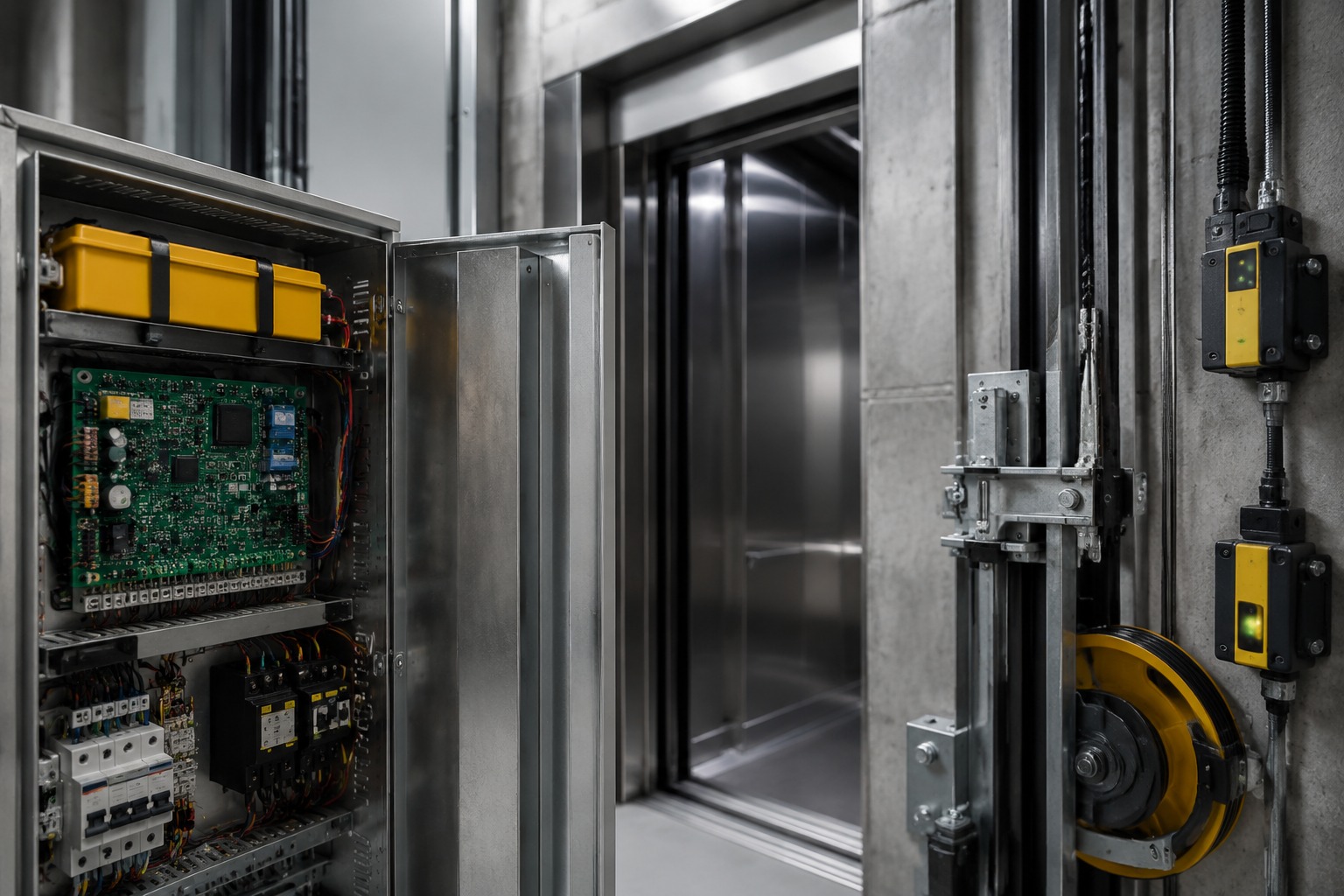
When utility power fails, an elevator emergency power supply helps protect passengers, supports safe evacuation, and reduces downtime for the building. In the United States, this usually means one or more backup functions: emergency car lighting, alarm or intercom continuity, control power stabilization, and in some systems, support for automatic rescue operation that moves the car to a landing. The right solution depends on elevator brand, controller logic, battery condition, input and output voltage, load profile, and whether the unit is designed only for lighting or for broader rescue support.
For building owners, maintenance companies, and modernization contractors, the key issue is not simply buying a backup power box. It is selecting a unit that matches the elevator’s control design, brake release logic, door behavior, battery chemistry, and safety sequence. A residential lift in Phoenix, a hospital elevator in Houston, and a commercial high-rise in Chicago may all require different emergency power strategies because their traffic, code environment, uptime expectations, and equipment age differ.
Across the United States, especially in large service markets such as New York City, Los Angeles, Miami, Dallas, Seattle, and Atlanta, elevator downtime creates immediate operational pressure. Buildings near major logistics and import hubs such as the Port of Los Angeles, Port of Long Beach, Port of Houston, Port Newark, and Savannah often rely on fast replacement part sourcing because waiting for the wrong backup unit can delay return to service. That is why emergency power selection has become a practical purchasing topic for distributors, maintenance providers, and property managers who need dependable compatibility rather than generic claims.
This guide explains what emergency power supplies do, how to choose an emergency lighting power supply, what to watch for in Hitachi applications, how to evaluate battery condition and voltage, how to confirm rescue operation compatibility, how to test after installation, and when to replace aging components. It also includes a U.S. market view, application guidance, comparison tables, and practical advice for sourcing compatible parts such as a Hitachi elevator emergency power supply, an emergency lighting power supply for elevator cabins, or a UAX 48V brake power supply for Hitachi elevators.
United States Market Demand for Elevator Backup Power
The U.S. market for elevator backup power products is shaped by three factors: aging installed equipment, modernization projects, and rising expectations for passenger safety during outages. Older commercial towers in Boston, Philadelphia, San Francisco, and downtown Los Angeles often run mixed fleets with legacy components that require careful model matching. At the same time, newer multifamily developments in Austin, Nashville, Charlotte, and Denver are adding demand for compact emergency lighting units and replacement battery assemblies.
Severe weather also affects demand. Hurricane risk in Florida and the Gulf Coast, winter storm outages in the Midwest and Northeast, wildfire-related power instability in California, and grid stress events in fast-growing Sun Belt regions all push facility teams to pay closer attention to elevator rescue readiness. For many building operators, the question is no longer whether a backup unit exists, but whether it has enough capacity, proper signaling, and proven compatibility to do its job when needed.
The chart above reflects a realistic upward demand pattern driven by modernization activity, stricter maintenance expectations, and increased focus on reliable passenger rescue during utility interruptions.
| Driver | Why It Matters | Typical Buyer | Common Building Type | Effect on Product Choice | Regional Example |
|---|---|---|---|---|---|
| Aging elevator fleets | Legacy systems often need exact replacement matching | Maintenance contractor | Older office tower | Higher focus on brand-specific units | Chicago Loop |
| Modernization projects | Control upgrades often change rescue logic | Modernization contractor | Mixed-use high-rise | Need interface and voltage review | New York City |
| Storm-related outages | Buildings want safer passenger handling during blackouts | Building owner | Residential tower | More interest in battery-backed rescue systems | Miami |
| Healthcare uptime | Hospitals prioritize safe movement and emergency lighting | Facility manager | Medical campus | Requires stable performance and testing records | Houston |
| Import part lead times | Wrong part orders increase downtime | Distributor | All building types | Careful model verification becomes critical | Los Angeles/Long Beach |
| Code and inspection pressure | Documented maintenance and functional checks matter | Property manager | Commercial portfolio | Preference for traceable, tested replacements | Boston |
This table shows that market demand is not only about product availability. It is closely tied to installation age, weather risk, documentation needs, and the operational consequences of downtime in each local market.
What Elevator Emergency Power Supplies Actually Do
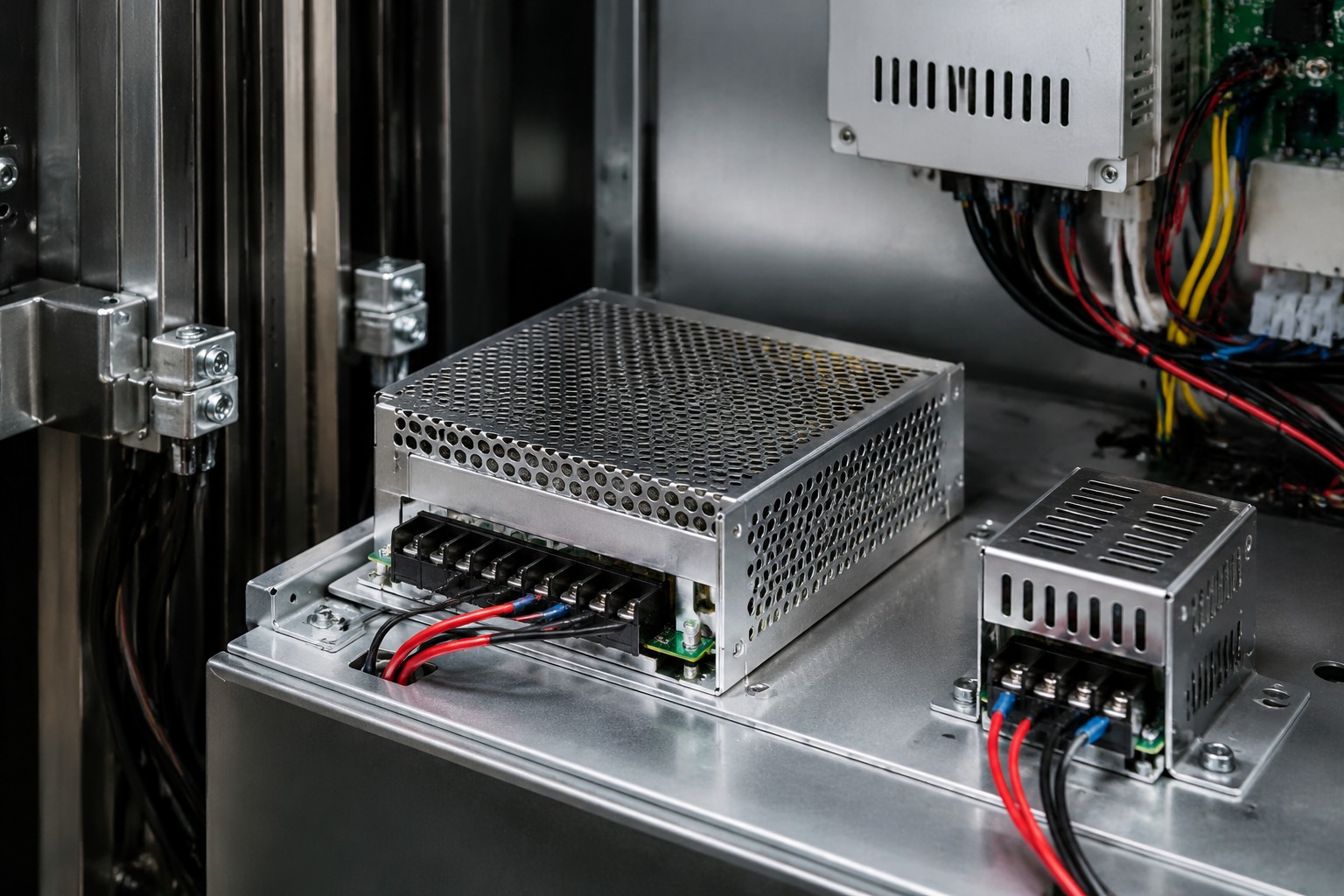
An elevator emergency power supply is designed to keep certain essential functions active when the main electrical supply is lost or unstable. Depending on the elevator system, it may support cabin lighting, alarm circuits, intercom communication, car fan operation, controller memory retention, brake power support, or an automatic rescue sequence. Not all backup units perform all of these tasks, so understanding the real function of each product type is the first step in proper selection.
In many installations, the most basic function is emergency lighting. This keeps the car interior illuminated so passengers are not left in darkness. In higher-function systems, the backup supply also helps maintain communication and allows the controller to execute a rescue program, typically moving the car at reduced speed to the nearest floor and opening the doors. However, a lighting-only power unit should never be assumed to support rescue movement. That assumption causes field mismatches and unnecessary service calls.
For U.S. buyers, especially those handling parts for multiple brands, it is useful to think in layers. Layer one is passenger reassurance: light, alarm, and communication. Layer two is equipment continuity: stable auxiliary power to selected control circuits. Layer three is rescue execution: power and logic support for moving the car, releasing or controlling the brake, and coordinating door opening at a landing. Whether a unit can perform layer three depends on the elevator design, not just on the presence of a battery.
| Function | Purpose | Usually Required Components | Common Voltage Consideration | Passenger Safety Impact | Buying Note |
|---|---|---|---|---|---|
| Emergency cabin lighting | Provides visibility during an outage | Battery, charger, lamp output circuit | Matches lighting load | Reduces panic | Check run time under actual lamp load |
| Alarm power support | Keeps alarm active | Auxiliary DC output | Controller-specific | Improves emergency signaling | Confirm wiring terminals |
| Intercom continuity | Supports communication with building staff | Stable low-voltage output | Intercom interface dependent | Helps trapped passengers communicate | Verify current draw |
| Controller auxiliary backup | Maintains selected control functions | Regulated power module | Must match logic system | Can support orderly recovery | Do not substitute generic units casually |
| Brake power support | Assists brake-related emergency operation | Specialized brake power supply | Often exact DC requirement | Critical in rescue sequence | Model matching is essential |
| Automatic rescue operation | Moves car to landing after outage | Battery system, logic input, compatible control path | Multi-circuit compatibility required | Highest direct rescue value | Needs full system review before ordering |
The practical lesson is simple: identify the intended safety function before purchasing. If your goal is only cabin light continuity, the selection path is very different from a unit intended to participate in rescue operation.
How to Select an Emergency Lighting Power Supply
Emergency lighting power supply selection starts with the lighting load, but it should not end there. You need to know the lamp or LED type, operating voltage, current draw, expected backup duration, charging conditions, battery replacement method, installation space, and the elevator brand’s wiring arrangement. In many U.S. service cases, field teams replace a failed emergency light unit only to discover the replacement does not physically fit the existing bracket or does not provide enough runtime for inspection expectations.
Selection should also consider environmental conditions. Elevator machine rooms and car tops can face high heat in Arizona, humidity in Florida, winter temperature swings in the Northeast, and dust in industrial settings. Battery life and charging reliability are strongly affected by these conditions. A compact low-cost unit may look acceptable on paper but fail early in a hot environment with frequent short outages.
For buildings with long procurement cycles, it is wise to choose products that are easy to identify and document later. Label clarity, terminal marking, installation instructions, and traceable specifications reduce confusion when a different technician returns years later for maintenance.
| Selection Factor | What to Verify | Why It Matters | Field Risk if Ignored | Recommended Practice | Typical U.S. Use Case |
|---|---|---|---|---|---|
| Lighting load | Total wattage or current draw | Determines output sizing | Short runtime or overload | Measure actual load, not estimated load | Multifamily elevators in Dallas |
| Backup duration | Required emergency operation time | Sets battery capacity target | Inspection failure or poor passenger safety | Confirm site expectations before purchase | Hotels in Orlando |
| Battery chemistry | Lead-acid, sealed type, or other specified design | Affects service life and charging behavior | Premature battery failure | Use approved or compatible chemistry only | Commercial towers in Seattle |
| Input/output voltage | Controller and lamp voltage compatibility | Prevents electrical mismatch | No operation or damaged unit | Cross-check labels and manuals | Schools in Atlanta |
| Physical dimensions | Mounting space and cable length | Ensures clean installation | Improvised mounting and vibration issues | Compare exact dimensions before shipping | Retrofits in New Jersey |
| Maintenance access | Ease of battery testing and replacement | Lowers service cost over time | Skipped maintenance | Select service-friendly layouts | Office buildings in Minneapolis |
This checklist helps buyers focus on measurable criteria. A strong selection decision usually comes from combining electrical matching, physical fit, and realistic service conditions rather than focusing only on the lowest price.
Important Notes for Hitachi Emergency Power Supplies
Hitachi elevator applications deserve special attention because model family, controller generation, and subsystem design can vary widely across installations. In the U.S. replacement market, the most common mistakes involve assuming that all Hitachi emergency power supplies are interchangeable, overlooking voltage details, or failing to verify whether the unit supports lighting only, brake-related power, or a broader rescue function. Even small connector or output differences can create a mismatch.
When dealing with Hitachi parts, technicians should record the original part number, label data, controller model, wiring terminal arrangement, and the exact jobsite symptom. Was the issue loss of emergency lighting, low battery voltage, no rescue movement during outage, or an alarm continuity problem? The symptom helps narrow the correct replacement path. In some cases, the elevator may need a dedicated brake-related power unit such as a DC48V solution rather than a standard lighting backup module.
For distributors and maintenance firms supporting nationwide portfolios, exact matching is especially important when coordinating shipments to jobs in California, Illinois, Texas, or Florida where downtime pressure is high. A product that appears visually similar may not behave the same way electrically.
| Review Item | What to Capture | Why It Is Important | Typical Risk | Best Practice | Related Product Type |
|---|---|---|---|---|---|
| Original part number | Complete label code and revision | Prevents incorrect substitution | Wrong unit shipped | Send clear nameplate photos | All Hitachi power modules |
| Voltage rating | Input and output values | Ensures electrical compatibility | No output or controller fault | Verify against machine-room records | Lighting and brake supplies |
| Function scope | Lighting, control, brake, or rescue support | Defines selection path | Lighting-only unit used for rescue duty | Match to actual system requirement | Emergency and auxiliary power units |
| Connector style | Terminal block, plug, harness type | Impacts installation fit | Field rewiring errors | Compare photos and pin positions | Controller interface modules |
| Battery arrangement | Internal or external battery setup | Affects maintenance and runtime | Incorrect battery replacement | Document battery specifications | Lighting backup units |
| Rescue sequence logic | How the elevator responds during outage | Determines system-level compatibility | Car does not reach landing | Review controller logic with service team | Automatic rescue support units |
For buyers sourcing brand-matched parts, careful verification is more valuable than speed alone. A supplier that helps review photos, labels, and application details can reduce costly return cycles and unnecessary shutdown time.
Battery Condition and Voltage Checks
Battery condition is one of the most overlooked reasons emergency power systems fail in the field. A backup unit may appear normal during daily operation because it charges quietly in the background, but the battery can still be weak, sulfated, or unable to hold voltage under load. That is why no emergency power review is complete without both static voltage checks and load-based performance checks.
Voltage alone is not the full story. A battery may show acceptable open-circuit voltage and still collapse when the emergency lighting or rescue circuit draws current. For this reason, maintenance teams should document battery age, charging voltage, load response, visual condition, and replacement history. Swollen casing, leakage, corrosion, or heat discoloration are warning signs that should never be ignored.
In large property portfolios, consistent battery inspection routines help reduce surprise failures. A documented check in a high-rise in Manhattan should be just as clear and actionable as one done in a suburban medical office building in Phoenix.
The area chart reflects an important market shift: more U.S. building operators are moving from reactive battery replacement to planned condition monitoring, especially as 2026 maintenance expectations become more data-driven.
| Inspection Item | What to Check | What It Suggests | Common Failure Symptom | Action | Documentation Tip |
|---|---|---|---|---|---|
| Open-circuit voltage | Battery voltage at rest | Basic state of charge | Weak lighting backup | Compare with manufacturer range | Record date and meter used |
| Voltage under load | Drop during emergency operation | Real usable capacity | Lights dim immediately | Replace battery if sag is excessive | Log load condition duration |
| Charging voltage | Output from charger to battery | Charger health | Battery never fully recovers | Inspect charger circuit | Take reading at stable input |
| Battery age | Installation date or service tag | Expected end-of-life risk | Sudden failure during outage | Plan replacement by age trend | Use visible asset labels |
| Physical condition | Swelling, leakage, corrosion | Safety and performance issues | Intermittent or unsafe operation | Remove from service if damaged | Add photos to maintenance record |
| Terminal integrity | Tightness and cleanliness | Electrical continuity quality | Intermittent backup output | Clean and secure terminals | Note any replaced hardware |
The value of this inspection table is that it separates a true battery problem from a charger problem or a wiring problem. That distinction avoids unnecessary part swaps and shortens troubleshooting time.
Rescue Operation Compatibility
Compatibility for rescue operation is the most critical and most misunderstood part of elevator emergency power selection. Not every backup power unit can support an automatic rescue sequence, and not every elevator is designed to use the same rescue method. Some systems move the car to the nearest landing using battery-backed inverter logic. Others require dedicated brake power, controller signaling, door zone confirmation, and safe sequencing before opening the doors. If one link is missing, the elevator may stay stopped even though the lighting remains on.
That is why rescue compatibility should be reviewed as a system question, not just a part number question. The controller, inverter or drive, brake circuit, door operator logic, and battery-backed supply all have to work together. In modernization projects, this is especially important because one subsystem may be new while another remains original. A mixed system in a San Francisco office tower or a renovated hotel in New Orleans may require extra verification because the final rescue sequence depends on components from different generations.
When reviewing rescue compatibility, maintenance companies should ask: What happens the moment utility power is lost? Which circuits must remain alive? Does the brake require a specific DC supply? Does the elevator move under battery power, standby generator transfer, or a dedicated rescue module? Is there enough capacity for the required sequence? These questions define the correct solution.
This bar chart highlights where rescue compatibility matters most. Hospitals, transit-connected buildings, and high-rise residential properties typically place the greatest value on dependable, tested emergency operation.
| System Element | Compatibility Question | Why It Matters | Failure Risk | Verification Method | Common Project Type |
|---|---|---|---|---|---|
| Controller logic | Does the controller support battery-based rescue? | Defines operating sequence | No rescue command issued | Review wiring and logic documents | Modernizations |
| Brake circuit | Is a dedicated DC brake supply required? | Brake release may depend on exact voltage | Car cannot move | Check brake power specifications | Traction elevators |
| Drive or inverter | Can the drive operate in rescue mode? | Movement control depends on it | Uncontrolled stop or no movement | Confirm drive rescue parameters | High-rise installations |
| Door zone signal | Can the system confirm safe landing position? | Needed before door opening | Doors stay closed at landing | Test zone inputs in simulation | Commercial buildings |
| Battery capacity | Is there enough energy for the full sequence? | Sequence may fail mid-cycle | Incomplete rescue | Perform timed load test | All critical sites |
| Signal interfaces | Are connectors, relays, and terminals aligned? | Prevents field mismatch | False faults or no activation | Compare pinouts and photos | Replacement part orders |
This compatibility review prevents the most expensive mistake in the category: installing a unit that powers lights but cannot participate in the intended rescue sequence.
Testing After Installation
After installing any elevator emergency power component, testing should confirm both basic functionality and real performance under outage conditions. A unit that shows normal indicator lights during utility power does not prove it will deliver enough output when needed. The post-installation process should therefore include visual inspection, voltage confirmation, charge-state review, transfer behavior observation, load testing, and documentation of results.
A practical U.S. field procedure often includes simulating power loss at a controlled time, observing whether cabin lighting comes on immediately, verifying alarm or intercom continuity, and checking whether the elevator executes its expected rescue behavior. If the unit is related to brake support or automatic rescue, testing should also confirm that the car reaches a landing safely and that the doors behave as designed. This kind of controlled testing is especially valuable in properties where passenger confidence matters, such as healthcare facilities, airports, premium residential towers, and large hotels.
Testing should not be rushed because many failures appear only after several minutes of discharge or when voltage drops below a threshold. In cities with heavy inspection and tenant expectations, such as Washington, D.C., New York, and San Diego, a well-documented test also helps property teams answer follow-up questions from managers and service providers.
Maintenance Records and Replacement Timing
Maintenance records are the bridge between a successful installation today and a correct replacement decision years later. Without a clear record, future technicians may not know the battery age, unit model, original symptom, installation date, charger readings, or whether the component was installed as an exact replacement or as a verified compatible alternative. That missing information often creates repeat troubleshooting and avoidable downtime.
A strong record should include the product label, photos of the installed unit, measured voltages, battery manufacture or install date, test results, and the reason for replacement. For portfolio owners with sites across multiple states, standardized forms make a real difference. A record from a Jacksonville residential tower should be understandable to a maintenance manager in St. Louis or a distributor coordinating replacement stock in Newark.
Replacement timing should be based on a mix of battery age, environmental conditions, performance trend, outage history, and visual condition. Waiting until the next outage exposes the problem is rarely the best strategy. Planned replacement reduces emergency callouts and improves confidence that the elevator will respond correctly when needed.
The comparison chart shows what many U.S. buyers prioritize in practice. Technical review and model matching often matter more than price alone because the cost of the wrong part is usually higher than the savings from a rushed order.
| Record Item | What to Log | Replacement Trigger | Operational Benefit | Who Uses It | Recommended Frequency |
|---|---|---|---|---|---|
| Unit identification | Part number, serial, photos | Unreadable or inconsistent labeling | Accurate future ordering | Distributor and technician | At installation |
| Battery installation date | Date and technician name | Battery reaches expected service age | Predictable replacement planning | Maintenance manager | At battery change |
| Voltage readings | Open-circuit, charging, under-load values | Declining trend or unstable readings | Early fault detection | Service team | Scheduled inspections |
| Functional test results | Lighting, alarm, rescue response | Partial or failed response | Proof of performance | Building owner | After installation and routine testing |
| Environmental notes | Heat, moisture, dust, vibration exposure | Harsh conditions causing accelerated wear | Better life-cycle planning | Facility manager | As conditions change |
| Failure history | Symptoms, outage behavior, corrective action | Repeat failures or recurring alarms | Faster troubleshooting | All stakeholders | Every service event |
This table explains why maintenance data has direct commercial value. It shortens diagnosis time, improves replacement timing, and reduces the chance of ordering the wrong unit for a repeat job.
Buying Advice for U.S. Elevator Parts Teams
For the United States market, buying advice starts with documentation. Before requesting a quote, gather the elevator brand, original part number, complete label photos, wiring terminal photos, voltage information, and a clear description of the fault. If the issue involves rescue performance, also state whether the unit is tied to lighting only, brake power, or an automatic rescue sequence. This helps the supplier verify whether an exact replacement or a tested compatible option is appropriate.
Lead time also matters. Buildings in major distribution corridors such as Los Angeles, Houston, Chicago, Newark, and Atlanta often need rapid coordination because elevator downtime affects tenant satisfaction and service obligations. Still, fast shipping should never replace application review. The wrong emergency power supply can create a second outage event and cost more than the original failure.
Buyers should also ask about inspection standards, protective packaging, and replacement support. Backup power products contain electrical and battery-related components that should arrive clean, protected, and clearly labeled. Strong packaging is especially important for long-distance shipments across the U.S. or onward distribution through regional warehouses.
Industries and Applications That Depend on Reliable Backup Power
Emergency elevator power is relevant across many sectors. Hospitals depend on safe passenger handling and communication continuity. Hotels need to protect guest confidence. High-rise residential buildings must reduce the risk and stress of passengers trapped in dark cars. Office towers aim to minimize disruption to tenants and building operations. Universities, airports, transit-adjacent buildings, and data-center support facilities all place value on stable emergency lighting and dependable rescue behavior.
Each application changes the buying priority slightly. A hospital may emphasize documented performance and rigorous testing. A residential tower may focus on simple, dependable emergency lighting and repeatable service procedures. A modernization contractor may prioritize model matching across a mixed fleet. This is why the best supplier conversations start with application context, not just a generic part request.
Case Examples from the U.S. Field
In one multifamily property in Miami, recurring summer outages exposed weak cabin lighting batteries that had passed visual inspection but failed under load. Replacing the batteries and documenting their installed dates solved the immediate issue and created a replacement schedule that reduced emergency calls the following storm season.
In a Chicago office modernization, a rescue-related power component was initially quoted based only on appearance. A detailed review later showed the brake circuit required a specific DC output characteristic, changing the part selection. That extra verification avoided a failed commissioning test.
In a healthcare facility near Houston, management requested better documentation after a short outage raised questions about elevator readiness. The maintenance team added standardized voltage logs, photos, and annual functional testing records. The result was not only better preparedness, but also clearer communication between the facility team, distributor, and service provider.
Local Sourcing and Supply Chain Considerations in the United States
Local availability matters, but compatibility matters more. Many U.S. buyers source through regional hubs tied to ports and logistics centers such as Los Angeles/Long Beach, Houston, Savannah, Newark, and Chicago. These hubs support faster movement of elevator parts into local service networks, but the real advantage comes when supply speed is paired with accurate technical review. A same-day shipment of the wrong part is still a delay.
Maintenance companies with service territories across multiple states often benefit from suppliers that can support centralized purchasing while still handling detailed model verification for each jobsite. That is especially useful when different branches are working on Hitachi, Toshiba, KONE, Mitsubishi, and other brands with distinct control and emergency power designs.
How Our Company Supports U.S. Elevator Buyers
Technological capabilities
We support elevator parts buyers with careful model matching for control boards, inverter and frequency converter parts, door operator components, door locks, light curtains, guide shoes, sensors, encoders, power supplies, buttons, COP panels, intercom parts, and other lift accessories. For emergency power categories, our focus is on confirming application details such as voltage, connector style, subsystem function, and brand compatibility so customers can reduce mismatch risk before ordering.
Manufacturing capabilities
Our sourcing and quality process emphasizes stable product inspection, practical specification review, and protective packaging suited for long-distance transport to U.S. maintenance companies, distributors, building owners, and modernization contractors. Whether the requirement is a lighting backup unit, a brake-related power supply, or another elevator spare part, we prioritize consistency and part identification to support reliable replacement planning.
Service capabilities
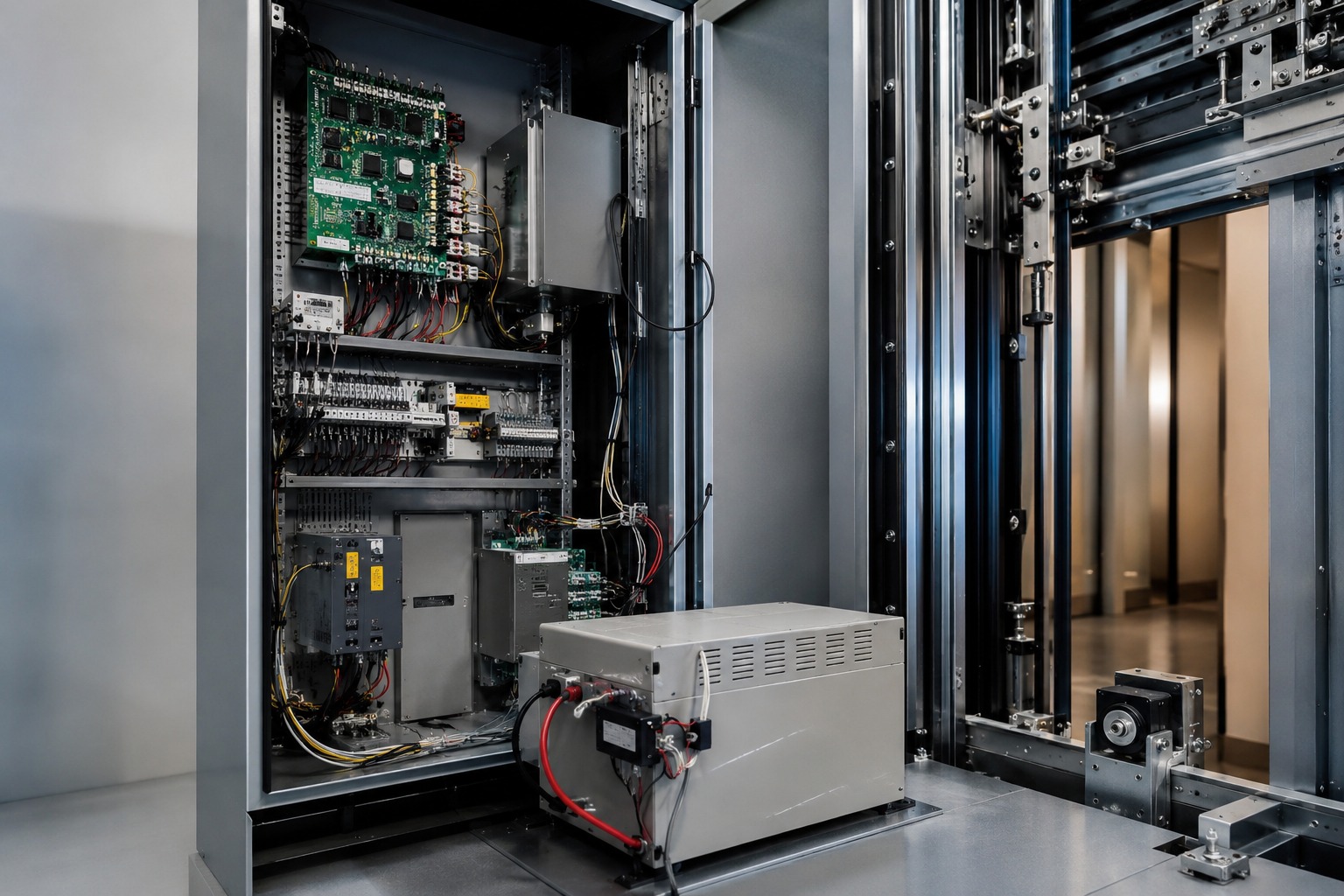
We aim to help customers reduce downtime with responsive communication, clear photo and label review, and support for compatible replacement sourcing across multiple elevator brands including Hitachi, Toshiba, KONE, Mitsubishi, and others. For U.S. buyers handling urgent service calls, modernization schedules, or portfolio maintenance, that means faster alignment between the field problem and the replacement part being quoted.
2026 Trends: Technology, Policy, and Sustainability
Looking toward 2026, three trends are shaping elevator emergency power decisions in the United States. First, smarter maintenance is becoming more common. Building operators increasingly want battery health tracking, clearer digital service records, and trend-based replacement planning instead of waiting for visible failure. Second, policy and inspection expectations continue to favor documented safety readiness, especially in high-occupancy and critical-use buildings. Third, sustainability is influencing product choices, with more attention on battery life optimization, reduced waste from unnecessary replacements, and efficient modernization strategies that keep functioning subsystems in service while updating high-risk components.
Technology will likely move toward more condition-aware backup units and easier integration with service documentation platforms. Policy direction will continue to reward traceability, testing discipline, and clear maintenance records. Sustainability will push the market toward better battery management, smarter stock planning, and more accurate replacement cycles. For buyers, the practical takeaway is to choose products and suppliers that support long-term maintainability, not just immediate installation.
FAQ About Elevator Emergency Power
Does every elevator emergency power supply perform rescue operation?
No. Many units only support emergency lighting, alarm, or auxiliary low-voltage functions. Rescue operation requires system-level compatibility with the controller, brake circuit, and related components.
How do I know whether I need a lighting power supply or a brake power supply?
Start with the elevator symptom and original part function. If the issue is only loss of cabin light during outages, a lighting unit may be enough. If the system relies on backup power for brake release or rescue movement, a dedicated brake-related supply may be required.
Can I replace a Hitachi emergency power supply with a generic unit?
Only after confirming full electrical and functional compatibility. In many cases, exact or verified compatible replacement is safer than a generic substitution, especially for rescue-related functions.
How often should batteries be checked?
They should be reviewed during scheduled maintenance and tested after installation or replacement. Age, environment, and outage frequency affect the ideal interval, but routine voltage and load checks are essential.
Is battery voltage enough to judge battery health?
No. A battery can show acceptable voltage at rest but fail under load. Always combine voltage readings with actual discharge or functional testing where appropriate.
What information should I send when asking for a quote?
Provide the original part number, label photos, wiring photos, voltage details, elevator brand, and a clear description of the failure or intended function. For rescue-related requests, include controller and brake information if available.
Why are maintenance records so important?
They help future technicians identify the correct replacement, evaluate battery age, compare voltage history, and avoid repeat troubleshooting. Good records lower downtime and improve replacement timing.
What is the best way to reduce outage-related elevator downtime in the U.S. market?
Use accurate model matching, perform post-installation testing, track battery condition, and work with a supplier that can support compatibility review along with reliable packaging and responsive service.