
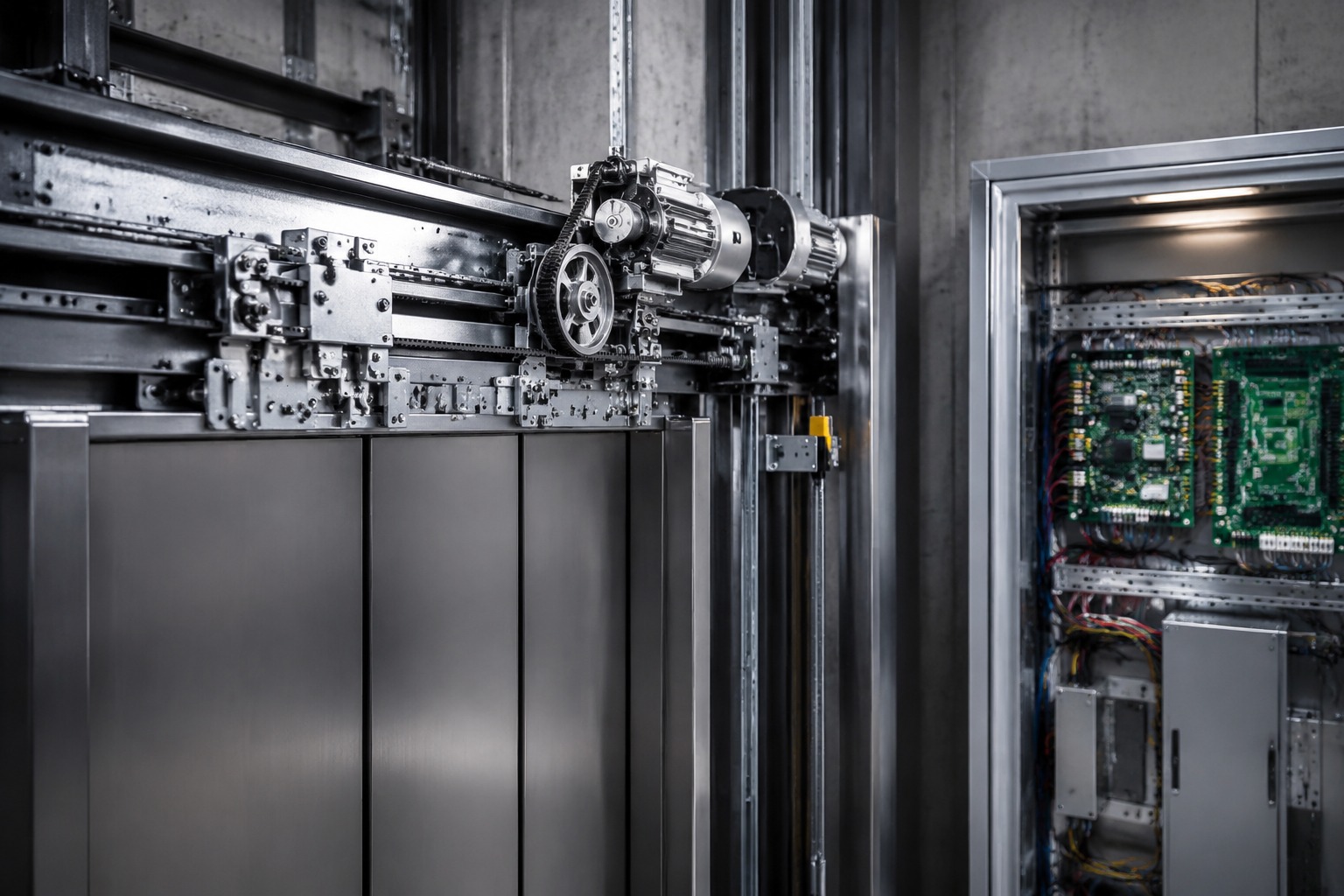
Elevator door performance depends on more than the motor alone. In daily service across the United States, door cycle speed is shaped by the interaction of the door motor, belt, pulley, controller, encoder feedback, hanging panels, guide components, and door locks. When one part drifts out of tolerance, the result is often visible at the landing first: doors that open too slowly, hesitate before closing, reverse unexpectedly, make noise, or generate repeated faults that increase downtime.
For maintenance companies, building owners, distributors, and modernization contractors, the practical goal is simple: keep the door system opening and closing smoothly, safely, and consistently. That means understanding common elevator door motor problems, knowing when a belt is nearing replacement, checking pulley alignment and hanging panel movement, and commissioning the controller so speed and torque match the site condition. In high-traffic buildings from New York City and Chicago to Los Angeles, Houston, Miami, Seattle, and Atlanta, reliable door operation is one of the biggest contributors to passenger satisfaction and call-back reduction.
This guide explains how door motors, belts, and controllers affect door cycle speed, why permanent magnet synchronous door motors are increasingly selected for modernization, what technicians should note about Hitachi HGE and UAX applications, and how preventive maintenance can reduce shutdown risk. If you are sourcing replacement components, model matching matters as much as price. For example, a permanent magnet synchronous door motor for Hitachi applications, an HGE-compatible door motor, or a door motor belt for elevator operators must be matched carefully to controller logic, mounting dimensions, and operating load.
In the U.S. market, door system reliability also affects modernization planning, spare parts stocking, and service response time. Property teams near major logistics hubs such as the Port of Los Angeles, Port of Long Beach, Port of New York and New Jersey, Savannah, Dallas-Fort Worth, and inland distribution centers often prioritize suppliers that can support fast identification and protective packaging, because a mismatched part can delay repair longer than a simple component shortage.
Common Elevator Door Motor Problems
The most common elevator door motor issues are not always catastrophic failures. In many cases, the motor still runs, but system performance degrades gradually. A weak start, inconsistent opening speed, vibration under load, repeated reversals, or overheating can all point to a mechanical or electrical cause around the motor circuit.
Technicians in the United States frequently encounter these conditions in aging mid-rise office buildings, hotels, hospitals, mixed-use towers, transit facilities, and apartment properties. Heavy traffic, dust, humidity, temperature swings, and deferred maintenance all accelerate wear. In coastal regions such as Miami, Tampa, and New Orleans, corrosion can affect terminals and moving assemblies. In colder areas such as Boston, Minneapolis, and Denver, seasonal changes can influence lubrication behavior and door drag.
| Symptom | Likely Cause | What to Inspect | Operational Risk | Urgency | Typical Corrective Action |
|---|---|---|---|---|---|
| Door opens slowly | Belt wear, low torque setting, drag in panels | Belt tension, hanger rollers, controller speed parameter | Passenger delay | Medium | Adjust parameters and replace worn moving parts |
| Door reverses before closing fully | Excess closing force, lock issue, sensor trigger | Light curtain, door lock, panel alignment | Nuisance shutdowns | High | Correct obstruction logic and verify alignment |
| Motor runs hot | High duty cycle, friction, bearing resistance | Current draw, pulley rotation, ventilation | Motor damage | High | Reduce load source and verify motor rating |
| Jerky start or stop | Poor controller tuning, encoder issue | Acceleration curve, wiring, feedback signal | Mechanical shock | High | Recommission speed profile and check feedback |
| Noise from operator | Worn pulley, loose fasteners, aging belt | Pulley groove, mounting points, belt surface | Progressive wear | Medium | Tighten, lubricate where appropriate, replace parts |
| Intermittent no-open condition | Controller fault, power supply fluctuation | Error history, input voltage, connectors | Entrapment risk and downtime | Critical | Troubleshoot control circuit and replace failed components |
The table above shows that a “motor problem” is often a door system problem. A healthy motor can still struggle if the belt is stretched, the pulley is worn, or the hanging panels create excess drag. Conversely, replacing only a belt may not solve repeated faults if the controller torque limits or acceleration settings are incorrect.
Another common issue is poor model substitution. A door motor may appear similar physically, yet differ in rated speed, torque constant, voltage, shaft configuration, connector style, or encoder signal. That is why professional sourcing with careful model matching is important, especially when dealing with branded systems used in modernization work throughout the United States.
Benefits of Permanent Magnet Synchronous Door Motors
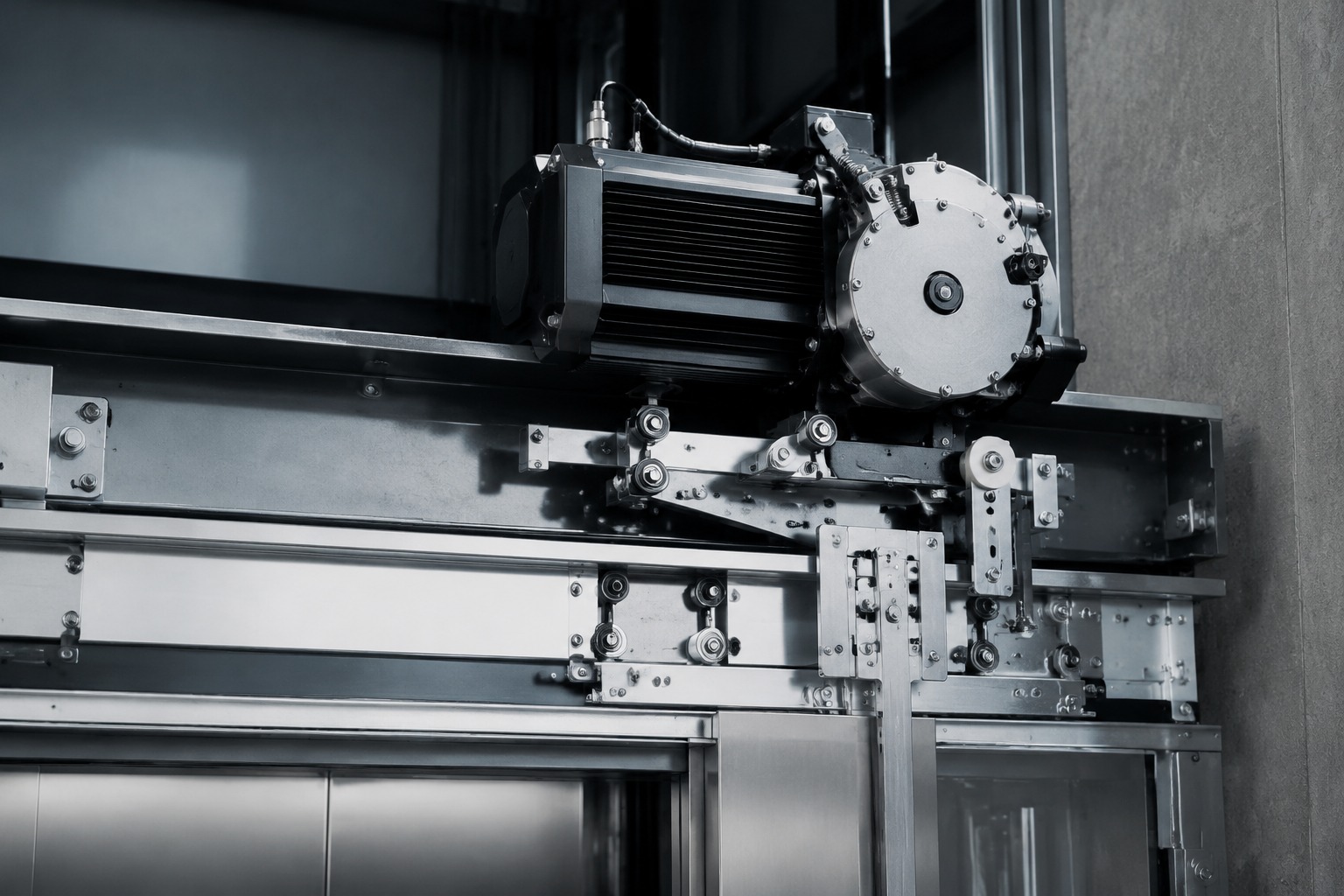
Permanent magnet synchronous door motors are increasingly preferred because they deliver high efficiency, responsive torque control, and stable low-speed performance. For elevator operators, this matters during start-up, deceleration, nudging, and repeated short-cycle operation. Compared with older designs, a PMSM-based door motor can improve consistency while reducing heat and energy loss.
In U.S. building portfolios, especially where modernization budgets focus on reliability and tenant experience, these benefits are practical rather than theoretical. Faster response does not mean unsafe speed; it means the controller has more precise authority over acceleration and deceleration. That helps doors move smoothly without slamming, hunting, or pausing at the wrong point in the travel path.
| Feature | PMSM Benefit | Impact on Door Cycle | Maintenance Effect | Best Fit Applications | Value to U.S. Owners |
|---|---|---|---|---|---|
| High torque at low speed | Smooth starting force | Less hesitation at opening | Reduced stress on mechanical parts | Hotels, residential towers | Better passenger comfort |
| High efficiency | Lower energy loss | Stable repeated cycling | Lower heat build-up | Offices, hospitals | Supports energy goals |
| Precise control response | Better speed tuning | Consistent open and close times | Fewer call-backs from rough motion | High-traffic commercial sites | Improved tenant satisfaction |
| Compact design potential | Easier integration | Good for modernization packages | Simplifies replacement planning | Retrofit projects | Useful in space-limited machine areas |
| Reduced slip-related losses | More predictable operation | Stable closing force control | Supports accurate commissioning | Public buildings | Enhances safety consistency |
| Compatible with advanced control | Fine torque shaping | Less shock at end of travel | Longer life for belts and rollers | Modernized elevators | Lower lifecycle service cost |
The comparison above explains why PMSM door motors have become a strong option for both replacement and modernization. In many U.S. projects planned for 2026 and beyond, sustainability goals, lower energy use, and better diagnostic integration are pushing buyers toward more efficient door operator solutions.
This market growth trend reflects increasing modernization activity in large metro areas, stricter uptime expectations in Class A properties, and the continued replacement of aging operator assemblies in schools, healthcare systems, and transit-adjacent buildings.
Hitachi HGE and UAX Door Motor Notes
When discussing Hitachi-related door motor replacements, technicians usually focus on model compatibility, controller communication, shaft dimensions, mounting points, and the exact operating profile expected by the door operator. HGE and UAX applications can require different fitment and parameter expectations, so identifying the original motor data and operator configuration is essential before ordering.
In practice, “notes” for these models often include verifying:
- Nameplate information and original application code
- Connector arrangement and cable length
- Mounting bracket position and shaft geometry
- Pulley size and belt compatibility
- Encoder or feedback device type
- Controller parameter baseline after installation
For modernization contractors in cities such as San Francisco, Philadelphia, Phoenix, and Washington, D.C., careful review is especially important because the door operator may have been altered during prior service work. A motor that is nominally compatible may still need belt selection review, pulley inspection, and commissioning adjustment to perform correctly.
Reliable sourcing partners add value here by supporting technical identification, not just shipment. Strong technological capability means understanding part numbers, substitution risks, controller behavior, and cross-reference details. For elevator maintenance teams handling mixed fleets, that support helps reduce repeat visits and avoids the cost of installing the wrong component.
From a manufacturing perspective, stable quality inspection matters because door motors face frequent start-stop cycles. Consistency in rotor balance, winding quality, bearing selection, and assembly checks influences how smoothly the door will operate over time. For branded replacement work in the United States, buyers often prefer suppliers that combine model matching with protective packaging, especially when parts move through long shipping routes to the Midwest, Northeast, Gulf Coast, or West Coast service centers.
Signs a Door Motor Belt Needs Replacement
The belt is one of the most overlooked causes of poor door cycle performance. As the belt ages, it can stretch, glaze, crack, shed dust, lose tooth integrity, or slip under load. When that happens, the motor may still be healthy, but the door will no longer track the expected speed curve. Slow starts, uneven closing, or a “soft” feel at the beginning of motion are common clues.
| Sign | Visual Evidence | Effect on Door Operation | Inspection Frequency | Service Priority | Recommended Action |
|---|---|---|---|---|---|
| Surface cracking | Small splits on outer belt skin | Reduced strength and possible sudden failure | Monthly | High | Plan near-term replacement |
| Glazing | Shiny hardened surface | Slip and inconsistent speed | Monthly | Medium | Replace and check pulley condition |
| Tooth wear | Rounded or missing teeth | Position error and jerky movement | Monthly | High | Replace immediately |
| Frayed edges | Fiber exposure on both sides | Misalignment and accelerated wear | Monthly | High | Replace and realign pulley path |
| Excessive belt dust | Black debris near operator | Progressive wear and contamination | Biweekly in high traffic sites | Medium | Investigate tension and tracking |
| Tension loss | Noticeable slack or vibration | Slow acceleration and poor repeatability | Monthly | Medium | Retension if allowed, replace if aged |
The explanation is straightforward: belts are wear items, and they directly influence how effectively motor torque becomes door movement. If a belt is damaged, replacing only controller boards or adjusting torque parameters may temporarily hide the issue but will not solve root cause. In properties with constant use, such as airports, hospitals, or student housing, belt inspections should be more frequent than in low-rise office buildings with predictable traffic patterns.
Service teams often pair belt replacement with pulley cleaning, alignment checks, and a quick review of guide shoe contact and panel drag. If you are procuring replacement stock, it helps to keep documented dimensions, tooth profile, and original operator references on file. That reduces emergency ordering mistakes when a unit fails during peak occupancy.
How to Inspect Pulley and Hanging Panels
Inspection of the pulley and hanging panels is one of the fastest ways to determine whether a door motor is being overloaded by mechanical resistance. A properly functioning motor should not need excessive torque to overcome poor alignment or worn rolling components. Mechanical drag raises current draw, increases heat, and shortens the life of both the motor and belt.
A field inspection should typically include the following steps:
- Lock out and secure the elevator according to site safety procedures.
- Visually inspect pulley grooves for polishing, chips, uneven wear, or contamination.
- Check pulley rotation by hand where allowed; it should turn smoothly without roughness.
- Inspect hanging panels for level travel, side play, scraping, and roller wear.
- Observe guide track cleanliness and any debris that could increase drag.
- Verify panel gaps and lock engagement alignment.
- Review fasteners, brackets, and mounting hardware for looseness or fatigue.
| Inspection Point | Normal Condition | Warning Sign | Likely Impact on Motor | Suggested Tool | Recommended Response |
|---|---|---|---|---|---|
| Pulley groove | Clean and evenly shaped | Sharp wear or debris packing | Belt slip and noise | Flashlight | Clean or replace pulley |
| Pulley bearing | Free and smooth rotation | Grinding or play | Higher torque demand | Hand rotation check | Replace bearing or pulley assembly |
| Panel rollers | Round and balanced | Flat spots or wobble | Jerky movement | Visual and manual check | Replace worn rollers |
| Track surface | Clean travel path | Dust, grease buildup, metal debris | Added drag and inconsistent speed | Cleaning kit | Clean and recheck motion |
| Panel alignment | Even gap and smooth closing | Rubbing at one edge | Motor overload and door reversal | Straight edge or gauge | Adjust hanger settings |
| Mounting hardware | Tight and stable | Looseness or movement marks | Noise and vibration | Torque wrench | Retighten and inspect structure |
The chart below illustrates where U.S. demand for door motor and operator-related parts tends to be strongest by sector. This reflects building age, traffic volume, and maintenance intensity rather than total elevator count alone.
Hospitals and transit facilities often lead because their doors cycle constantly, and even minor door performance issues can disrupt operations. Residential towers also rank high, especially in large urban markets where aging equipment and heavy daily use overlap.
Commissioning Door Speed and Torque
After motor replacement or major operator service, commissioning is critical. Even a correct motor can perform poorly if the controller is not tuned to the mechanical condition of the door system. Commissioning typically involves setting or verifying opening speed, closing speed, acceleration, deceleration, torque limits, obstruction sensitivity, and final leveling of motion near fully open and fully closed positions.
The best settings depend on the door width, panel weight, belt condition, track friction, traffic pattern, and OEM control logic. In the United States, technicians also need to consider code compliance, safety devices, and the building’s operational expectation. A hospital service elevator may prioritize smooth, predictable motion over aggressive speed, while a high-traffic office lobby may need optimized cycle time without compromising reversal sensitivity.
| Checkpoint | Target Result | Common Error | Visible Symptom | Risk if Ignored | Technician Action |
|---|---|---|---|---|---|
| Opening speed | Fast but smooth opening | Set too low or too high | Slow service or hard opening | Passenger complaints or wear | Adjust speed curve |
| Closing speed | Controlled, consistent close | Excessive closing rate | Door slam or reversal | Safety nuisance trips | Reduce speed and test repeatedly |
| Acceleration | Stable start without jerk | Ramp too steep | Shock load on belt | Early component wear | Smooth ramp values |
| Deceleration | Soft final approach | Late braking | Impact at travel end | Mechanical stress and noise | Refine stop profile |
| Torque limit | Enough force for reliable travel | Too low or too high | Stall or overforce condition | Faults or safety concerns | Set based on measured load |
| Obstruction sensitivity | Timely reverse on contact or detection | Improper threshold | False reversals or poor protection | Unsafe behavior or delays | Test with approved procedure |
The explanation here is important: commissioning is not just entering standard values. It is a balancing process between door speed, available torque, and actual site mechanics. A well-tuned system lowers stress on the motor, belt, and panels while improving user experience.
For building owners comparing suppliers, this is where service capability becomes critical. Responsive technical support, clear model confirmation, and practical after-sales follow-up can save hours during start-up. In the U.S. market, where elevators are often maintained by third-party service firms across large territories, fast troubleshooting support is a real commercial advantage.
The area chart shows the growing shift toward efficient, data-aware door systems. By 2026, more U.S. projects are expected to combine replacement motors with controller diagnostics, better feedback devices, and maintenance planning based on fault history rather than reactive repair alone.
Preventive Maintenance Tips
Preventive maintenance remains the most cost-effective way to protect elevator door motor performance. Because doors cycle far more often than many other elevator subsystems, small defects become large quickly. A structured PM program reduces emergency shutdowns and extends the service life of motors, belts, pulleys, and operator hardware.
Recommended preventive maintenance practices include:
- Inspect belt condition and tension regularly, especially in high-cycle buildings.
- Clean pulley grooves and operator areas to prevent abrasive buildup.
- Check hanger rollers, guide shoes, and panel alignment for drag.
- Review controller fault logs for repeated door-related events.
- Verify electrical connectors for heat marks, looseness, or corrosion.
- Measure door opening and closing times periodically to identify drift.
- Replace wear items before they trigger secondary failures in the motor circuit.
Technological capability plays a role in preventive maintenance because accurate parts matching and fault interpretation shorten diagnosis. Manufacturing capability matters because parts consistency influences replacement success. Service capability matters because downtime is often measured in tenant complaints, missed deliveries, or patient transport delays, not just maintenance invoices.
For example, a professional elevator parts supplier serving the U.S. market can support maintenance teams by helping confirm compatible control boards, inverter and frequency converter parts, door operator assemblies, sensors, encoders, power supplies, buttons, COP panels, and other lift accessories across brands such as Hitachi, Toshiba, KONE, Mitsubishi, and more. When that support includes stable quality inspection, careful packaging, and responsive communication, contractors can reduce return risk and keep service schedules on track.
Local conditions also affect PM strategy. Buildings near busy freight corridors such as Chicago rail interchanges, the Inland Empire logistics region in California, the Port of Houston, or New Jersey distribution zones may face higher dust and usage intensity. Coastal humidity in Jacksonville or Miami can accelerate corrosion. In older urban cores like New York City, Boston, and Philadelphia, modernization projects may involve mixed-age door components that require closer inspection intervals.
This comparison reflects what many U.S. buyers value most: getting the correct part quickly and with enough technical confidence to avoid a second visit. Price matters, but incorrect matching can cost more than the initial savings, especially when labor, building disruption, and return freight are considered.
FAQ About Elevator Door Motors
What usually causes an elevator door motor to fail?
True motor failure often results from long-term overload, overheating, bearing wear, electrical supply issues, or controller faults. However, many “motor failures” begin with belt wear, pulley problems, panel drag, or poor commissioning that forces the motor to work harder than intended.
How do I know whether I need a new motor or just a new belt?
Start with visual inspection and current behavior. If the belt shows cracking, glazing, frayed edges, or tooth damage, replace it first if the motor remains electrically sound. If the motor overheats, draws abnormal current, makes bearing noise, or fails even with a healthy mechanical path, motor replacement may be needed.
Are permanent magnet synchronous door motors better for modernization projects?
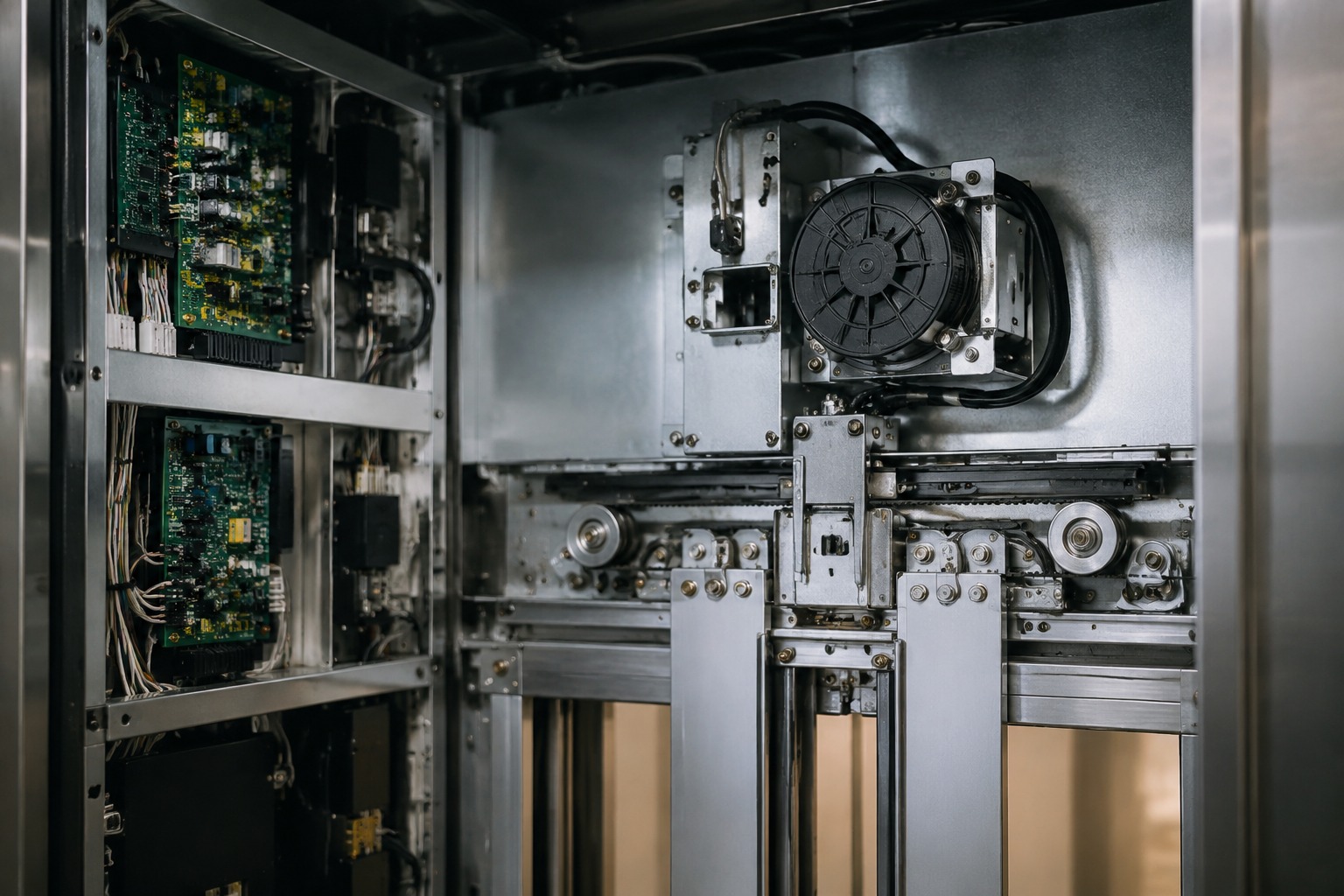
In many cases, yes. PMSM door motors can offer smoother low-speed torque, higher efficiency, better control response, and more stable performance in repeated cycling. They are especially attractive where building owners want reliability improvements and lower lifecycle service burden.
What should be checked before ordering a replacement door motor?
Verify brand, model, application series, nameplate data, shaft dimensions, mounting arrangement, connector type, feedback device details, pulley compatibility, and controller requirements. Photos and original markings help reduce mismatch risk.
How often should door belts be inspected?
Monthly inspection is common for normal buildings, but high-traffic sites such as hospitals, hotels, airports, and major residential towers may justify more frequent checks. Any increase in noise, dust, or irregular speed should trigger immediate review.
Why do doors reverse even when nothing is in the opening?
Likely causes include excessive drag, poor closing force adjustment, sensor sensitivity issues, lock misalignment, or controller settings that no longer match the mechanical condition. False reversals are common when commissioning has drifted or wear has increased resistance.
Can pulley wear affect controller tuning?
Yes. A worn pulley can create slip, uneven transfer of motion, and inconsistent feedback to the controller. This can make even correct parameter settings appear unstable in operation.
What industries in the United States most often need door motor replacements?
Healthcare, commercial office, hospitality, residential high-rise, airports, universities, and public infrastructure all show steady demand. These sectors depend on frequent and reliable door cycles and are more exposed to uptime pressure.
What should buyers look for in a parts supplier?
Look for strong model matching, consistent quality inspection, protective packaging, responsive service, and experience with multiple elevator brands. Suppliers that support maintenance companies and modernization contractors with practical compatibility guidance are especially valuable.
Buying Advice for the United States Market
When buying elevator door motors and related parts in the United States, focus on total replacement success instead of unit price alone. The right purchase decision includes technical fit, expected reliability, logistics timing, and post-sale support. A motor arriving in Seattle, Newark, Dallas, or Los Angeles is only useful if it matches the site and can be commissioned without surprises.
Good buying practice includes collecting the original motor label, operator photos, door width, panel type, controller information, and any recent fault descriptions. If the belt, pulley, or hanging hardware also show wear, consider a combined replacement approach rather than changing one part at a time. This often reduces return labor and improves final tuning.
Distributors and contractors also benefit from working with suppliers that cover a broader elevator parts range. When one source can support door motors, control boards, inverter parts, door locks, light curtains, guide shoes, sensors, encoders, and power supplies, emergency sourcing becomes simpler and downtime risk is lower.
2026 Trends: Technology, Policy, and Sustainability
Looking ahead to 2026, several trends are likely to shape elevator door motor selection in the United States. First, more modernization projects will prioritize efficient motors and smarter control integration as owners seek measurable energy and reliability gains. Second, predictive maintenance will continue expanding, with fault logs, cycle counts, and performance drift used to schedule service before breakdown. Third, sustainability expectations will encourage longer-lasting replacement parts, improved packaging efficiency, and lower-waste maintenance planning.
Policy and compliance trends may also influence product selection. While local requirements vary by jurisdiction, owners increasingly prefer components that support safer, more consistent operation and clearer documentation. In major urban regions where building performance and tenant experience are under scrutiny, smoother and more reliable door systems can support broader asset management goals.
Finally, the market is moving toward service ecosystems rather than isolated parts sales. Buyers want technical guidance, dependable sourcing, stable quality control, and responsive support together. For elevator companies, that means choosing suppliers that understand real field conditions, not just catalog descriptions.
Case Examples from the U.S. Field
In a midtown Manhattan office tower, repeated door reversals were first blamed on sensors. Inspection showed the actual cause was a worn belt and panel drag from aging hanger rollers. Replacing the belt, restoring alignment, and recommissioning speed and torque eliminated most nuisance callbacks within the first service cycle.
In a Houston medical building, a door motor was running hot after several parameter changes. The problem was not the replacement motor itself but a rough pulley bearing that increased load. Once the bearing assembly was corrected and torque limits reset, opening consistency improved and heat generation dropped.
In a Los Angeles residential high-rise modernization, the owner selected a permanent magnet synchronous replacement strategy to improve smoothness and reduce repeat service. Careful model matching, quality inspection, and commissioning support were key because the site had mixed-age operator components from earlier repairs.
Local Supplier Considerations and Why Support Matters
Whether your project is in New York, Chicago, Atlanta, Denver, Phoenix, or near ports like Savannah and Long Beach, local supplier access still matters. Fast domestic handling, or at least fast technical confirmation and shipping coordination, can make a major difference during outage situations. But local availability alone is not enough. Elevator contractors also need confidence in packaging, documentation, and compatibility screening.
That is why many U.S. buyers prefer suppliers with three strengths: technological capability in cross-referencing and model identification, manufacturing capability with stable inspection and consistent build quality, and service capability with responsive communication from inquiry through delivery. These strengths help maintenance teams reduce downtime, source compatible replacement parts, and keep elevator systems operating safely and smoothly.
When door cycle speed becomes inconsistent, the root cause may be the motor, the belt, the controller, the pulley, the hanging panels, or a combination of all five. Solving the issue correctly means treating the door system as an integrated assembly. With good inspection, the right replacement components, and careful commissioning, elevator doors can return to reliable opening performance and stay there.