
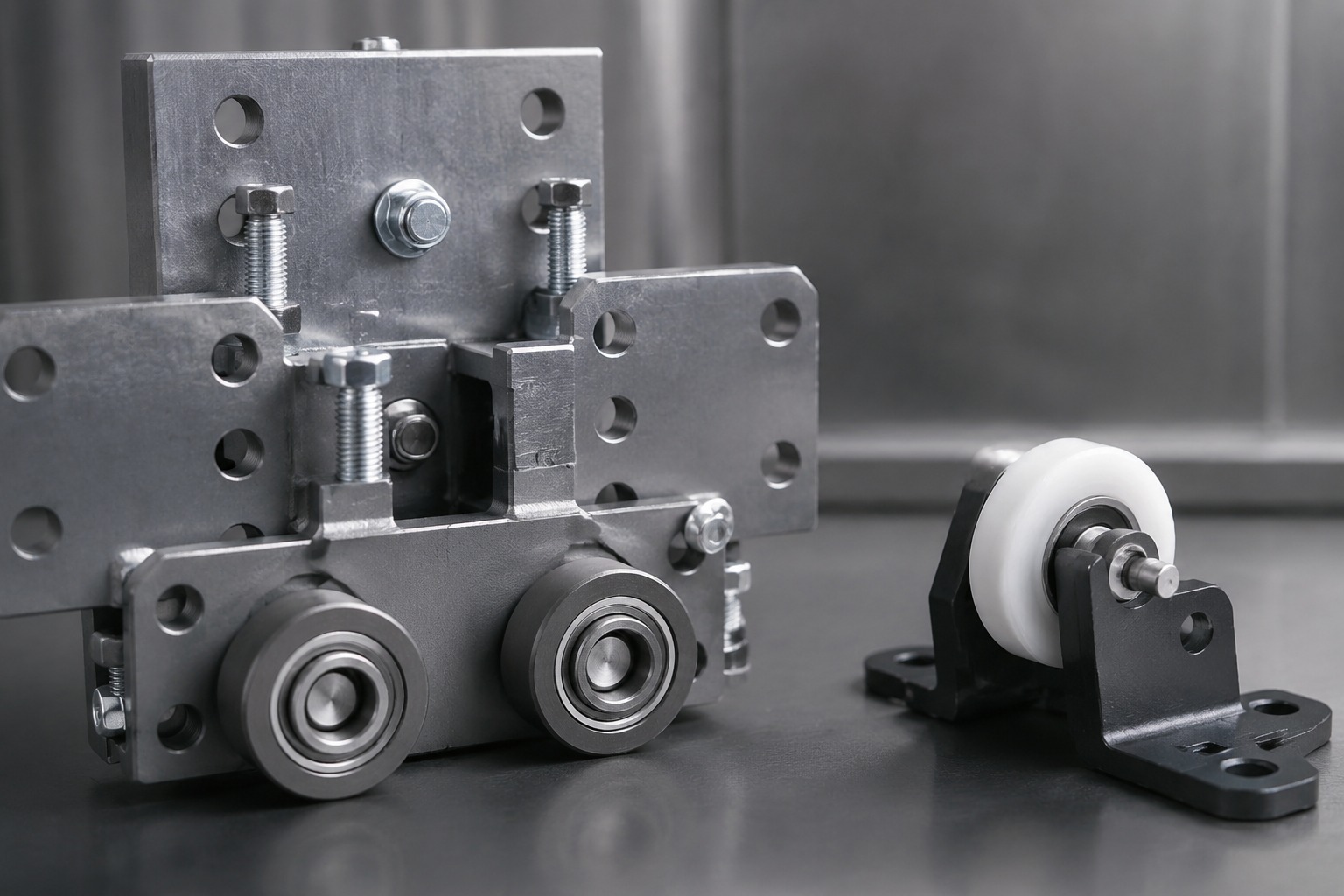
Elevator door hanging plates are small structural parts with a very big job. They support the moving door panels, hold the roller or pulley assembly in position, help maintain the correct relationship between the door panel and the track, and contribute directly to opening smoothness, closing accuracy, and operating noise. When a hanging plate is selected correctly and installed with proper alignment, the door system runs with less vibration, lower wear, and fewer shutdowns. When the wrong plate, roller size, or opening distance is used, technicians often see symptoms such as scraping, door bounce, uneven gaps, repeated reopening, or fault codes from the operator.
For building owners, service companies, and modernization contractors across the United States, understanding the role of the hanging plate is practical, not theoretical. In high-traffic office towers in New York, hospitals in Chicago, mixed-use towers in Miami, hotels in Las Vegas, and logistics buildings near Los Angeles and Houston, elevator doors cycle thousands of times each week. Door faults remain one of the most common service call categories, so correct replacement parts and model matching matter. In many cases, technicians do not need a full door operator replacement. They need the right hanging plate, roller pulley, guide relationship, and alignment procedure.
This guide explains the main functions of elevator door hanging plates, the difference between car door and hall door hanging panels, how opening distance affects part selection, what to check on pulley diameter and roller wear, and where model-specific notes such as Hitachi NF door hanging plate details become important. It also covers installation, maintenance, buying advice, local sourcing considerations in the U.S. market, and future trends through 2026 in modernization, safety, and sustainability.
Many maintenance teams use the phrase “door hanger plate,” “door hanging panel,” or “door suspension plate” interchangeably. While naming varies by region and manufacturer, the core purpose remains the same: the part supports the moving door assembly and ensures the door tracks properly under repeated service. If your project involves a hall opening of 800–900 mm, a hall door hanging plate for 800–900 mm openings with 65 mm pulley may be the correct configuration. For wider car door systems in the 1000–1100 mm range, a car door hanging plate for 1000–1100 mm openings may be more suitable. For some Hitachi applications, maintenance teams specifically ask for an NF door hanging plate for Hitachi elevators to match original geometry and fitment.
What elevator door hanging plates actually do
The door hanging plate acts as the load-bearing interface between the door panel and the operator-side or landing-side suspension arrangement. In practical terms, it does four things at once. First, it carries the door panel weight through the roller or pulley assembly. Second, it maintains stable position so the panel tracks correctly along the door rail. Third, it helps preserve proper spacing, which supports lock engagement, center opening accuracy, and landing sill alignment. Fourth, it reduces noise by minimizing play, vibration, and skew during door travel.
In most service environments, a worn or mismatched hanging plate does not fail dramatically at first. Instead, it gradually changes the movement quality of the door. Technicians may notice black dust near rollers, shine marks from rubbing, increased side play, or faster wear on one roller than the other. Building staff may only notice that the elevator sounds louder or the door “hesitates.” Those small symptoms often point back to the relationship between the plate, pulley, track, and door panel geometry.
On center-opening doors, both left and right panels must move symmetrically. If one hanging plate sits slightly out of square, the operator can still force motion, but the system works harder, creating extra noise and faster roller wear. On side-opening doors, an alignment error can cause edge rubbing or poor closing force consistency. Because elevator door operators depend on repeatable mechanical movement, the hanging plate is more than a bracket. It is a precision support part that affects safety, ride perception, and maintenance intervals.
| Function | What the hanging plate controls | Typical symptom if incorrect | Effect on operation | Priority for inspection | Common field note |
|---|---|---|---|---|---|
| Load support | Carries door panel through roller assembly | Panel sag | Hard closing, rubbing | High | Check plate deformation |
| Track position | Keeps panel aligned to rail path | Jerky opening | Noise and vibration | High | Look for uneven roller marks |
| Gap consistency | Maintains correct clearances | Uneven edge gap | Locking inconsistency | High | Measure both ends |
| Motion stability | Reduces sway and oscillation | Door bounce | Repeated reopening | Medium | Inspect track and guides together |
| Noise control | Limits chatter at rollers | Grinding or rattling | Poor user perception | Medium | Check pulley wear and bearings |
| Operator efficiency | Helps motor move door with less resistance | Slow opening | Higher load on operator | High | Review model match |
The table above shows why the part deserves attention during preventive maintenance. A service team that treats the hanging plate as a simple support bracket often misses the root cause of repeat door faults. The most efficient approach is to inspect the entire door path: plate, roller, track, guide shoe, sill, coupler relationship, and locking alignment.
Car door hanging plates versus hall door hanging panels
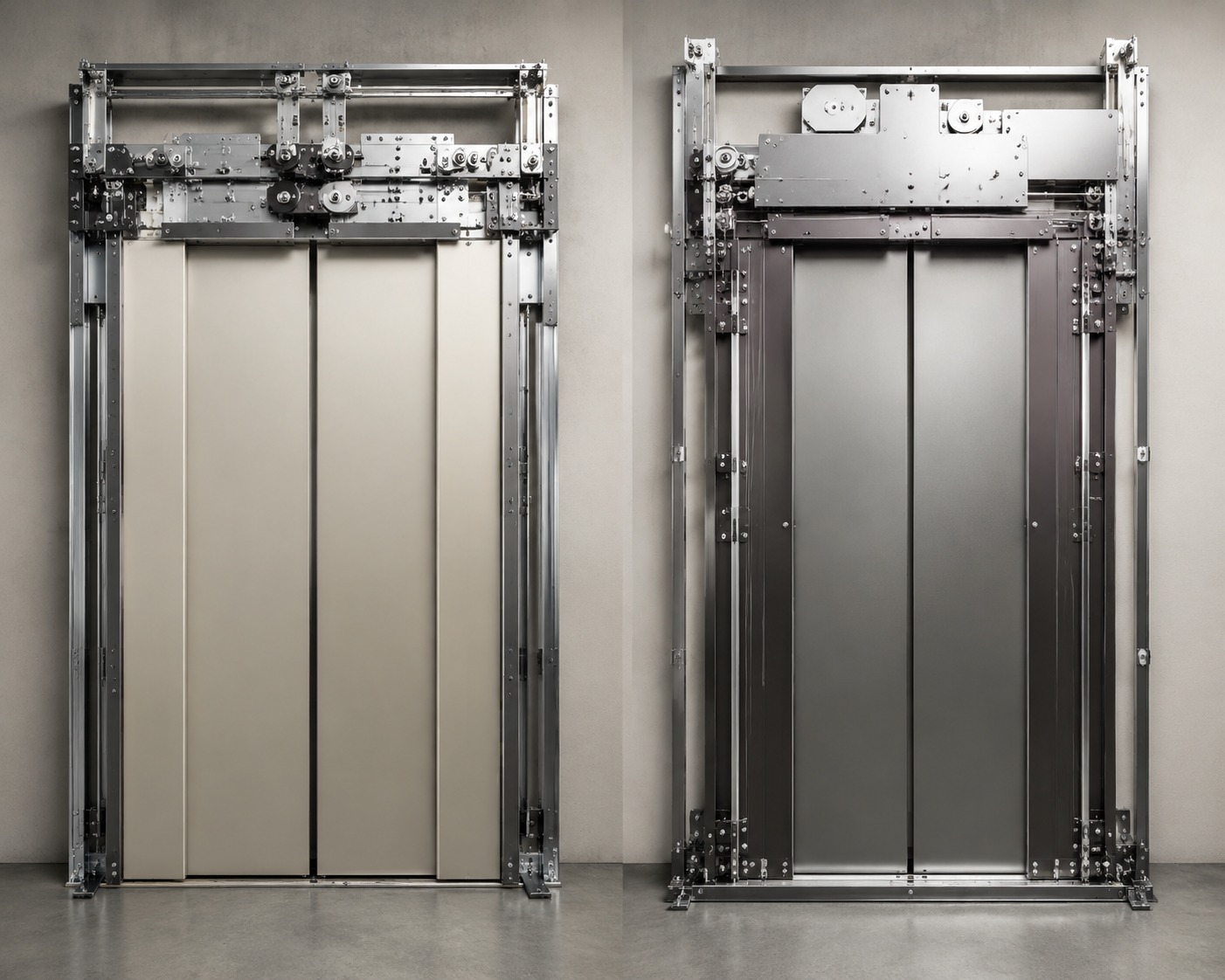
Car door hanging plates and hall door hanging panels serve similar mechanical purposes, but they are not interchangeable in most applications. The car door assembly moves with the cab and interfaces with the operator, clutch, and car-side panel arrangement. Hall door assemblies are installed at each landing and depend on coupling and unlocking action from the car door side. Because of this, dimensional details, hole positions, load distribution, and door opening ranges can differ significantly.
Car door hanging plates usually face higher dynamic cycling because the operator directly drives the car door. That means the plate must maintain accurate geometry under repeated acceleration and deceleration. Hall door hanging panels, by contrast, still experience frequent movement, but their operating path is linked to landing-side mechanical behavior, lock release, and coupler engagement. The alignment priorities are similar, yet the fitment details are different.
In modernization projects in older buildings in Boston, Philadelphia, or San Francisco, technicians often encounter mixed equipment histories. A door operator may have been replaced years ago while the landing hardware remained original. In that scenario, using a generic plate without confirming opening width, pulley size, hole spacing, and brand family can create new faults instead of solving old ones. That is why careful identification of car door versus hall door hardware is essential before ordering parts.
| Comparison point | Car door hanging plate | Hall door hanging panel | Why it matters | Field risk if confused | Recommended check |
|---|---|---|---|---|---|
| Installation location | On the elevator car | At each landing | Different motion and interface | Wrong mounting pattern | Confirm equipment side |
| Drive relationship | Directly linked to operator | Linked through coupling action | Different load behavior | Poor travel smoothness | Review operator model |
| Opening width options | Often matched to car opening geometry | Matched to landing opening | Critical for fit | Misaligned travel path | Measure clear opening |
| Hole spacing | Brand and model specific | Brand and model specific | Mounting accuracy | Improvised drilling | Match drawing or sample |
| Pulley size | Depends on design family | Depends on design family | Affects track contact | Fast roller wear | Verify roller diameter |
| Typical replacement reason | Wear, deformation, vibration | Wear, panel tracking, lock issues | Different symptom patterns | Wrong diagnosis | Inspect full door system |
For buyers in the United States, product naming in procurement documents can also vary. A purchasing team in Dallas may ask for “door hanger plate,” while a modernization contractor in Seattle may ask for “door hanging board” or “suspension plate.” The safest purchasing method is to confirm brand, model family, side designation, opening width, pulley diameter, and photos of the original part. When possible, compare dimensions against the removed component.
How opening distance affects part selection
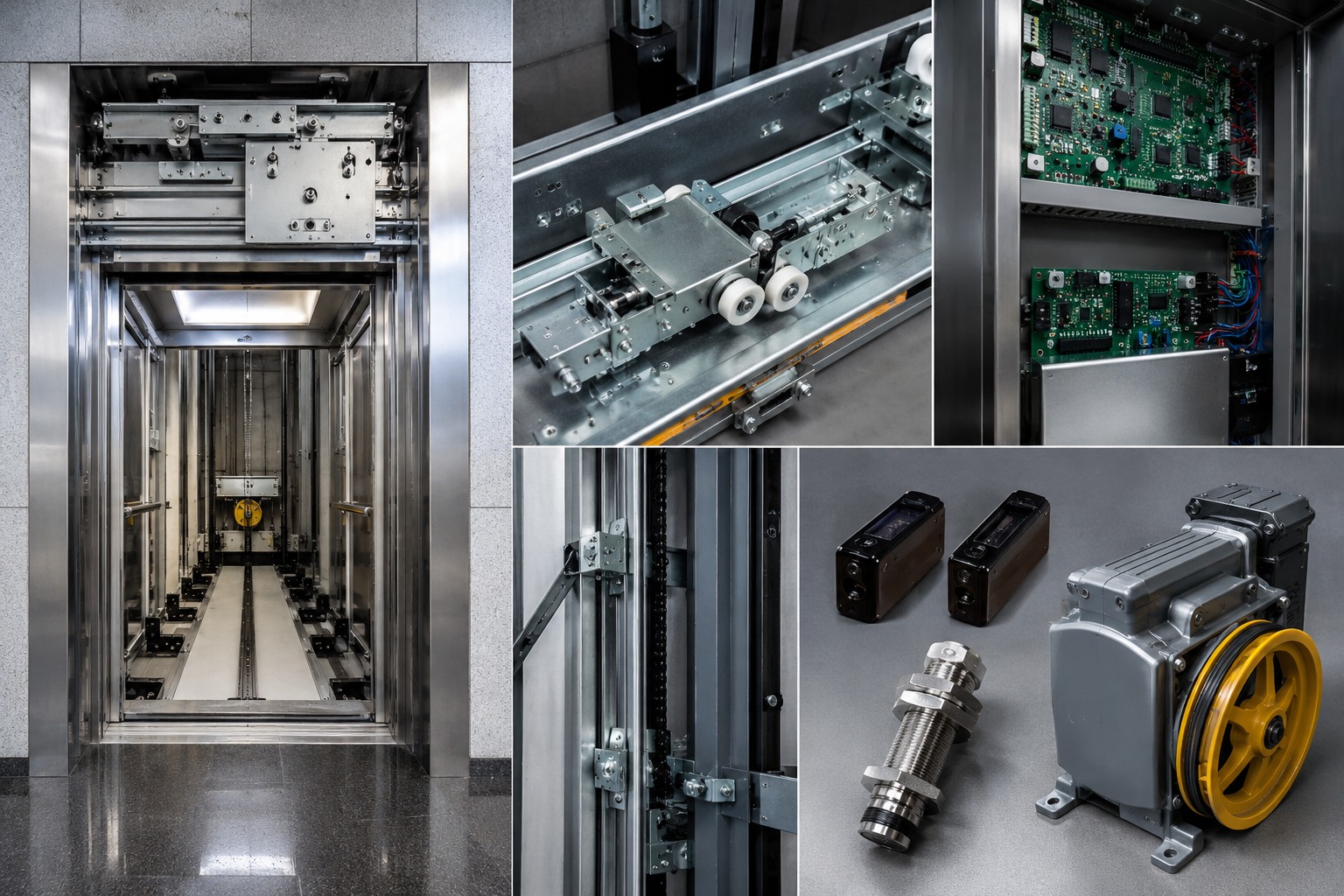
Opening distance is one of the most important variables in selecting the right door hanging plate. The plate geometry must match the door opening range so the panel can travel correctly without overrun, binding, or offset loading. In simple terms, a hanging plate built for an 800–900 mm door opening is not automatically suitable for a 1000–1100 mm opening. The mounting position, support span, roller placement, and panel balance may all differ.
Technicians should measure the actual clear opening and confirm whether the system is center-opening or side-opening. They should also review whether the replacement applies to the car door or hall door. A common mistake is ordering based only on brand name. Even within one brand family, multiple opening widths may use different hanging plates. This is especially common in buildings modernized in phases, where some floors retain older landing arrangements while the car side has changed.
For example, in regional distribution projects serving Atlanta, Newark, and Long Beach, spare parts teams often stock common opening ranges because they represent the bulk of service demand. Yet exact model matching still matters. A landing door setup for an 800–900 mm opening may use a 65 mm pulley and a specific bracket profile, while a wider car door system for a 1000–1100 mm opening may require a longer support relationship and different geometry to maintain stable travel.
| Opening distance range | Typical application | Common plate type | Pulley consideration | Main selection risk | Best practice |
|---|---|---|---|---|---|
| 700–800 mm | Older residential or service use | Compact landing or car type | Smaller pulley options may appear | Confusing legacy variants | Use sample comparison |
| 800–900 mm | Common hall door width | Landing hanging plate | 65 mm pulley often seen | Assuming all 900 mm units match | Check hole pattern and thickness |
| 900–1000 mm | Mid-range commercial openings | Model-specific variants | Roller load rises with traffic | Mixing car and hall side parts | Verify installation side |
| 1000–1100 mm | Wider car doors | Car hanging plate | Balance and travel are critical | Ordering by width only | Check full assembly dimensions |
| 1100–1200 mm | Hospital or freight-adjacent uses | Heavy-duty variants | Larger or reinforced arrangement | Underestimating door weight | Review panel mass |
| Custom modernization sizes | Retrofitted systems | Modified or matched pattern | Original track condition matters | Field adaptation without drawing | Confirm dimensions before shipment |
The table highlights that opening distance is not just a number on a quotation sheet. It directly affects fit, travel, and durability. Choosing a correctly sized part reduces installation time, avoids unnecessary modification, and supports safer operation over the long term.
Roller pulley size and wear checks
The roller or pulley works together with the hanging plate, and the two should always be evaluated as a pair. Even a correctly matched hanging plate can perform poorly if the roller diameter is wrong, the bearing is worn, or the running surface has flat spots. In many service calls, the visible symptom is noise, but the underlying cause is a worn roller loading the plate unevenly or forcing the door panel to run out of line.
Pulley diameter affects how the assembly engages the track. If the diameter is smaller than required, the door may sit too low or develop unstable contact. If larger than specified, it can change the effective running position and create rubbing elsewhere in the system. Wear checks should include the pulley outer surface, bearing freedom, side play, axle fit, cracking, and any uneven polish that suggests skewed loading.
In high-use transportation hubs such as Chicago O’Hare area hotels, warehouse offices near the Port of Savannah, and coastal towers in Miami where humidity and contamination can accelerate wear, regular inspection of rollers and hanging plates can meaningfully reduce downtime. Door systems exposed to dust, salt air, or frequent cart impact often age faster than expected from cycle count alone.
| Inspection item | What to look for | Typical cause | Operational symptom | Recommended action | Urgency |
|---|---|---|---|---|---|
| Pulley diameter | Mismatch with specification | Wrong replacement part | Tracking issues | Replace with correct size | High |
| Outer running surface | Flat spots, grooves, chips | Long wear or impact | Rhythmic noise | Replace pulley | High |
| Bearing rotation | Stiff or rough turning | Contamination or age | Drag and slow motion | Replace roller assembly | High |
| Side play | Excess wobble | Bearing wear or loose fit | Door chatter | Check axle and plate fit | Medium |
| Mounting point | Ovalized hole or looseness | Long-term vibration | Unstable tracking | Inspect plate condition | High |
| Contact pattern | Uneven shine on one side | Misalignment | Skewed opening path | Realign full assembly | High |
The best maintenance practice is to avoid replacing only the visibly damaged component when related parts show matching wear. If a pulley is badly worn, inspect the hanging plate hole condition, track surface, and lower guide path at the same time. Replacing the pulley alone may offer a short improvement but not a durable fix.
Hitachi NF door hanging plate notes
Hitachi NF door hanging plate applications deserve special attention because technicians often request them by model family rather than by generic dimensions. In the field, “NF” may be used as shorthand during maintenance planning, but the safest approach is still to verify the original part, opening width, mounting pattern, and associated pulley size before shipment. Brand families can include multiple revisions over time, especially in buildings that have undergone partial modernization.
For service teams working in large metro areas such as Los Angeles, Washington, D.C., and Houston, brand-specific parts matching is important because labor time is expensive and return visits are disruptive. A correctly matched NF-style hanging plate can reduce installation adjustments, improve door tracking, and restore normal noise levels faster than using a broad substitute with similar but not identical geometry.
When technicians compare an existing NF door hanging plate, they should document overall length, plate thickness, hole center distances, pulley configuration, installation side, and wear marks. Photos of both front and back are helpful. If the old part is bent from impact or fatigue, measure from the unbent reference points whenever possible. During quoting, many buyers also ask about whether the replacement includes pulley hardware or whether the plate is supplied separately.
For projects involving NF-type requirements, a dedicated Hitachi NF door hanging plate option can simplify procurement when the model family is known. Still, final confirmation should include application details so the replacement supports proper installation without field modification.
The line chart shows a realistic growth trend in U.S. replacement demand for door hanging plates. The rise reflects aging building stock, ongoing modernization in major cities, and increased maintenance attention on door-system reliability. Through 2026, demand is likely to remain strong as property managers prioritize uptime, tenant experience, and parts availability.
Installation alignment checklist
Correct installation is as important as correct part selection. A good hanging plate installed out of alignment can still produce noise, wear, and callbacks. Before installation, technicians should inspect the rail, panel edges, sill groove, lower guides, operator condition, and fastening hardware. If the previous part failed because of collision damage, verify that the surrounding structure is still true before fitting the new plate.
A useful alignment routine starts with confirming the part number or dimensional match, then mounting the plate without final tightening so minor adjustment remains possible. After that, install or check the roller assembly, verify track seating, level the panel, check the vertical and horizontal clearances, and run the door manually before powered testing. The goal is to achieve smooth travel with no bind, no visible sway, and even gaps at the closed position.
In many U.S. service environments, especially in older downtown properties where machine-room and hoistway conditions are tight, technicians benefit from using a written checklist. It reduces the chance of missing a detail under time pressure and supports consistent quality across service teams.
| Step | Alignment task | Target condition | Common mistake | Result if missed | Verification method |
|---|---|---|---|---|---|
| 1 | Confirm model and dimensions | Exact or approved match | Ordering by appearance only | Poor fit | Compare old part and drawing |
| 2 | Inspect rail and track | Clean, straight, secure | Skipping track check | New part wears quickly | Visual and hand check |
| 3 | Mount plate loosely first | Allows fine adjustment | Fully tightening too early | Difficult alignment | Check movement before final torque |
| 4 | Set roller engagement | Smooth contact, no bind | Ignoring side pressure | Noise and drag | Manual run test |
| 5 | Level and center panel | Even gap and height | Checking one side only | Edge rub or lock issues | Measure both sides |
| 6 | Powered operation test | Stable opening and closing | No final cycle test | Callback after restart | Multiple open/close cycles |
The checklist above works for most service and modernization environments. The key point is that alignment is a system task, not a single fastener task. Every door plate replacement should end with repeated cycle testing, observation of sound and travel quality, and final confirmation that the lock and coupler relationship remain correct.
The bar chart reflects where demand for hanging plate replacements is strongest. Hospitals and office towers tend to rank high because of intensive traffic and strict uptime expectations. Transit-adjacent buildings also show elevated demand due to cycle volume and environmental wear.
Maintenance tips for elevator door systems
Preventive maintenance for door hanging plates should be tied to the entire door system. A monthly visual check may be enough for low-rise properties with modest traffic, while busy commercial towers may need more frequent observation and quarterly detailed inspection. Maintenance should include cleaning debris from the track and sill, checking roller rotation, inspecting fasteners, verifying panel alignment, and listening for changes in sound during travel.
Lubrication practices vary by design, so technicians should follow the requirements for the specific assembly. Over-lubrication can attract dust and create paste-like contamination, especially in urban properties near street-level entrances. In cold-weather markets such as Minneapolis or Denver, seasonal dirt and moisture can increase lower-guide resistance and make upper assembly problems seem worse than they are. In coastal environments such as Tampa or San Diego, corrosion control and packaging quality for stored spares are also important.
Maintenance teams should track service history. If a door repeatedly shows pulley wear every short interval, the deeper issue may be rail condition, installation geometry, or a mismatch between door weight and replacement configuration. Simply changing the same wearable part again does not solve the root problem.
From a sourcing perspective, a professional elevator parts supplier adds value by helping customers match the correct model, confirming dimensions, applying stable quality inspection, and providing protective packaging so parts arrive ready for field use. Those capabilities matter when maintenance companies need dependable replacements without excessive downtime.
The area chart shows a growing shift from emergency-only replacement toward planned modernization and preventive maintenance. In the U.S. market, more owners are replacing door components proactively to avoid outages, complaints, and expensive repeat labor.
Frequently asked questions about elevator door hanging plates
What is the first sign that a door hanging plate may need replacement?
The first sign is often increased noise or rough door movement rather than visible breakage. Uneven gaps, black dust around rollers, or repeated door reopen events are common early indicators.
Can I replace only the pulley and keep the old hanging plate?
Sometimes yes, but only if the plate is not bent, worn at the mounting hole, or misaligned. If pulley wear is severe, inspect the plate closely because both parts often age together.
How do I know whether I need a car door or hall door hanging plate?
Confirm the installation location and equipment function. Car door parts attach to the cab-side moving assembly, while hall door parts are used on landing doors. Photos and dimensions help avoid mistakes.
Why does opening distance matter so much?
Because the geometry of the plate and roller arrangement is tied to the door width and travel path. Using the wrong opening range can cause poor tracking, noise, and fast wear.
Are generic replacements acceptable?
Only if dimensions, load relationship, installation side, and operating geometry truly match. For many brand families, especially model-specific applications, precise matching is safer and more efficient.
What should a buyer send when requesting a quote?
Brand, model, opening width, car or hall side, pulley size if known, photos, dimensions, and any markings from the original part. This reduces the chance of mismatch.
How often should these parts be inspected?
That depends on traffic and environment. High-use sites may need frequent inspection, while moderate-use buildings can include the part in regular door-system preventive maintenance schedules.
Do door hanging plates affect noise control?
Yes. Correctly aligned plates help maintain stable roller contact and reduce chatter, rattling, and vibration. They play a direct role in smooth, quiet door movement.
| Buyer question | Short answer | Key data needed | Common misunderstanding | Best decision rule | Practical outcome |
|---|---|---|---|---|---|
| Is brand name enough to order? | No | Model and dimensions | All parts in one brand are the same | Verify exact fitment | Fewer returns |
| Can width alone identify the part? | No | Width plus side and pattern | Opening size is the only variable | Check full geometry | Better installation success |
| Should rollers be changed together? | Often yes | Wear condition both sides | One worn part means the other is fine | Inspect as a set | Longer service life |
| Is noise always a motor issue? | No | Mechanical inspection results | Operator causes all noise | Start with the door path | Faster troubleshooting |
| Can old tracks stay in service? | Sometimes | Track condition and alignment | New plate fixes damaged rail | Inspect surrounding parts | More reliable operation |
| Do modernizations need special checks? | Yes | Legacy and new component interface | Retrofits are simple drop-in jobs | Review whole assembly | Reduced callback risk |
The FAQ table makes one point very clear: successful replacement depends on complete identification, not assumptions. That principle applies whether the project is a single-building repair in Phoenix or a portfolio-wide modernization program across multiple cities.
Buying advice for the United States market
In the United States, buyers often balance three concerns at once: compatibility, lead time, and operating reliability. Price matters, but the lowest initial cost is not always the lowest total cost when labor, return visits, tenant disruption, and downtime are considered. A properly matched hanging plate with stable quality can save far more than it costs if it prevents repeated service calls.
Local market conditions also shape purchasing strategy. Buyers near major trade hubs such as the Port of Los Angeles, Port of Houston, Savannah, Newark, and inland logistics centers like Chicago and Memphis may prioritize packaging and predictable fulfillment because damaged or delayed parts can disrupt service schedules. Urban service contractors in New York, Seattle, and Washington, D.C. may place higher value on exact fit and quick technical confirmation to reduce on-site troubleshooting time.
When evaluating suppliers, ask about three things. First, technological capabilities: can the supplier help identify model compatibility, compare photos, confirm dimensions, and support replacement matching across brands such as Hitachi, Toshiba, KONE, and Mitsubishi? Second, manufacturing capabilities: are parts produced with controlled dimensions, stable material quality, and inspection routines that reduce fitment variation? Third, service capabilities: does the supplier offer responsive communication, protective packaging, and support for maintenance companies, distributors, building owners, and modernization contractors?
These capabilities matter because elevator door systems are unforgiving of small dimensional errors. A supplier that understands field installation realities can help customers source compatible replacement parts more efficiently and keep equipment operating safely with less downtime.
The comparison chart shows why specialized sourcing often performs better for elevator door components. The key difference is not only inventory; it is the ability to support precise matching, stable quality inspection, and responsive service when building downtime is a real cost.
Applications, industries, and a practical case view
Door hanging plates are used across nearly every vertical transportation segment, but replacement priorities vary by industry. Office towers focus on tenant experience and traffic handling. Hospitals care about reliable door performance during patient transport and frequent peak periods. Hotels prioritize quiet operation and reduced guest complaints. Residential high-rises need dependable operation with manageable maintenance budgets. Industrial campuses and logistics offices often need rugged performance in dusty or impact-prone environments.
Consider a practical case. A modernization contractor working on a mid-rise mixed-use property in Charlotte faced repeated door reopen faults on a landing group. The operator had already been adjusted twice, but noise and uneven motion remained. Inspection found that one hall door hanging plate had wear at the mounting point and the pulley showed uneven contact. The opening width was confirmed at 800–900 mm, and the replacement was matched accordingly. After rail cleaning, plate replacement, pulley renewal, and alignment, the doors returned to stable service with lower noise and no repeat fault over the following maintenance cycle. The lesson was simple: the operator setting was not the core issue; the suspension geometry was.
A second example from a healthcare facility in Southern California involved wider car doors in a heavy-use elevator. The service team initially suspected lower-guide drag, but dimensional review showed that an earlier replacement plate did not match the original opening range. Once the correct car-side hanging plate geometry was restored, travel improved and cycle consistency returned. These cases show why accurate part selection matters in real operation.
Local supplier expectations and 2026 trends
By 2026, the U.S. market for elevator door system components is expected to continue shifting toward planned modernization, better digital parts identification, and stronger sustainability expectations. Building owners increasingly want to reduce downtime without replacing complete systems when targeted component renewal can extend useful life. That trend supports ongoing demand for high-quality hanging plates, rollers, guide parts, and other door accessories.
Policy and safety expectations are also pushing the market toward better documentation and maintenance discipline. While local code application varies by jurisdiction, owners and service providers are paying more attention to maintenance records, recurring door issues, and the user experience impact of noisy or unreliable entrances. In sustainability terms, targeted parts replacement can be more resource-efficient than full assembly disposal when the broader system remains serviceable.
Technologically, one likely trend is better photo-based and dimension-based matching support from suppliers, helping technicians identify the right door components faster. Manufacturing trends include tighter dimensional control, stable surface finishing, and better packaging for long-distance distribution. Service trends include faster response, clearer compatibility communication, and more support for portfolio customers managing multiple brands across different cities.
For companies like ours, the value we bring to the U.S. market is practical. On the technology side, we support careful model matching across a broad range of elevator accessories and replacement parts, helping customers compare configurations and reduce compatibility risk. On the manufacturing side, we focus on reliable sourcing, stable quality inspection, and packaging that protects parts during domestic distribution or international transit into U.S. projects. On the service side, we respond quickly to maintenance companies, distributors, building owners, and modernization contractors that need dependable replacement support to reduce downtime and keep systems operating safely.
Whether your project is a single replacement in a residential building in Austin, a stock order for a service branch in New Jersey, or a modernization program covering hotel properties in Orlando and Las Vegas, the same rule applies: identify the correct door hanging plate by application, opening distance, and configuration, then install and align it as part of the whole door system. That approach delivers smoother movement, lower noise, and more reliable elevator operation.