
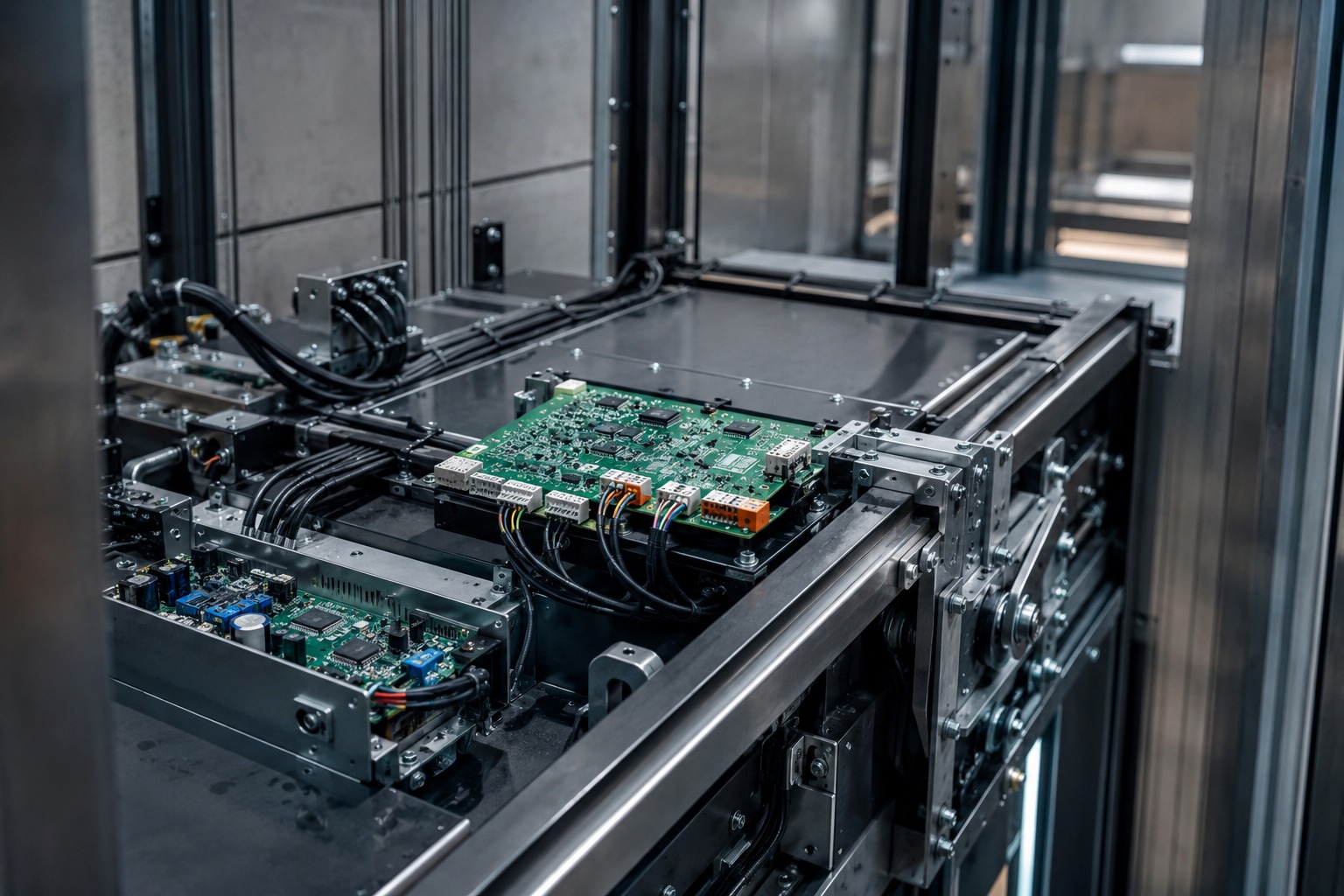
A car top communication board is a signal management and communication interface installed on or near the top of an elevator car. In practical field work across the United States, it helps transmit commands, status data, safety signals, door-related inputs, inspection information, and maintenance communication between the car top devices and the rest of the elevator control system. When this board fails, technicians may see intermittent door faults, missing inspection responses, unstable car top inputs, or communication alarms that affect normal operation and troubleshooting efficiency.
For maintenance companies, distributors, building owners, and modernization contractors, understanding this board matters because many service calls that appear to be controller, wiring, or sensor issues are actually linked to unstable communication at the car top. In dense service regions such as New York City, Chicago, Los Angeles, Houston, Miami, Atlanta, and Seattle, where elevator uptime is closely tied to tenant satisfaction and service-level agreements, a correct diagnosis can reduce repeat visits and shorten shutdown time.
In older and mixed-brand installations, the car top communication board often sits at the intersection of multiple field devices: door operators, light curtains, position inputs, inspection stations, intercom links, and harness connectors. That is why part matching, connector verification, and protocol confirmation are just as important as replacing the board itself. If a Toshiba unit is involved, accurate model identification is especially important because board family, revision, connector position, and software compatibility can vary by application.
This guide explains what the board does, how common failures appear in the field, what to check before replacing a Toshiba board, how to verify connectors and communication protocols, how inspection boxes tie into the system, and how to test the repair afterward. It also covers buying advice, spare parts planning for service companies, and 2026 trends in technology, policy, and sustainability for the United States elevator market.
What a Car Top Communication Board Does
The main job of a car top communication board is to organize and transmit signals between equipment mounted on the elevator car and the elevator controller or networked subsystems. It can act as a local I/O handling point, a communication node, or a protocol bridge depending on the design. In many elevator systems, this board is responsible for collecting inputs from switches and sensors, passing outputs to field devices, and maintaining a stable communication path during normal operation, inspection mode, and troubleshooting.
In the field, technicians usually think about the board in terms of practical outcomes: does the car top inspection station respond correctly, do door inputs arrive without delay, do communication LEDs behave normally, and can the main controller consistently see the car top devices? When one of those answers becomes no, the board becomes a primary suspect, especially after moisture exposure, vibration, connector oxidation, or harness strain.
The table below summarizes the most common functions handled by a car top communication board in elevator applications.
| Function Area | Typical Signal Type | Common Connected Devices | Why It Matters | Possible Failure Impact | Service Priority |
|---|---|---|---|---|---|
| Door communication | Input/output and status feedback | Door operator, door zone, lock chain interfaces | Supports opening, closing, and status confirmation | Door faults, nuisance reopen events, service interruptions | Very high |
| Inspection operation | Maintenance and control signals | Inspection box, run buttons, stop switch | Allows safe top-of-car maintenance work | Inspection mode unavailable or unreliable | Very high |
| Safety-related feedback | Discrete signal monitoring | Safety switches, bypass-related inputs, chain monitoring | Helps controller interpret field conditions correctly | Trips, lockouts, unclear fault history | High |
| Position and motion support | Pulse or status communication | Sensors, encoders, leveling inputs | Improves coordination with travel control | Leveling issues, unstable car response | High |
| Passenger interface support | Communication/data transfer | Intercom parts, COP-related links, indicators | Maintains user-facing communication paths | Loss of alarm communication or display feedback | Medium |
| Diagnostic and maintenance access | Status LEDs, network communication | Service tools, diagnostics ports | Speeds troubleshooting and validation | Longer service time, incomplete diagnosis | High |
For buyers in the United States, the board should never be treated as a generic electronics item. Elevator communication boards are application-specific parts. The housing, connector keying, firmware behavior, mounting pattern, and communication method can differ across machine-room, MRL, modernization, or region-specific installations. A correct replacement plan begins with brand, model, board number, photos, connector count, and fault description.
For Toshiba-related needs, many service companies start by reviewing the part layout and compatibility details on a Toshiba elevator car top communication board page before placing an order. That approach is useful because field photos and board marking verification often prevent expensive returns and second-site visits.
Common Communication Failure Signs
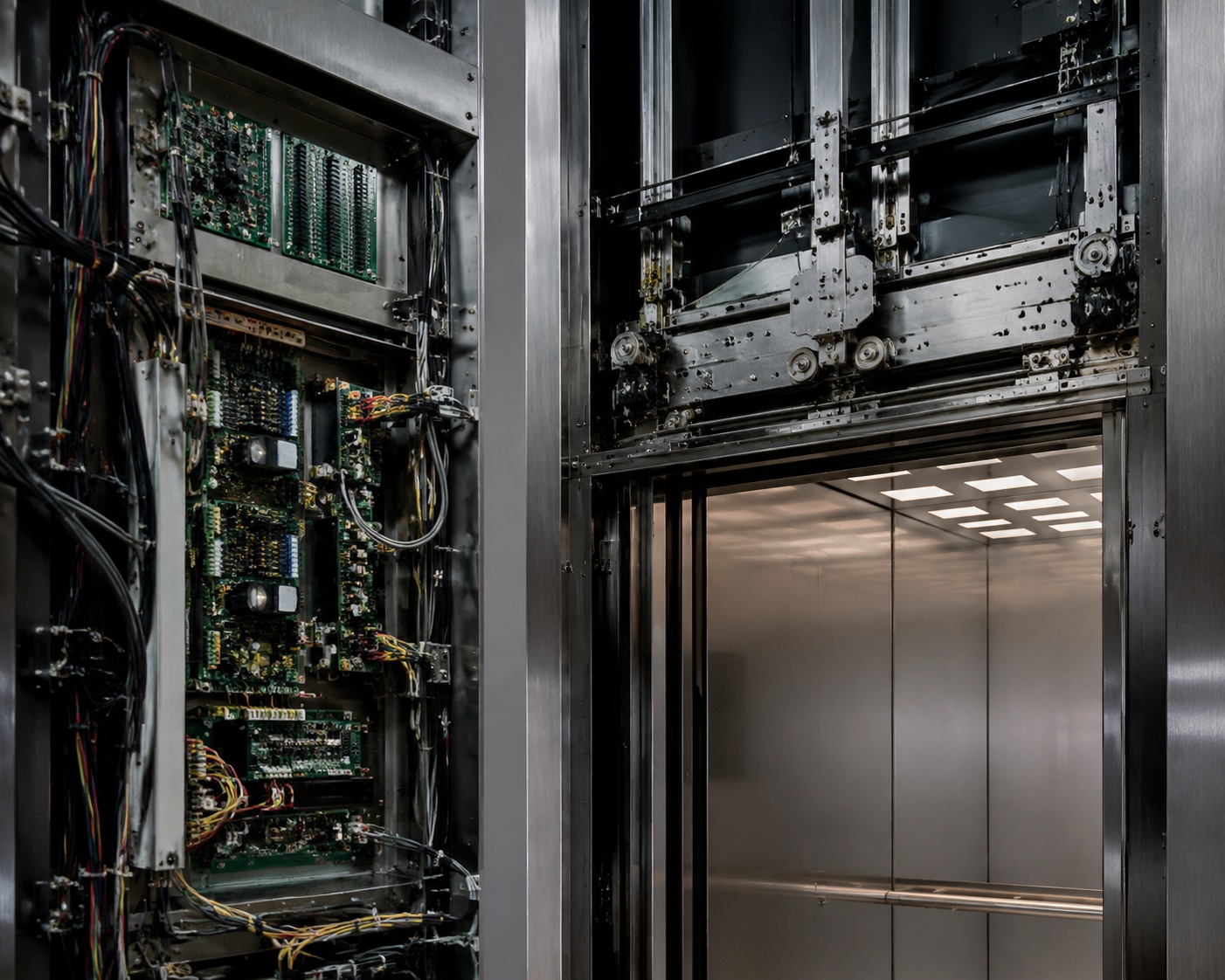
Communication failures at the car top do not always produce one simple alarm. In many buildings, especially older high-rise properties in Manhattan, mixed-use towers in Dallas, hospitals in Boston, and hotels in Orlando, the symptoms may appear as intermittent faults that move between door operation, inspection availability, and random service resets. The real clue is inconsistency. If the elevator works for a period, then loses field communication after travel, vibration, heat buildup, or humidity changes, the issue may be on the board or at its cable connections.
Common signs include missing car top inputs on the controller display, flickering communication LEDs, repeated resets after door cycles, unexplained inspection mode lockouts, and communication timeout logs. Some technicians also notice that tapping or moving a harness changes the fault pattern, which points to loose connectors, broken conductors near strain points, or damaged terminal seating rather than the board alone.
The next table lists common symptoms and what they often indicate in practice.
| Observed Symptom | Likely Source | Field Clue | Immediate Check | Risk if Ignored | Recommended Action |
|---|---|---|---|---|---|
| Intermittent loss of car top inputs | Loose connector or board communication issue | Inputs disappear during travel or vibration | Inspect connector seating and harness strain | Random shutdowns and repeat callbacks | Reseat, test continuity, review board condition |
| Inspection mode does not engage | Board, inspection box, or switch path fault | No response from top-of-car controls | Check inspection chain and board status LEDs | Maintenance delays and unsafe troubleshooting workarounds | Verify wiring path and board communication |
| Door communication alarms | Board I/O instability or protocol mismatch | Door faults without obvious mechanical cause | Review door-related inputs and outputs | Passenger entrapments and uptime loss | Check board revision and connected devices |
| Frequent controller communication timeout | Network path issue | Fault logs show recurring timeout events | Measure supply voltage and inspect network wiring | System lockouts, nuisance resets | Trace power, shielding, and protocol settings |
| LED indicators abnormal or dark | Power problem or board failure | No expected blink pattern or power indication | Confirm incoming voltage and fuse condition | Misdiagnosis and unnecessary part replacement | Power test before replacing board |
| Fault changes when harness is moved | Connector oxidation or broken conductor | System recovers temporarily during handling | Inspect pin damage and cable integrity | Repeat failures after service team leaves | Repair harness and secure strain relief |
| Intercom or auxiliary signals unstable | Shared communication or grounding issue | Multiple low-voltage functions affected together | Check ground reference and shared harnesses | Passenger communication reliability problems | Evaluate board and system grounding path |
In the United States market, one frequent source of confusion is assuming every communication problem is a controller failure. In reality, a localized car top board issue can isolate several field devices at once. That is why a methodical approach is more efficient than replacing multiple unrelated parts. Start with power, then connectors, then cable continuity, then board status, then protocol or compatibility checks.
From a service perspective, preventive replacement can be justified when the board shows corrosion, recurring intermittent faults, or visible heat damage. In coastal markets such as Miami, Tampa, New Orleans, and near the Port of Long Beach, humidity and salt exposure can accelerate connector degradation and affect low-voltage communication stability.
Toshiba Car Top Board Replacement Notes
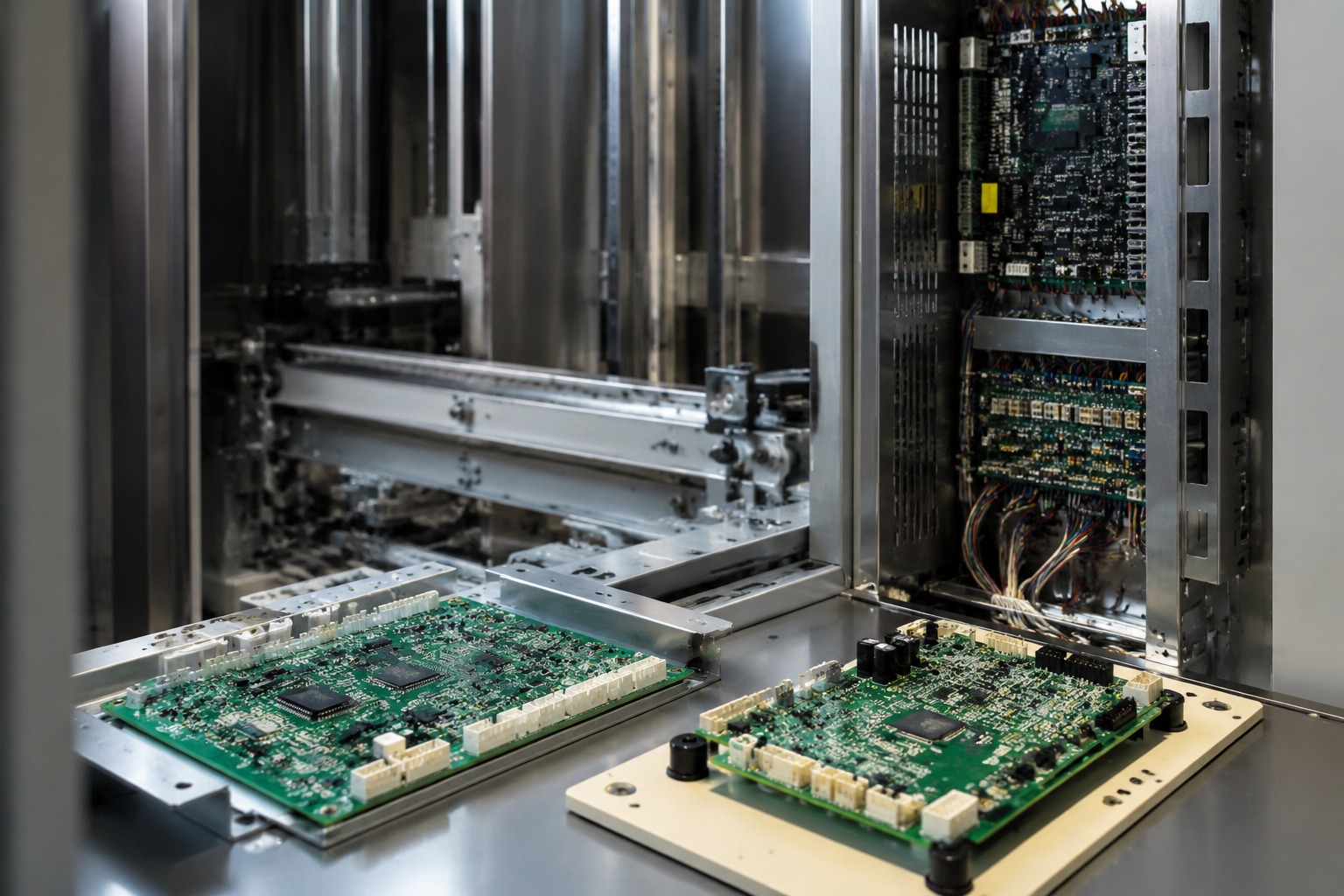
Replacing a Toshiba car top communication board requires more than matching the brand name. Technicians and procurement teams should confirm the complete part number, board revision, connector arrangement, software or firmware relevance if applicable, and the exact elevator model or project reference. Even when two boards look similar in photos, differences in port assignment or communication behavior can make them non-interchangeable.
Before ordering, gather the old board label, front and back photos, installation location, fault history, and associated controller information. If the elevator was modernized, do not assume the original car top board family is still in place. Many modernization contractors in the United States encounter mixed assemblies where a previous upgrade changed the controller, door operator, or communication interface while leaving some original field wiring in service.
The following checklist helps reduce mismatch risk during Toshiba replacement planning.
| Replacement Check Item | Why It Is Important | What to Verify | Common Mistake | Impact of Mistake | Best Practice |
|---|---|---|---|---|---|
| Full part number | Confirms exact board family | Label, suffix, barcode, printed code | Ordering by brand only | Wrong board received | Submit close-up board photos |
| Revision level | May affect compatibility | Version mark or revision print | Ignoring sub-version differences | Unexpected communication issues | Compare old and new revisions before shipment |
| Connector layout | Prevents wiring errors | Pin count, orientation, keying | Assuming visual similarity means fit | Miswiring and damage risk | Cross-check harness map and photos |
| Mounting dimensions | Ensures physical installation | Hole spacing, standoff height | Focusing only on electronics | Install delay on site | Verify dimensions in advance |
| System application | Links board to actual elevator setup | Controller type, door package, project data | Skipping application context | Incomplete diagnosis | Share elevator model and fault description |
| Condition of harnesses | Protects new board after replacement | Pin wear, oxidation, cable strain | Replacing board only | New part fails to solve issue | Inspect wiring and repair weak points |
| Power quality | Avoids repeat damage | Input voltage stability, grounding | Installing new board into unstable circuit | Recurring faults or board stress | Measure supply before startup |
In many cases, replacing the car top board should be paired with a review of related communication modules. For example, if the system includes add-on functions or extended signal handling, checking a matching Toshiba elevator expansion board can help determine whether the communication path issue extends beyond the car top assembly.
Buying advice for the United States market is straightforward: work with a supplier that can support model matching, photo review, quality checks, and protective packaging for long-distance shipment. This is especially important for companies servicing nationwide portfolios from distribution points near Newark, Savannah, Houston, or Los Angeles, where fast logistics can shorten outage duration but only if the part is matched correctly the first time.
As a supplier serving elevator maintenance and modernization customers, our technology capability is centered on part identification support, careful model matching, and compatibility review for control boards and communication-related spare parts. That helps customers avoid the common issue of replacing a board that fits physically but does not communicate correctly within the system.
Cable Connector and Protocol Checks
A new board will not solve a communication problem if the root cause is damaged wiring, oxidized terminals, poor shielding, wrong connector seating, or an unresolved protocol mismatch. Cable and connector checks should therefore happen before and after any board replacement. In the field, this step often determines whether the repair becomes a one-visit fix or a recurring service problem.
Start with visual inspection. Look for bent pins, discoloration, heat marks, cracked housings, rubbed insulation, and improper strain relief. Then confirm continuity and insulation condition where applicable. If the cable travels through flexing points on the car top, examine sections near cable clamps and bend points closely. Repeated movement can break conductors internally while leaving the outside jacket intact.
Protocol checks are equally important. Some systems rely on specific communication timing, addressing, or device recognition behavior. If the board revision is wrong, or if another communication node in the chain is unstable, the car top board may seem defective even when it is not.
The table below shows a practical inspection framework.
| Check Category | Inspection Focus | Typical Tools | What Good Looks Like | What Bad Looks Like | Corrective Action |
|---|---|---|---|---|---|
| Connector seating | Fully inserted and locked plugs | Visual check, hand pressure | Firm fit, no movement, latch engaged | Loose fit or partial insertion | Reseat and secure connection |
| Pin condition | Corrosion, bending, spread contacts | Magnifier, flashlight | Clean, aligned, even contact tension | Oxidation or pin deformation | Clean, repair, or replace connector |
| Cable continuity | Conductor integrity end to end | Multimeter | Stable readings with no interruption | Open circuit or intermittent reading | Replace damaged cable section |
| Shielding and grounding | Noise protection path | Meter and visual trace | Correct grounding and intact shield | Floating shield or damaged braid | Restore proper grounding method |
| Supply voltage | Power quality to the board | Meter under load | Stable voltage within expected range | Drop, ripple, or fluctuation | Trace upstream power issue |
| Protocol compatibility | Correct board behavior in system | Controller diagnostics, service docs | Recognized communication with no timeout | Addressing conflicts or no handshake | Verify part revision and system setup |
| Harness strain relief | Mechanical protection | Visual inspection | Cables supported and not stretched | Pulled wires or sharp bends | Re-route and secure harness |
For modernization contractors and service firms working across varied building types, connector and protocol checks are often more valuable than replacing multiple low-cost components blindly. Warehouses, hospitals, airports, campuses, and residential towers all present different environmental conditions. In Phoenix and Las Vegas, heat can accelerate material aging. In Boston and Minneapolis, temperature swings and condensation can affect enclosed control areas. In Gulf Coast markets, moisture exposure requires closer attention to terminal condition.
Our manufacturing capability supports this practical reality by emphasizing stable sourcing, careful quality inspection, and protective packaging for boards, sensors, interconnect components, and other elevator spare parts. That matters because communication boards can be vulnerable to impact, static exposure, and connector damage during transit if they are not packed properly.
Inspection Box and Maintenance Interface Links
The inspection box on the car top is one of the most direct ways technicians interact with the communication path supported by the car top board. When the inspection station fails to respond correctly, the issue may involve the box itself, its switches, the local harness, or the board receiving and transmitting those maintenance signals. That is why inspection operation should be evaluated as part of any communication diagnosis.
Inspection boxes typically integrate controls such as inspection/normal selection, stop switch, run buttons, and sometimes mobile or portable maintenance interfaces depending on the system setup. If these links are unstable, maintenance becomes slower and less predictable. This is especially critical for service teams working under time pressure in busy commercial properties in San Francisco, Washington, D.C., Philadelphia, and downtown Chicago.
When evaluating related hardware, many customers review an inspection box and maintenance switch assembly to compare the interface side of the circuit with the communication board side. That helps determine whether the fault is in the command device, the harness, or the signal-handling board.
The next table connects inspection interface issues with likely communication findings.
| Maintenance Interface Issue | Possible Link to Car Top Board | Technician Observation | Primary Test | Secondary Test | Likely Resolution |
|---|---|---|---|---|---|
| Inspection switch does not transfer mode | Board not receiving input or not reporting state | No mode change seen on controller | Check switch continuity | Check board input indication | Repair switch path or board channel |
| Run buttons unresponsive | Board input failure or communication interruption | Button works electrically but no movement | Verify button output to board | Check communication status | Restore input path or replace board |
| Stop switch causes irregular reset behavior | Signal instability or poor connector contact | Inconsistent response during testing | Inspect terminal block and wiring | Monitor controller log | Repair connection and retest |
| Portable/mobile interface not recognized | Compatibility or local port issue | No handshake with maintenance tool | Review interface port condition | Confirm board revision | Correct board or accessory mismatch |
| Multiple inspection functions fail together | Shared power or common communication loss | Entire station appears dead | Measure supply voltage | Check board power LED | Fix power feed or replace failed board |
| Intermittent operation after car movement | Harness strain or vibration-sensitive board fault | Works stationary, fails in motion | Inspect moving cable path | Tap-test and continuity test carefully | Repair harness or secure mounting |
For service companies, this area is also where labor costs can escalate. If technicians need to revisit a site because inspection mode was not validated correctly after a board swap, the true repair cost increases beyond the price of the part. Strong maintenance procedures save money by reducing callbacks.
Testing Communication After Repair
After replacing or repairing a car top communication board, testing must confirm more than power-up. The elevator should be checked for stable communication during idle state, door cycles, inspection operation, and normal travel. A successful repair means the system behaves consistently under actual operating conditions, not just during a short static observation period.
A recommended post-repair process starts with visual verification, then power confirmation, then board LED review, then controller diagnostics, then function testing, then monitoring under movement. If the site has a history of intermittent faults, extend observation time. In high-demand buildings such as healthcare facilities, transit-linked towers, university dormitories, and logistics centers, short testing is often not enough to prove stability.
The table below outlines a practical post-repair test sequence.
| Test Step | Purpose | What to Observe | Pass Criteria | If It Fails | Notes |
|---|---|---|---|---|---|
| Visual installation check | Confirm correct mounting and connectors | Board seated, no loose plugs, no pin stress | All hardware secure | Stop and correct installation | Do this before energizing |
| Power-on verification | Ensure proper board supply | Voltage, indicators, startup behavior | Stable power and expected LED pattern | Trace power feed and grounding | Measure under load when possible |
| Controller communication review | Confirm data path restored | Diagnostics screen or service tool status | No active communication timeout | Review protocol and network path | Capture fault history if available |
| Inspection function test | Validate maintenance interface link | Mode transfer, stop, run commands | Immediate and consistent response | Recheck inspection chain wiring | Test all relevant buttons |
| Door cycle test | Stress common communication path | Open/close repeatability and feedback | No communication or door alarms | Check door-related I/O and connectors | Run several cycles, not just one |
| Travel and vibration test | Expose intermittent faults | Stable operation while car moves | No dropout during travel | Inspect harness flex points | Critical for intermittent complaints |
| Extended monitoring | Confirm long-term stability | Logs, alarms, tenant feedback | No repeat fault during observation window | Escalate to deeper system review | Useful for sites with repeated callbacks |
For companies handling nationwide service, service capability is not just about shipping a part. It also includes responsive communication, matching support, and helping customers prepare for installation and testing with the right information before the part arrives. That reduces downtime and helps field teams complete the job on the first visit whenever possible.
Below is a realistic view of how the United States elevator service market has been expanding its demand for replacement electronics, driven by aging installed bases, modernization programs, and faster uptime expectations.
This trend is relevant because communication boards sit in the category of parts that are often urgent, model-sensitive, and difficult to source at short notice. That makes stocking strategy and supplier readiness increasingly important in 2026 planning.
Spare Parts Planning for Service Companies
Service companies in the United States face a practical question: which communication-related parts should be stocked locally, and which should be sourced case by case? The answer depends on service territory, installed brand mix, account type, and the cost of downtime. A company serving hospitals in Cleveland, office towers in Charlotte, and hotels in Las Vegas may need a different stocking plan than a regional residential specialist in the Midwest.
Car top communication boards are usually best handled through a tiered stocking strategy. Fast-moving, broad-use accessories and associated components can be stocked in local vans or branch inventory. Higher-value, model-specific boards may be kept in central warehouses, with urgent dispatch capability from major logistics hubs such as Chicago, Dallas-Fort Worth, Atlanta, Los Angeles, or New Jersey.
The table below offers a planning model for service firms.
| Part Category | Stocking Level | Typical Urgency | Inventory Risk | Best Storage Location | Planning Recommendation |
|---|---|---|---|---|---|
| Common connectors and terminals | High | Immediate | Low | Technician van and branch stock | Keep broad assortment for on-site repairs |
| Harness repair materials | High | Immediate | Low | Branch stock | Essential for intermittent communication issues |
| Inspection switches and box accessories | Medium to high | High | Moderate | Branch and central stock | Stock according to service portfolio |
| Brand-specific car top boards | Selective | Very high | High | Central warehouse | Hold stock for installed base concentration |
| Expansion and auxiliary boards | Selective | Medium to high | High | Central warehouse | Review demand by modernization history |
| Power supplies and related electronics | Medium | High | Moderate | Branch and central stock | Useful because power issues mimic board faults |
| Sensors and door communication accessories | Medium to high | High | Moderate | Branch stock | Frequently needed with communication diagnostics |
Spare parts planning should also consider the industries served. Healthcare, hospitality, airports, multifamily residential, education, manufacturing, and public infrastructure each have different tolerance for elevator downtime. The chart below compares approximate demand intensity for communication-related parts by industry segment in the United States service market.
Case studies from the field often show the same pattern. A maintenance contractor with several Toshiba units in a downtown property cluster keeps connector kits, power supplies, and inspection interface components locally, while sourcing the exact car top communication board from a responsive supplier after model confirmation. This strategy lowers carrying cost without increasing downtime unnecessarily.
Another useful planning tool is trend analysis. The area chart below reflects a realistic shift in service attention from mechanical-only troubleshooting toward electronics, communication, and diagnostic-heavy repairs.
Looking toward 2026, three trends matter. First, technology: more elevators rely on distributed electronics and communication-heavy diagnostics, which increases the value of accurate board matching. Second, policy: building owners are under stronger pressure to improve uptime, documentation, and maintenance traceability. Third, sustainability: targeted component replacement is often preferred over broad assembly replacement because it can reduce waste, shorten outage time, and extend the life of existing systems.
In supplier comparison, the strongest service outcomes usually come from partners that combine technical identification support, consistent quality checks, and responsive logistics. The comparison chart below highlights what service companies typically value when selecting a source for communication boards and related elevator spare parts.
FAQ About Car Top Communication Boards
What is the quickest way to identify the right replacement board?
The fastest method is to provide the board label, clear front and back photos, connector photos, elevator model details, and the fault description. This reduces the risk of ordering by appearance only.
Can a communication fault be caused by the cable instead of the board?
Yes. In fact, loose connectors, broken conductors, poor shielding, and oxidation are common causes of intermittent communication loss. Cable checks should always be part of diagnosis.
What symptoms suggest the board is failing rather than the controller?
Intermittent loss of car top inputs, unstable inspection operation, localized door communication faults, and abnormal board indicator behavior often point toward the car top communication path first.
Should a Toshiba board be replaced with the exact same revision?
That is usually the safest approach unless confirmed alternatives are available. Revision differences can affect connectors, communication behavior, or application compatibility.
Is it enough to power up the elevator after replacement?
No. The repair should be validated through inspection mode testing, door cycle testing, travel testing, and review of communication status or fault logs.
How should service companies stock these parts?
Use a tiered inventory plan. Stock common connectors, repair materials, and some inspection components locally. Keep high-value, model-specific boards in a central warehouse based on installed base demand.
What related parts are often checked with a car top communication board?
Door operator components, power supplies, sensors, encoders, intercom parts, inspection boxes, expansion boards, and wiring harnesses are all common related items.
Why does supplier capability matter for this product?
Because communication boards are model-sensitive. A capable supplier helps with matching, quality review, protective packaging, and responsive service so the replacement part arrives ready for a faster repair.
What should building owners ask their maintenance provider after a communication board repair?
Ask what fault was confirmed, whether wiring and connectors were inspected, what tests were completed after replacement, and whether any preventive spare parts should be kept on hand for that property.
What is changing in 2026 for this category?
More distributed electronics, stronger uptime expectations, and more sustainability-focused maintenance decisions are making accurate repair planning and compatible spare parts sourcing even more important in the United States.
United States Market and Application Outlook
Demand for car top communication boards and related electronics is being shaped by three large forces in the United States. First, the installed base is aging, especially in mature urban markets such as New York, Boston, Philadelphia, and Chicago. Second, modernization projects are expanding in high-density residential and commercial buildings where owners want to improve reliability without replacing the full elevator package. Third, tenant expectations for uptime continue to rise across offices, healthcare, education, and hospitality.
Applications are broad. Communication boards matter in passenger elevators, service elevators, hospital elevators, hotel lifts, residential towers, campus buildings, and industrial freight systems where top-of-car maintenance access remains essential. The parts are particularly relevant in buildings where door performance, inspection availability, and communication diagnostics all affect service quality.
For buyers comparing local suppliers, the strongest choices are not always the closest geographically. A supplier with good technical response, accurate model matching, and reliable packaging can often deliver better results than a nearby source with limited product verification. That is especially true when parts move through busy trade lanes connected to ports and air cargo hubs such as Los Angeles/Long Beach, Houston, Savannah, Newark, and Chicago O'Hare.
Why Buyers Work With Our Team
Our role in this market is to help maintenance companies, distributors, building owners, and modernization contractors source elevator control boards and related spare parts with less uncertainty. On the technology side, we focus on careful model matching, compatibility review, and support for identifying the correct board before shipment. On the manufacturing and sourcing side, we emphasize stable quality inspection and protective packaging to reduce transit risk for sensitive electronic parts. On the service side, we prioritize responsive communication so customers can move quickly when downtime is affecting a building.
Beyond car top communication boards, customers often source related items such as inverter and frequency converter parts, door operator components, door locks, light curtains, guide shoes, oil cups, sensors, encoders, power supplies, buttons, COP panels, intercom parts, and other lift accessories for brands including Hitachi, Toshiba, KONE, Mitsubishi, and more. The practical value is not just broad range, but the ability to support real service scenarios where multiple related parts may need to be reviewed together.
For United States customers, that means fewer delays in sourcing compatible replacement parts, better protection during shipment, and stronger support for keeping elevator systems operating safely and with less downtime.