
Elevator Brake Power Components for Safer Stops and Better Rescue Readiness in the United States
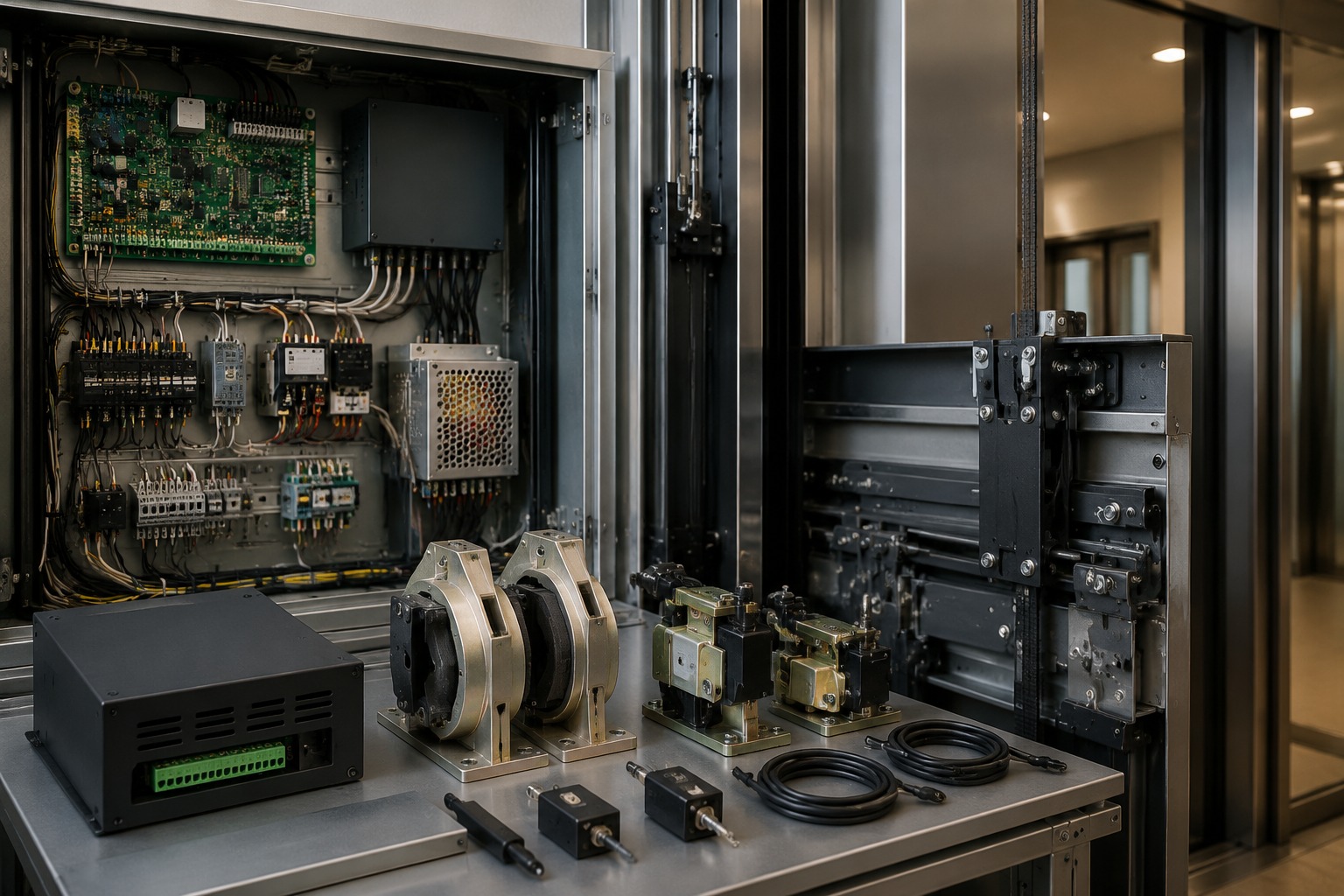
Brake power components are small parts with a very large safety role. In a traction elevator, the brake must release smoothly when the machine is commanded to run and must close reliably when the car stops or when power is removed. That simple action depends on the correct brake release power supply, stable voltage or constant current control, proper wiring, and compatible brake control logic. For maintenance companies, modernization contractors, distributors, and building owners across the United States, choosing the right elevator brake power parts helps reduce nuisance shutdowns, shorten rescue time, and protect stopping performance.
In the US market, demand is especially strong in high-density service regions such as New York City, Chicago, Los Angeles, Houston, Miami, Atlanta, Seattle, and the Dallas-Fort Worth corridor. Coastal logistics routes through the Port of Los Angeles, Port of Long Beach, Port of Houston, Port of Savannah, Port Newark, and inland trade hubs around Memphis and Kansas City also affect spare-part lead times. Because brake circuits are safety-critical, many service firms now keep local stock of replacement modules instead of waiting for a machine-room failure to trigger an emergency order.
This guide explains what brake release power supplies do, when constant current designs are used, what to check on 48V units, how wire rope brake controllers fit into the system, and how to test after replacement. It also covers common failure signs, spare stock planning, buying advice, local sourcing considerations, and 2026 trends related to modernization, sustainability, and code-driven maintenance expectations.
Direct answer: why these parts matter
If you need the short answer first, brake power components exist to provide the correct electrical energy and control sequence for elevator brake release and brake engagement. When matched correctly, they help the brake open quickly without overheating the coil, support smooth starts, reduce relay stress, and allow the brake to reapply consistently when the controller commands a stop. When mismatched or failing, they can cause delayed release, brake chatter, overcurrent, repeated faults, rough leveling, or complete no-run conditions.
In practical field terms, the right replacement part is not just about the label on the housing. It must match the brake coil electrical characteristics, controller logic, machine type, and installation environment. This is why many technicians compare model code, output specification, mounting method, connector style, and field measurements before replacing a unit.
US market context for elevator brake power parts
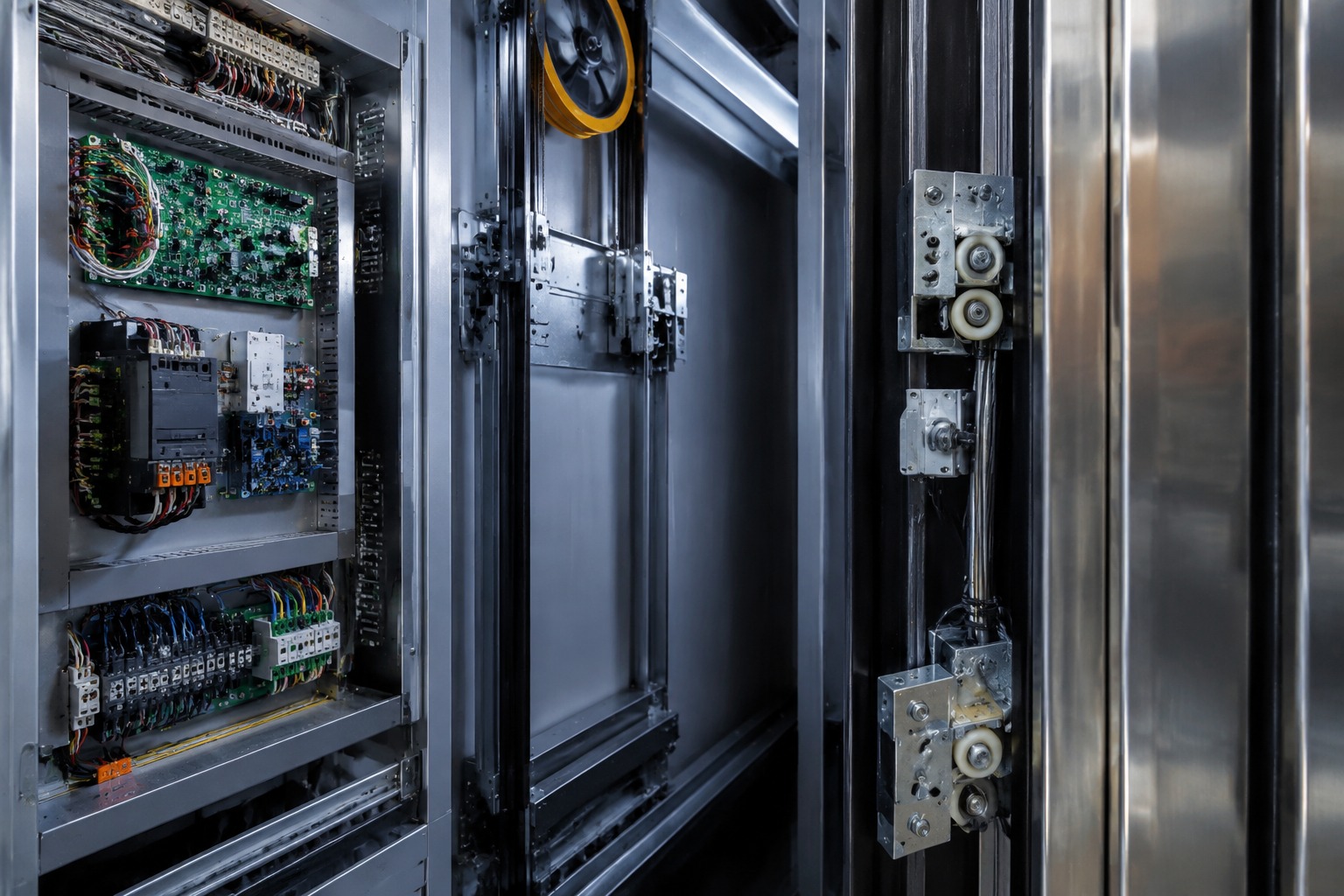
The United States has a mixed installed base: older commercial towers, hospital elevators, hotel groups, airports, transit facilities, universities, public housing, and modern residential high-rises all use different generations of brake systems. Some are still maintained with original boards and legacy brake release units; others are being modernized with newer inverter-driven systems and updated safety logic. This creates a market where exact matching and cross-reference knowledge are as important as availability.
For example, a Manhattan service contractor may need rapid same-week replacement for a traction passenger elevator serving a Class A office building, while a contractor in Phoenix may plan preventive replacement during a scheduled modernization. In the Midwest, where weather swings can affect machine-room conditions, heat and dust tolerance become practical concerns. In Florida and the Gulf Coast, humidity, corrosion risk, and storm-related power events often influence spare stocking decisions.
The trend above reflects rising modernization work, tighter uptime targets, and increasing preference for planned replacement instead of reactive failure response. In large cities, especially where elevator traffic is intense, the cost of downtime usually exceeds the cost of holding a few brake-related spare parts locally.
Product types commonly used in the field
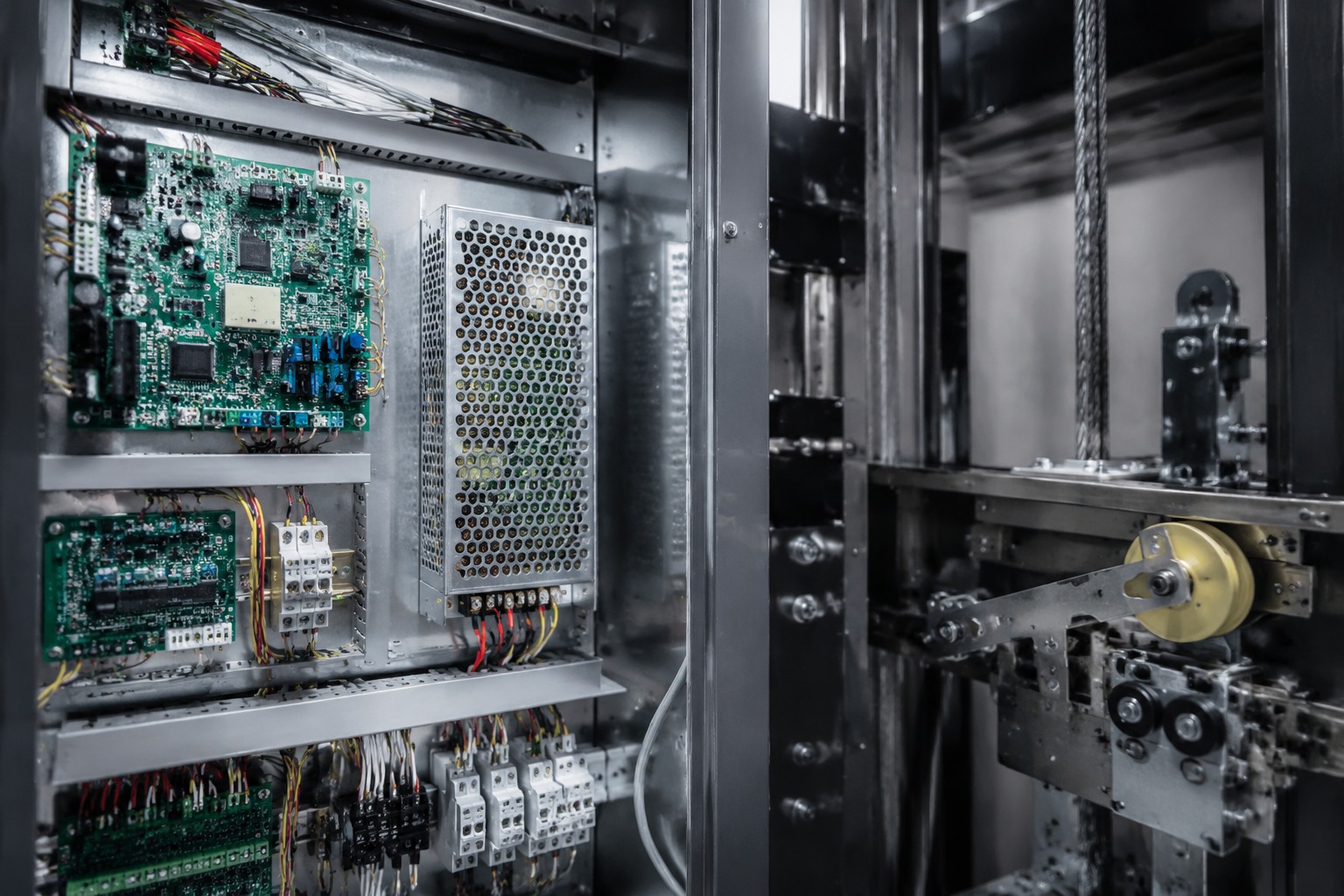
Brake power assemblies appear in several forms: general brake release power supplies, constant current brake supplies, dedicated DC 48V units, machine-specific controllers, and supporting components such as relays, fuses, connectors, and terminal blocks. In some systems, the brake release function is handled by a discrete module. In others, it is integrated with a wider machine control scheme. For replacement work, technicians often start by identifying whether the failed item is a stand-alone supply or part of a larger board assembly.
| Component type | Main function | Typical application | Key check point | Failure effect | Replacement priority |
|---|---|---|---|---|---|
| Brake release power supply | Provides controlled output to release brake coil | Traction elevators in commercial buildings | Output stability under load | No release or delayed release | High |
| Constant current brake supply | Maintains target current for brake coil behavior | Systems requiring consistent coil force | Current regulation accuracy | Overheating or weak release | High |
| 48V DC brake power supply | Feeds 48V brake circuit | Specific machine or controller designs | Voltage ripple and load response | Intermittent brake faults | High |
| Wire rope brake controller | Coordinates additional rope brake action | Selected safety or machine arrangements | Command and feedback logic | Safety trip or no-run | Critical |
| Brake relay and contact set | Switches brake circuit state | Legacy and hybrid systems | Contact wear and coil health | Chatter or inconsistent stopping | Medium |
| Fuse, terminal, connector parts | Protects and connects brake power path | All machine rooms and control cabinets | Heat marks and resistance | Random trips or voltage drop | Medium |
This table shows why brake troubleshooting should not stop at the main module. A failed connector, heat-damaged terminal, or worn relay can mimic a bad brake supply, so complete circuit review is essential before ordering replacement stock.
How brake release power supplies work
A brake release power supply converts and manages electrical power so the elevator brake coil receives the correct release energy. In many systems, the brake needs a strong pull-in action at the moment of release and then a stable hold condition while the car is running. If that power is unstable, too low, too high, or poorly timed, the brake may not open fully or may run hotter than intended.
The release sequence typically interacts with the main controller, drive, safety chain, and machine brake assembly. When the controller confirms conditions for motion, the brake supply energizes the coil. Once the brake opens, the machine can rotate without drag. When a stop is commanded, or if the safety chain opens, the brake power is removed and spring force reapplies the brake. That means the reliability of the power path directly affects safe stopping and rescue procedures.
Technicians in the field often look for three things first: whether the unit outputs correctly under actual load, whether the timing and switching are normal, and whether the coil itself measures within specification. A power supply can test fine with no load yet fail when connected to the brake. That is why live operational measurements, done safely and according to site procedures, matter more than simple bench assumptions.
When sourcing replacements, many buyers choose a dedicated elevator brake release power supply only after confirming the original model, output values, terminal arrangement, and compatibility with the machine and controller generation. This reduces call-backs and avoids the common mistake of installing a physically similar but electrically unsuitable unit.
Buying advice for maintenance teams and distributors
For US buyers, brake power parts should be evaluated on more than price. The key buying questions are: Is the part electrically compatible? Does it match the machine and control platform? Has the unit been checked for stable output and connector condition? Is protective packaging sufficient for long-distance shipping to places like Denver, Boston, San Diego, or Anchorage? Can the supplier assist with model confirmation before dispatch?
Building owners and facility managers may not need to know every electrical detail, but they should ask their maintenance provider whether the replacement plan includes verification of the brake coil, surrounding wiring, and related contact components. A single bad module may be only one symptom in a stressed circuit.
  Practical buying checklist for brake power replacements


      Checkpoint
      Why it matters
      What to confirm
      Risk if missed
      Best time to verify
      Recommended owner action


      Exact model match
      Prevents functional mismatch
      Part number, revision, brand family
      Immediate no-run or unstable operation
      Before quotation
      Send clear nameplate photos


      Output specification
      Ensures proper brake coil performance
      Voltage, current, duty profile
      Coil overheating or weak release
      Before order
      Request technical confirmation


      Connector and mounting style
      Reduces installation issues
      Terminal layout, dimensions, bracket type
      Field modification delays
      Before shipment
      Compare cabinet photos


      Condition inspection
      Improves reliability
      Visual checks, output test records
      Early repeat failure
      Supplier QC stage
      Ask for test confirmation


      Packaging protection
      Prevents transit damage
      Anti-static, cushioning, moisture protection
      Hidden damage in transit
      Before dispatch
      Confirm shipping standard


      Lead time and spare planning
      Keeps downtime low
      Stock status and replenishment cycle
      Long shutdown during failure
      Quarterly planning
      Set minimum stock levels


For distributors, this checklist also helps standardize customer intake. Accurate information collected at the first contact usually cuts decision time and reduces incorrect returns.
When constant current brake supplies are used
A constant current brake supply is used when the brake coil and system design benefit from controlled current rather than relying only on fixed voltage behavior. This approach can improve consistency in release force, reduce variation caused by line conditions, and help protect the coil during different phases of operation. In field service language, it can support more predictable brake action, especially on systems where coil characteristics or control timing make current regulation important.
These units are often considered when a brake needs a reliable pull-in profile, where overcurrent could shorten coil life, or where operating conditions vary enough that simple voltage supply is less ideal. They can also be relevant in older installations being partially modernized, where the surrounding control architecture remains in place but brake power stability needs improvement.
Use cases in the United States commonly include modernization projects in office towers, hotels, medical centers, and university campuses where maintaining original machine behavior is important. In hospitals in cities such as Philadelphia or Minneapolis, smooth and repeatable stopping is especially valuable because downtime affects patient movement and service logistics. In airports and convention properties around Las Vegas, Orlando, and Atlanta, high traffic cycles also make brake consistency a maintenance priority.
When evaluating options, many buyers compare a standard release module with a constant current brake release power supply after reviewing coil requirements, drive behavior, and prior fault history. The goal is not to upgrade for its own sake, but to match the system’s actual electrical needs.
The chart shows why maintenance strategies differ by property type. Heavy-cycle buildings often experience faster wear in related contact and switching components, making brake supply health a larger planning issue.
Industries and applications that rely on stable brake power
Stable brake power is not only a machine-room detail. It affects operations in sectors where elevator uptime is closely tied to tenant satisfaction, patient movement, freight scheduling, guest service, and code compliance. Commercial real estate managers in downtown corridors from San Francisco to Charlotte care about passenger flow and service calls. Healthcare campuses focus on reliable transport. Warehousing and mixed-use facilities care about coordinated movement of people and goods.
| Industry | Main elevator use | Brake power priority | Downtime impact | Preferred service approach | Typical stock strategy |
|---|---|---|---|---|---|
| Commercial offices | Peak passenger traffic | Smooth release and consistent stopping | Tenant complaints and traffic delays | Preventive replacement during low occupancy windows | One or more local spares per machine group |
| Hospitals | Patient, bed, and service transport | High reliability under constant use | Clinical workflow disruption | Fast diagnosis and tested spare readiness | Critical spare kept on site or nearby |
| Hotels | Guest and service operations | Quiet, stable operation | Guest dissatisfaction and staffing delays | Planned maintenance between occupancy peaks | Regional spare support |
| Airports and transit | Continuous public movement | Rapid recovery after fault | Crowding and service bottlenecks | Priority dispatch and local stock | High-value spare pooling |
| Residential towers | Daily passenger use | Reliable leveling and no nuisance shutdowns | Resident complaints and rescue events | Routine inspection plus targeted replacement | Spare based on age and building class |
| Universities | Mixed passenger and service use | Durability across varied schedules | Access disruption across multiple buildings | Campus-wide maintenance planning | Shared central inventory |
The strongest pattern is simple: the more critical the building function, the more valuable planned spare availability becomes. On sites with continuous traffic, waiting for emergency sourcing is rarely the most economical choice.
What to check with 48V brake power supplies
A 48V brake power supply should never be treated as interchangeable solely because the voltage label looks correct. In elevator brake circuits, the important checks include rated output under load, allowable current, ripple behavior, thermal condition, fuse protection, terminal integrity, and compatibility with the controller’s release timing. Even small electrical differences can change how the brake coil behaves in service.
Start with the nameplate and the original circuit information. Confirm whether the brake is specified for DC 48V and whether the system expects a direct release profile or a staged pull-in and hold pattern. Then inspect the cabinet for heat discoloration, loose terminals, cracked insulation, and signs of previous overcurrent. Measure the output under safe test conditions, ideally both unloaded and connected, because some failures only appear when the brake coil draws current.
Another common field issue is assuming that brake problems must originate at the brake supply. In reality, the coil, relay contacts, control commands, suppression components, or terminal resistance may be the deeper cause. If a new 48V unit is installed into a damaged circuit, the replacement may fail early or appear unstable despite being healthy.
For machine-specific replacements, buyers often look for a 48V elevator brake power supply with verified model matching, careful packaging, and responsive technical support. That combination matters when a building in Boston, Seattle, or Austin cannot tolerate repeated troubleshooting visits.
| Inspection item | Normal expectation | Possible warning sign | Likely consequence | Field method | Replacement note |
|---|---|---|---|---|---|
| Rated output voltage | Stable 48V within tolerance | Low or drifting voltage | Weak brake release | Meter check under load | Confirm original specification |
| Current capability | Supports coil demand without sag | Trip or drop under load | No-run or intermittent faults | Observe during brake command | Do not oversimplify by voltage only |
| Heat condition | Normal operating temperature | Burn marks or odor | Pending failure or connector damage | Visual and safe thermal check | Inspect surrounding terminals too |
| Output ripple | Controlled DC behavior | Excessive ripple or noise | Unstable brake action | Electrical measurement | Review power conversion stage |
| Terminal tightness | Secure, low resistance connection | Loose screws or oxidation | Voltage drop and heating | Physical inspection | Replace damaged terminals |
| Control compatibility | Correct sequencing with controller | Timing mismatch | Brake chatter or trip faults | Functional run test | Cross-check machine logic |
These checks are especially useful during modernization work, where a newer controller may be interacting with legacy machine components. Verifying the full chain saves time and avoids blaming the wrong device.
Key notes on wire rope brake controllers
A wire rope brake controller is usually associated with additional rope brake functions or specialized safety arrangements in certain elevator systems. Because this device is part of a broader control and safety interaction, replacement decisions should be made carefully. The main points to review are command logic, feedback signals, brake action timing, wiring condition, and mechanical coordination with the related brake assembly.
In practice, technicians should avoid treating a rope brake controller as a simple accessory. If the unit has faulted, investigate whether the problem comes from the controller itself, the associated safety chain, sensor feedback, or a mechanical issue triggering repeated intervention. A control replacement without root-cause review can leave the original problem untouched.
For systems requiring a dedicated match, some buyers seek a wire rope brake controller for elevator applications after confirming machine model, board code, and wiring arrangement. This is especially important on high-liability sites such as hospitals, civic buildings, or premium high-rise properties where the safety documentation trail must remain clear.
Field notes from major metro markets show that documentation quality matters. A technician working in New York or Washington, DC may inherit a machine room with multiple historical modifications. Taking photos, marking wire positions, and comparing actual terminal use against drawings are essential steps before any controller swap.
The area trend reflects a broad change in maintenance behavior. Instead of waiting for an emergency shutdown, more US service organizations are shifting brake power parts into their planned replacement and local inventory programs.
Typical signs of brake circuit failure
Brake circuit failures often show up before complete shutdown. The earliest warning signs may include delayed car start, audible brake chatter, rough stopping, intermittent drive faults, repeated relay clicking, overheating smell in the control cabinet, nuisance trips after peak traffic, or inconsistent leveling. In some cases, the elevator runs again after a reset, which leads sites to postpone investigation. That delay can turn a manageable part replacement into a more disruptive outage.
Other signs are more visible: darkened relay contacts, brittle wire insulation, blown fuses, scorched terminal blocks, unusual coil resistance, or measurable voltage drop across a connection. If the machine has recently experienced power quality events, lightning-related disturbances, or moisture exposure, those factors should also be reviewed.
One important diagnostic point is pattern recognition. A fault that happens only after repeated runs may indicate heat build-up or current-related weakness. A fault that appears only at startup can suggest release power problems or switching contact issues. A fault that appears when stopping may point toward brake reapplication timing or related control sequencing.
| Observed sign | Possible cause | Severity level | Immediate action | Diagnostic priority | Possible replacement item |
|---|---|---|---|---|---|
| Brake does not release | No output, bad relay, open coil, blown fuse | Critical | Remove from normal service and test safely | Very high | Brake supply, relay, fuse, coil-related parts |
| Delayed startup after command | Weak output or timing issue | High | Check voltage/current under load | High | Brake release module or timing components |
| Brake chatter noise | Unstable power, poor connection, low current | High | Inspect terminals and output stability | High | Power supply, terminal block, relay |
| Cabinet heat marks | Loose terminal or overloaded component | High | Shut down and inspect for damage | High | Connector, terminal, supply module |
| Intermittent run fault after peak traffic | Thermal weakness or aging electronics | Medium to high | Monitor hot-state behavior | Medium | Brake supply or related switching part |
| Repeated fuse failure | Short circuit, coil issue, incorrect replacement | Critical | Stop replacing fuses blindly; find root cause | Very high | Supply, coil, wiring harness, suppression parts |
This kind of symptom table is useful for dispatch triage. It helps service coordinators decide whether to send a technician with a likely spare module, a full diagnostic kit, or both.
Testing after a brake power part is replaced
Testing after replacement should confirm more than the fact that the elevator runs. A proper check should verify output values, release timing, normal stopping behavior, absence of chatter, coil temperature trend, connector stability, and fault-free operation over repeated cycles. The objective is to prove that the replacement solved the problem without creating a new one.
A sensible test sequence often includes visual inspection, wiring verification, polarity confirmation where applicable, safe measurement of output at command, no-load and under-load checks, multiple runs in both directions, and observation after the unit warms up. If the site permits and procedures allow, technicians may also compare current draw to historical expectations. Any unusual sound at brake release or reapplication deserves attention before the job is signed off.
For high-traffic sites such as office towers in Manhattan, mixed-use properties in Miami, or healthcare buildings in Dallas, it is wise to perform enough cycles to simulate real service conditions rather than accepting a single successful run. Short testing can miss temperature-related faults that only appear after repeated operation.
Documentation is part of testing. Record the replaced part number, readings taken, visible condition of removed parts, and any related corrective work such as terminal repair or relay replacement. This creates a maintenance history that supports future diagnostics and procurement planning.
Case examples from real-world service situations
Case 1: A downtown Chicago office building experienced intermittent morning startup delays on one traction car. The brake supply tested near normal with no load, but output sagged under actual brake demand. Replacing the supply and a heat-stressed terminal block restored normal release and eliminated repeated tenant complaints.
Case 2: A hospital elevator in Houston showed occasional brake chatter after long operating periods. The root cause was not the coil but a weakening current control stage in the brake release module. After installing a correctly matched replacement and retesting through repeated cycles, the unit returned to stable service.
Case 3: A residential high-rise in Seattle had a false assumption that a 48V brake supply was defective. The actual failure was a high-resistance connection causing voltage drop only during release. Replacing the damaged terminal hardware solved the issue without changing the main module.
Case 4: A modernization contractor in Los Angeles needed model confirmation for a rope brake controller on a mixed-age installation. Clear photo review, terminal comparison, and pre-shipment matching prevented an incorrect order and avoided a second site visit.
Planning maintenance and spare stock
Spare stock planning for brake power parts should be based on building criticality, installed base age, historical fault rate, and lead time risk. A single office building with one lightly used traction elevator may not require the same stock level as a hospital campus or a property group with multiple older machines. The most cost-effective plan is usually a targeted one, not an oversized blanket inventory.
For maintenance companies, a practical approach is to categorize equipment into critical, important, and standard service classes. Critical sites may justify local stock or same-day regional access to brake release modules and related contact parts. Important sites may use branch inventory shared across a metro area. Standard sites may rely on scheduled procurement if lead times are acceptable.
Geography matters. Customers in coastal distribution centers like New Jersey, Southern California, and the Gulf Coast often have good freight access, but weather events and congestion can still interfere. Inland operators serving areas such as St. Louis, Indianapolis, or Salt Lake City may prefer one extra shelf spare rather than risking a shipping delay during an outage. By 2026, more maintenance firms are expected to combine parts consumption data with predictive service records to set minimum stock levels for brake-related electrical parts.
This comparison chart reflects how buyers typically evaluate brake power suppliers. Fast delivery matters, but model matching and quality inspection are usually ranked even higher because the wrong part creates more downtime than a short wait for the right one.
Local suppliers, logistics, and the role of a specialized parts partner
US buyers often prefer local access, but local availability alone is not enough for specialized brake power components. The better solution is a supplier that combines technical part matching, consistent inspection, secure packaging, and responsive communication with shipping routes that serve major markets efficiently. In elevator parts, reliable sourcing is often more valuable than simply listing a part online.
For customers serving New York, Los Angeles, Chicago, Houston, Miami, and Atlanta, the best supply arrangement is usually one that supports urgent requests while also helping plan repeat purchases. Distributors want low error rates. Maintenance companies want fewer return trips. Building owners want stable elevator operation without prolonged shutdowns.
Our company: capabilities that support brake power sourcing
Technological capabilities
We support customers by focusing on careful model matching for elevator electrical and control-related spare parts, including brake power assemblies, control boards, sensors, encoders, and other lift accessories. For brake-related orders, that means reviewing part codes, photos, machine details, and compatibility points so replacement decisions are based on actual application fit rather than rough visual similarity.
Manufacturing capabilities
Our sourcing and inspection process emphasizes stable quality review, protective handling, and packaging suited for domestic distribution and international transit. For sensitive elevator parts such as power supplies, controllers, and boards, this helps reduce shipping damage and supports more reliable installation outcomes when parts arrive at branch warehouses, service depots, or job sites.

Service capabilities
We work with maintenance companies, distributors, building owners, and modernization contractors who need responsive service and clear communication. Our goal is to help reduce downtime by supporting compatible replacement sourcing, organized shipment preparation, and practical spare planning for elevator systems across the US market.
2026 trends: technology, policy, and sustainability
Looking ahead to 2026, several trends are shaping how brake power parts are selected and stocked in the United States. First, modernization programs are pushing more owners to replace aging electrical modules before outright failure. Second, digital maintenance records are making it easier to identify repeated brake circuit issues by site, machine type, or climate condition. Third, sustainability goals are encouraging longer service life through targeted replacement instead of broad system waste.
Policy and compliance expectations are also influencing decisions. Building operators increasingly prefer documented maintenance actions, traceable parts, and clearer post-repair records. This does not mean every brake supply replacement requires a major overhaul, but it does mean informal repair habits are giving way to more disciplined documentation and verification.
From a technical standpoint, future brake power parts are likely to be evaluated more heavily for thermal stability, repeatable performance, and suitability for mixed-age installations. For suppliers, the market advantage will come from accurate identification, steady quality control, and dependable logistics rather than simply low unit cost.
Common questions about elevator brake power parts
What does a brake release power supply do?
It provides the controlled electrical output needed to energize the brake coil so the elevator brake can release when the controller commands motion and reapply properly when power is removed.
When is a constant current brake supply preferred?
It is preferred when the brake coil and control design require more consistent current regulation for stable release behavior, thermal protection, or predictable operation under varying conditions.
Can I replace any 48V brake supply with another 48V unit?
No. Voltage alone is not enough. Current capability, timing behavior, terminal layout, ripple characteristics, and controller compatibility must also match.
What are the most common failure signs?
Delayed startup, brake chatter, repeated fuse trips, intermittent no-run conditions, overheating smell, darkened terminals, and faults that appear after heavy traffic are all common warning signs.
Should testing stop once the elevator runs again?
No. Testing should include repeated operating cycles, output checks under load, observation of brake sound and stopping behavior, and confirmation that no heat-related or intermittent fault remains.
How many spare brake power parts should a maintenance company stock?
It depends on equipment age, site criticality, and lead time. High-priority sites often justify local stock, while lower-risk sites may rely on regional inventory.
What information helps with model matching?
Part numbers, revision labels, photos of the installed unit, wiring terminals, machine details, controller model, and a brief description of the fault all help speed correct sourcing.
Why do specialized suppliers matter for these parts?
Because brake power modules are safety-related and application-specific. Accurate matching, quality inspection, and secure packaging reduce the risk of incorrect installation and repeat downtime.